Your Guide to Diagnosing and Fixing Cannabis Leaf Issues
17 min read · , updated May 14, 2026
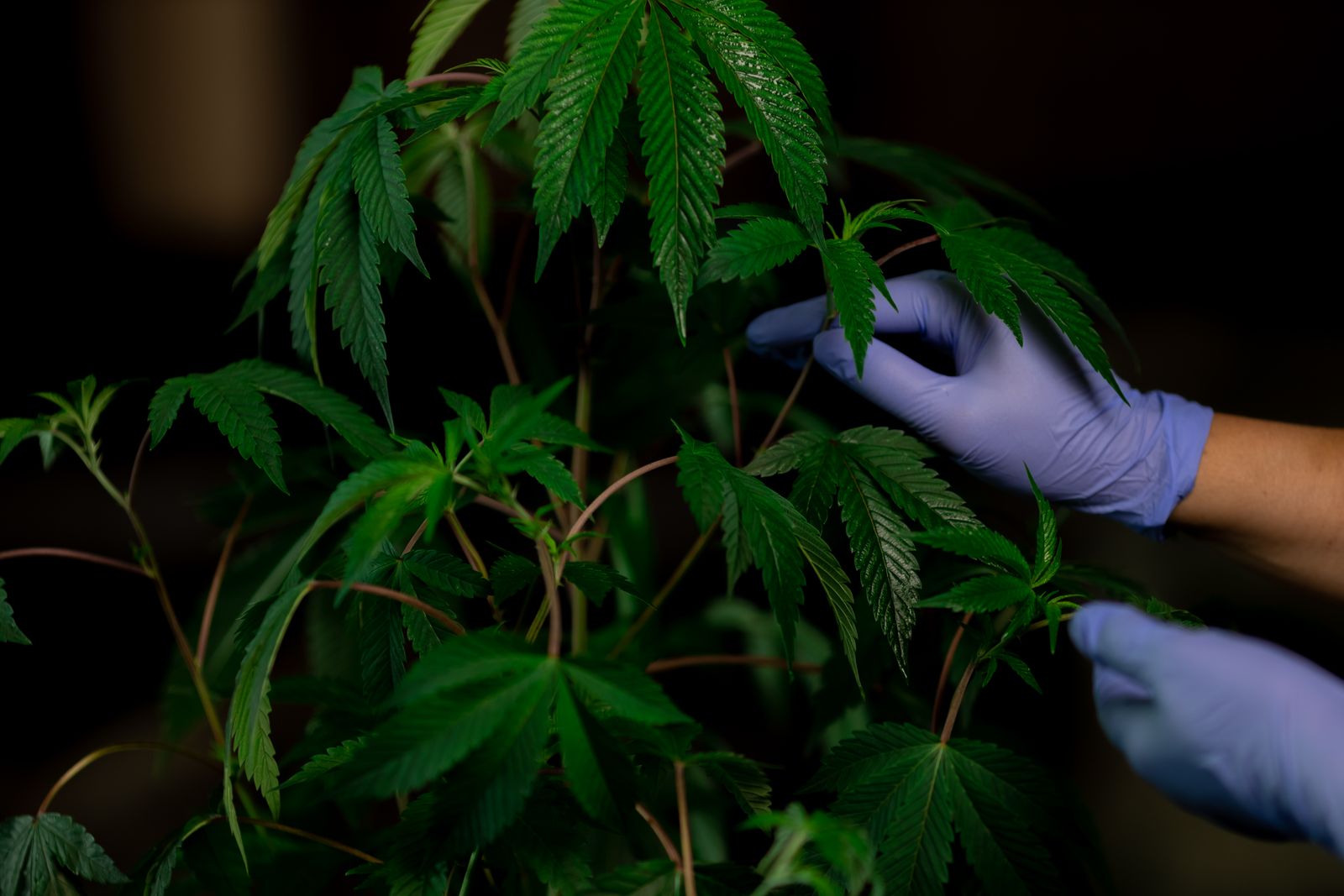
A single discoloured leaf can cost you an entire harvest — or mean nothing. The difference between those two outcomes is knowing how to read what your plant is actually telling you.
Cannabis leaves are the most sensitive diagnostic tool in your grow room. Long before a problem reaches your roots or your buds, it announces itself in the foliage: a yellowing edge here, a brown speckle there, a dramatic downward curl that growers call "the claw." Learning to decode these signals quickly and accurately is what separates a grower who salvages a great harvest from one who watches it decline in confusion.
This guide covers everything — discolouration, nutrient imbalances, pests, fungal threats, and environmental stress, with the specificity you need to act fast. No vague advice. Just a clear, practical framework for diagnosing and fixing the most common weed leaf issues, whether you're running a soil grow in a spare bedroom or a full hydro setup in your basement.
What Healthy Cannabis Leaves Actually Look Like
Before you can diagnose a problem, you need a solid baseline. A healthy cannabis leaf — whether you're growing a fast-finishing autoflower or a long-season feminised cultivar, has a few non-negotiable characteristics that are worth committing to memory.
- Vibrant, consistent colour: The exact shade varies by cultivar — a deep forest green in some indica-dominant strains, a lighter lime in certain sativas — but it should always look rich and alive, never dull or washed out.
- Smooth, slightly waxy texture: Healthy leaves carry a subtle sheen. If yours look dry, dusty, or matte, something is already off.
- Upward-angled posture: During the photoperiod, leaves should angle gently toward the light source. Drooping, sagging, or cupping is a distress signal.
- Intact edges and surfaces: No holes, no crispy margins, no powdery coatings, no spots of any colour.
The goal isn't to never see a single yellow leaf. A few yellowing leaves at the very bottom of a mature plant are completely normal — the plant is recycling mobile nutrients upward toward productive new growth. It's widespread, patterned, or rapidly advancing discolouration that demands your attention.
Use the quick-reference table below as your first triage step. Match the symptom you're seeing, then follow this guide to the relevant section for a full diagnosis and fix.
Quick Guide to Common Leaf Symptoms
| Symptom | Most Likely Cause | Where to Dig Deeper |
|---|---|---|
| Yellowing | Nitrogen deficiency, pH imbalance, or overwatering | Discolouration & Nutrient sections |
| Brown or black spots | Calcium deficiency, pH fluctuations, or fungal disease | Nutrient & Pests/Disease sections |
| Curling or clawing | Heat stress, overwatering, or nitrogen toxicity | Discolouration & Environmental sections |
| Crispy, burnt tips | Nutrient burn from overfeeding | Nutrient Burn section |
| Drooping or wilting | Overwatering or underwatering | Environmental & Watering section |
| Holes or bite marks | Pest activity | Pests & Diseases section |
| White powdery film | Powdery mildew | Pests & Diseases section |
Decoding Discolouration and Leaf Curl
Leaf discolouration is your plant's most urgent communication. The key to reading it correctly is a two-step process: identify the colour, then identify the location. Those two data points together will almost always point you to the right diagnosis.
A yellowing that starts at the bottom of the plant tells a completely different story than one appearing only at the top canopy. Brown spots scattered randomly across the blade mean something different than a brown edge creeping inward from the margins. Train yourself to observe both dimensions every time you inspect your plants.
Yellowing Leaves: Chlorosis and What It Means
Chlorosis — the loss of green chlorophyll, is the most common discolouration growers encounter. It looks straightforward, but its causes are numerous and the location is everything.
Yellowing from the bottom up is almost always a nitrogen deficiency. Nitrogen is a mobile nutrient, meaning the plant actively pulls it from older, lower leaves to feed new growth up top. Those sacrificed lower leaves are not a crisis — they're the plant intelligently prioritising. During the vegetative stage, a ramp-up in nitrogen-forward feeding will correct this quickly. If you see it late in flower, though, it's largely natural: the plant is cannibalising fan leaves to fuel bud development in the final weeks.
Yellowing from the top down is a different animal entirely. This pattern points to immobile nutrient deficiencies — iron and sulphur being the most common, or to environmental stress. Before adjusting your nutrient programme, check two things first: light distance and pH. A fixture hanging too close will bleach the uppermost leaves a washed-out yellow that mimics deficiency almost perfectly. And if your pH is drifting out of the optimal range, nutrient lockout can produce yellowing even when those nutrients are sitting right there in your medium, perfectly inaccessible to the roots.
Brown Spots and Crispy Burnt Tips
Brown markings on cannabis leaves come in a few distinct patterns, and each pattern has its own story.
- Small, scattered brown or black spots: Random dead spots sprinkled across the leaf surface are a classic hallmark of calcium deficiency. They look almost like tiny burns and tend to appear mid-canopy or higher.
- Burnt, crispy tips only: When just the very tip of the leaf browns and dies, that's textbook nutrient burn — you've pushed fertiliser concentrations beyond what the plant can process.
- Brown margins creeping inward: Edges browning on older leaves, moving toward the centre, often indicate a potassium deficiency or, in severe cases, salt buildup from chronic overfeeding.
Pro Tip: When you spot nutrient burn, the smartest first move is to flush the medium with plain, pH-balanced water. Think of it as a reset button for the root zone — it strips out accumulated salt and nutrient buildup so you can start fresh with a lighter, more measured feeding schedule.
The Claw and the Taco: Understanding Leaf Curl
When leaves physically contort themselves, the plant isn't being dramatic. It's in genuine distress, and the direction of the curl is your most important diagnostic clue.
Leaves curling downward ("the claw"): This is the signature of nitrogen toxicity. The leaves turn an unnaturally dark, almost plastic-looking green before the tips and edges hook downward. You've been too generous with your nitrogen-heavy veg nutrients. The fix is straightforward — flush with pH-balanced water to strip the excess, then reintroduce nutrients at a reduced concentration.
Leaves curling upward ("tacoing"): When leaf edges roll upward to form a taco shape, heat stress is the primary suspect. Your lights are likely too close, your ambient temperature is creeping too high, or both. Raise the fixture, improve air circulation between the canopy and the light, and check your room temperature against the 21–29°C target. Overwatering can also contribute to upward curling as waterlogged roots struggle to move water efficiently into the plant tissues.
Solving Common Nutrient Problems
Feeding cannabis is more art than arithmetic — but your leaves are the ultimate scorecard. They will tell you, with surprising precision, whether your plant is underfed, overfed, or locked out of nutrients it desperately needs. Getting this right is the single biggest variable in avoiding persistent weed leaf issues throughout the grow cycle.
The Big Three: N-P-K in Plain Language
Every fertiliser bottle you pick up will lead with its N-P-K ratio — nitrogen, phosphorus, and potassium. These are the three macronutrients cannabis demands in the largest volumes, and their balance needs to shift as your plant moves through its life stages.
- Nitrogen (N): The engine of vegetative growth. Your plant's hunger for nitrogen during veg is enormous — it fuels every new leaf, every internode. Too little causes bottom-up yellowing. Too much produces the claw: dark, waxy leaves curling downward with burnt tips.
- Phosphorus (P): Root development and bud production are phosphorus's domain. A deficiency during flowering — the worst time to run short — shows up as slowed growth and leaves shifting to a dark bluish-green, sometimes with purplish patches developing along the midrib and margins.
- Potassium (K): The resilience nutrient. Potassium governs water movement, enzyme function, and overall stress tolerance. A deficiency begins at the edges of older leaves: yellowing first, then browning and crisping inward, as if the margins have been lightly scorched.
For a deep dive into building and adjusting a feeding schedule that matches your cultivar's specific demands, the nutrients for your cannabis plant guide is the logical next stop.
Secondary Nutrients: Calcium and Magnesium
Secondary nutrients are not optional extras — they're essential for cellular integrity and chlorophyll production. Yet they're the ones growers most commonly overlook until a deficiency is already visible.
A magnesium deficiency is one of the most recognisable problems in the grow room. You'll see interveinal chlorosis: the leaf tissue between the veins turns yellow while the veins themselves remain distinctly green, creating a striped or marbled pattern. It typically starts on older, lower leaves and works its way up.
Calcium deficiency presents differently. Expect distorted or stunted new growth at the growing tips — the newest leaves look crinkled or malformed, paired with small, dead brown spots on leaf surfaces throughout the plant. Both deficiencies respond well to a quality Cal-Mag supplement added to your regular feed. It's one of the most cost-effective additions to any grower's toolkit, and in soft Canadian municipal water particularly, it's practically non-negotiable.
The pH Problem You Genuinely Cannot Ignore
This is the one. More growers waste more money on premium nutrients that accomplish nothing because the pH of their medium is outside the absorption window.
pH governs which nutrients your roots can physically take up. Drift outside the optimal range and your plant experiences nutrient lockout — a state where deficiency symptoms appear even though you're feeding correctly. Every symptom looks like a nutrient problem, but the actual fix is pH correction.
- Soil and soilless grows: Target a pH of 6.0–7.0, with 6.2–6.8 being the sweet spot for broadest nutrient availability.
- Hydro and coco coir: The optimal range tightens to 5.5–6.5, with 5.8–6.2 ideal for most nutrient schedules.
A quality pH pen — available for under $30 CAD at most hydro shops, removes this variable entirely. Test your water before every feed. It takes thirty seconds and prevents hours of frustrating symptom-chasing.
Deficiency vs. Toxicity: A Grower's Quick Reference
| Nutrient | Signs of Deficiency | Signs of Toxicity |
|---|---|---|
| Nitrogen | Pale yellowing from bottom up; slow growth | Dark waxy green leaves; downward claw; burnt tips |
| Phosphorus | Stunted growth; dark bluish-green leaves; purple splotches | Rare and difficult to isolate; often masked by other issues |
| Potassium | Yellowing and browning along edges of older leaves | Brown tips and edges; can trigger secondary nutrient lockout |
| Calcium | Distorted new growth; dead brown spots across leaf surface | Excess can lock out magnesium and potassium |
| Magnesium | Interveinal chlorosis on older leaves; green veins, yellow tissue | Very rare; can interfere with calcium uptake at extreme levels |
The cardinal rule when correcting nutrient issues: move incrementally. Resist the urge to compensate for a deficiency by doubling your fertiliser dose. The smarter play is to flush with plain pH-balanced water to clear accumulated salts, then reintroduce nutrients at half-strength and observe the response over three to five days. Patience here saves you from trading one problem for another.
Identifying and Eliminating Common Pests
Even the most controlled indoor grow is not immune to pests. They hitch rides on clothing, sneak in through ventilation, or emerge from insufficiently sterilised growing media. The difference between a minor inconvenience and a crop-ending infestation is almost entirely a matter of how early you catch them.
Different pests leave different calling cards, and knowing what to look for means you can respond with precision rather than panic.
The Most Common Uninvited Guests
Spider mites are among the most feared pests in any cannabis garden, and for good reason. They reproduce explosively under warm, dry conditions and can colonise an entire plant before you realise what's happening. The first sign is usually tiny white or yellow stippling on the upper leaf surface — small wounds where the mites have pierced the tissue to feed. Flip affected leaves over and look for the mites themselves, plus the fine silky webbing that signals a mature infestation.
Aphids cluster on stem joints and the undersides of leaves, appearing as small pear-shaped insects in green, black, or yellow. They leave behind a sticky excretion called honeydew, which becomes a growth medium for sooty mould — a secondary problem that can further damage your foliage and block light absorption.
Thrips are slender, fast-moving insects that rasp away the surface of leaf tissue. They leave characteristic silvery, shimmery trails or splotches where they've fed, along with tiny black specks of frass. The damage is easy to misread as a nutrient or environmental issue on first inspection.
Fungus gnats — their adult form is a minor nuisance, a small fly hovering around your growing medium. Their larvae are the genuine threat. They thrive in waterlogged topsoil and feed on fine root hairs, causing symptoms that look suspiciously like nutrient deficiencies: yellowing, slow growth, general decline.
Your Pest Response Protocol
Effective pest management works best as a tiered response — start with the least disruptive intervention and escalate only if necessary.
- Physical removal: For light infestations, a damp cloth or a firm spray of water dislodges a surprising number of pests. Inspect the undersides of leaves — that's where most species congregate and where eggs are laid.
- Insecticidal soap: A non-toxic, highly effective option for soft-bodied insects like aphids, spider mites, and thrips. It works by disrupting their cellular membranes without leaving harmful residues on your plant. Apply thoroughly to all leaf surfaces, including undersides, in a well-ventilated space.
- Neem Oil: The organic grower's gold standard. Cold-pressed neem oil contains azadirachtin, a compound that disrupts the feeding and reproductive cycles of dozens of pest species. Mix with warm water and a small amount of liquid soap as an emulsifier, then spray all plant surfaces. Repeat every 3–5 days and always apply with lights off to prevent leaf burn from water droplets acting as magnifying lenses.
- Beneficial insects: For serious or recurring infestations, introducing natural predators — ladybugs for aphids, predatory mites for spider mites — creates a self-sustaining biological defence that chemical sprays simply cannot replicate.
For a targeted solution to one of the most persistent indoor pest problems, the guide on how to get rid of gnats in your plants walks through exactly how to break the fungus gnat life cycle using a combination of sticky traps, soil drenches, and watering adjustments.
Preventing Powdery Mildew and Fungal Problems
Powdery mildew is immediately recognisable: white, flour-like patches on the upper surface of leaves. It looks almost decorative until you understand that it's a fast-spreading pathogen that will colonise your buds if left unchecked, rendering them unsmokable and unsaleable.
Prevention is dramatically easier than treatment. Two environmental factors drive powdery mildew more than any other:
- Stagnant air: Mildew thrives where air doesn't move. A pair of oscillating fans — one at canopy level, one near the floor — maintains consistent circulation that makes it extremely difficult for spores to settle and establish. Good airflow is non-negotiable.
- Humidity management: Keep relative humidity below 50% during the flowering stage. A small dehumidifier paired with a hygrometer is a modest investment that pays for itself in protected harvests. During veg, 50–70% RH is acceptable. During flower, 40–50%. In the final two weeks before harvest, dropping to 40–45% increases terpene density and dramatically reduces mould risk.
If mildew has already taken hold, a diluted solution of potassium bicarbonate or a commercial copper-based fungicide applied to affected areas can slow the spread. Remove heavily affected leaves entirely and improve airflow immediately.
Fixing Environmental Stress in Your Grow Room
Sometimes the nutrient programme is perfect, the pH is locked in, and there's not an insect in sight — and your leaves are still telling you something is wrong. When that happens, look at the room itself. Environmental stress is one of the most underdiagnosed causes of weed leaf issues, and it's entirely within your control.
Light Intensity and Distance
More light is not always better light. When a fixture is too close to the canopy — a risk that increases significantly with high-output LEDs and HPS lamps, the uppermost leaves will bleach to a bright, washed-out yellow. This is light burn, and it mimics nitrogen deficiency closely enough to fool even experienced growers.
The distinguishing feature: light burn always starts at the very top of the plant, on the leaves closest to the fixture. Nitrogen deficiency always starts at the bottom. If your top leaves are yellowing while lower leaves look healthy and green, raise your lights before reaching for your fertiliser.
The fix is simple: increase the distance between the fixture and the canopy by 5–10 cm and observe the response over 48 hours. If your light has a dimmer, use it. The goal is maximum photosynthesis, not maximum light output.
Temperature, Humidity, and VPD
Cannabis operates within a specific thermal comfort zone. Push outside that zone in either direction and the stress response appears immediately in the leaves.
Heat stress — room temperatures consistently above 29°C, causes fan leaf margins to curl upward into the classic taco shape. The plant is reducing its surface area to limit moisture loss and protect against photodamage. Cold stress, temperatures dropping below 16°C, slows metabolic function, causes leaves to droop and darken, and in severe cases, triggers purple or blue discolouration as anthocyanin pigments accumulate.
Target a temperature range of 21–29°C (70–85°F) during the light cycle. A modest drop of 3–5°C at night is acceptable and can even enhance resin production late in flower. What you want to avoid are large, rapid swings — consistency protects your plants far more than chasing a perfect number.
Advanced growers monitor vapour pressure deficit (VPD) rather than just temperature and humidity in isolation. VPD describes the relationship between the two variables and their effect on transpiration. Targeting a VPD of 0.8–1.2 kPa during veg and 1.0–1.5 kPa during flower optimises nutrient uptake, transpiration rate, and overall vigour in a way that temperature or humidity monitoring alone cannot achieve.
Getting your environment dialled before your first seed germinates is the smartest preparation any new grower can make. The detailed walkthrough on how to set up a grow tent covers ventilation, lighting placement, and environmental controls in the kind of step-by-step detail that removes the guesswork from the equation entirely.
Watering: The Most Common Mistake in the Grow Room
Watering errors — specifically overwatering, are responsible for more failed home grows than any nutrient or pest problem. The cruel irony is that both overwatering and underwatering produce near-identical symptoms: drooping, wilting, sad-looking plants that seem to be dying.
The tell is in the texture of the leaves.
An overwatered plant droops, but its leaves feel firm, almost turgid, and curl downward. The roots are sitting in saturated media, suffocating from lack of oxygen. Over time, this creates the exact conditions that fungus gnats and root rot need to thrive.
An underwatered plant also droops, but its leaves feel limp, papery, and lifeless. There's no turgor pressure in the tissue at all — the cells are simply empty.
The lift-the-pot method remains the most reliable watering indicator available to any grower without expensive sensors. Lift your container immediately after a thorough watering and memorise that weight. When it feels significantly lighter — and the top 2–3 cm of medium is dry, water again. This simple habit, paired with correctly sized containers, prevents the vast majority of overwatering incidents.
Common Questions About Weed Leaf Issues
Can My Plant Recover from Damaged Leaves?
Yes, with an important caveat: the damaged leaf itself will not recover. Once a leaf is burnt, spotted, or yellowed, that tissue is gone. But the plant can and will bounce back once you've corrected the underlying cause. The proof is in the new growth — when fresh leaves emerging at the top of the plant look healthy, green, and well-formed, you know the problem is resolved.
Damaged leaves can be removed once new healthy growth is established, or left on if they're still performing some photosynthesis. The priority is always fixing the root cause, not cosmetic cleanup.
How Do I Distinguish Overwatering from Underwatering?
Both cause drooping, but leaf texture gives it away immediately. Overwatered leaves droop while still feeling firm and downward-curled. Underwatered leaves droop while feeling completely limp and soft. When in doubt, lift the pot. A light container is thirsty. A heavy container needs more time to dry out before its next drink.
Why Are the Bottom Leaves Turning Yellow and Falling Off?
One or two yellowing lower leaves on an otherwise vigorous plant is completely normal — it's the plant cycling energy away from old, shaded growth and toward productive new tissue near the light. If you see rapid, widespread yellowing across multiple lower nodes, you're looking at a nitrogen deficiency. Nitrogen is mobile, meaning the plant pulls it from its oldest leaves to feed new growth. Increase nitrogen in your next feed and monitor the response over 48–72 hours.
Organic vs. Chemical Pest Control: Which Approach Wins?
For most Canadian home growers cultivating under the personal cultivation provisions of the Cannabis Act, the organic approach is the clear winner — not just philosophically, but practically.
- Organic options (neem oil, insecticidal soap, beneficial insects): Effective against the majority of common pests, leave no harmful residues on your final product, and are gentler on the beneficial microbial life in living soil grows.
- Chemical pesticides: Can resolve severe infestations faster, but require strict attention to pre-harvest intervals. Any synthetic pesticide applied during the flowering stage risks leaving residues in your harvested buds — a concern that disappears entirely with organic methods.
Start organic. Escalate only if the infestation is severe and unresponsive. In most cases, consistent application of neem oil or insecticidal soap over 7–10 days resolves the problem completely.
Growing healthy cannabis is a skill built through observation, not just technique. The more time you spend genuinely reading your plants — studying new growth, inspecting the undersides of leaves, noting changes in colour and posture, the faster your diagnostic instincts will sharpen. The leaves don't lie. Learn to listen to them and the rest of the grow falls into place.
At Pacific Seed Bank Canada, we back every seed with a germination guarantee and full cultivation support. Whether you're troubleshooting your current grow or ready to start fresh with a proven cultivar, Find your next favourite strain and build your next harvest on a foundation of quality genetics. For more in-depth cultivation guides, explore everything we publish on Growing Marijuana — from first seed to final cure.
Keep Reading

How Much Does It Cost To Grow Your Own Weed in Canada?
Learn the real costs of growing weed at home, including grow tents, lights, seeds, nutrients, electricity, and how much cannabis you can harvest.
The 5 Best Blueberry Cannabis Strains To Grow Indoors
Find the best blueberry weed strains to grow indoors, including Blue Dream, Blueberry Cheesecake, and more - and buy the seeds from Pacific Seed Bank.
Why 5.8–6.5 Is The Ideal pH for Cannabis (And When to Adjust)
Learn why 5.8-6.5 is the ideal pH for cannabis plants, how to test your plant's pH, and how to adjust it higher or lower when you need to.
The Best Autoflowering Light Schedule For Bigger Yields
Stop guessing your autoflowering light schedule. Our guide breaks down the 18/6, 20/4, and 24/0 schedules to help you grow bigger, better plants.