The 5 Best Blueberry Cannabis Strains To Grow Indoors
· 15 min read · Updated May 14, 2026
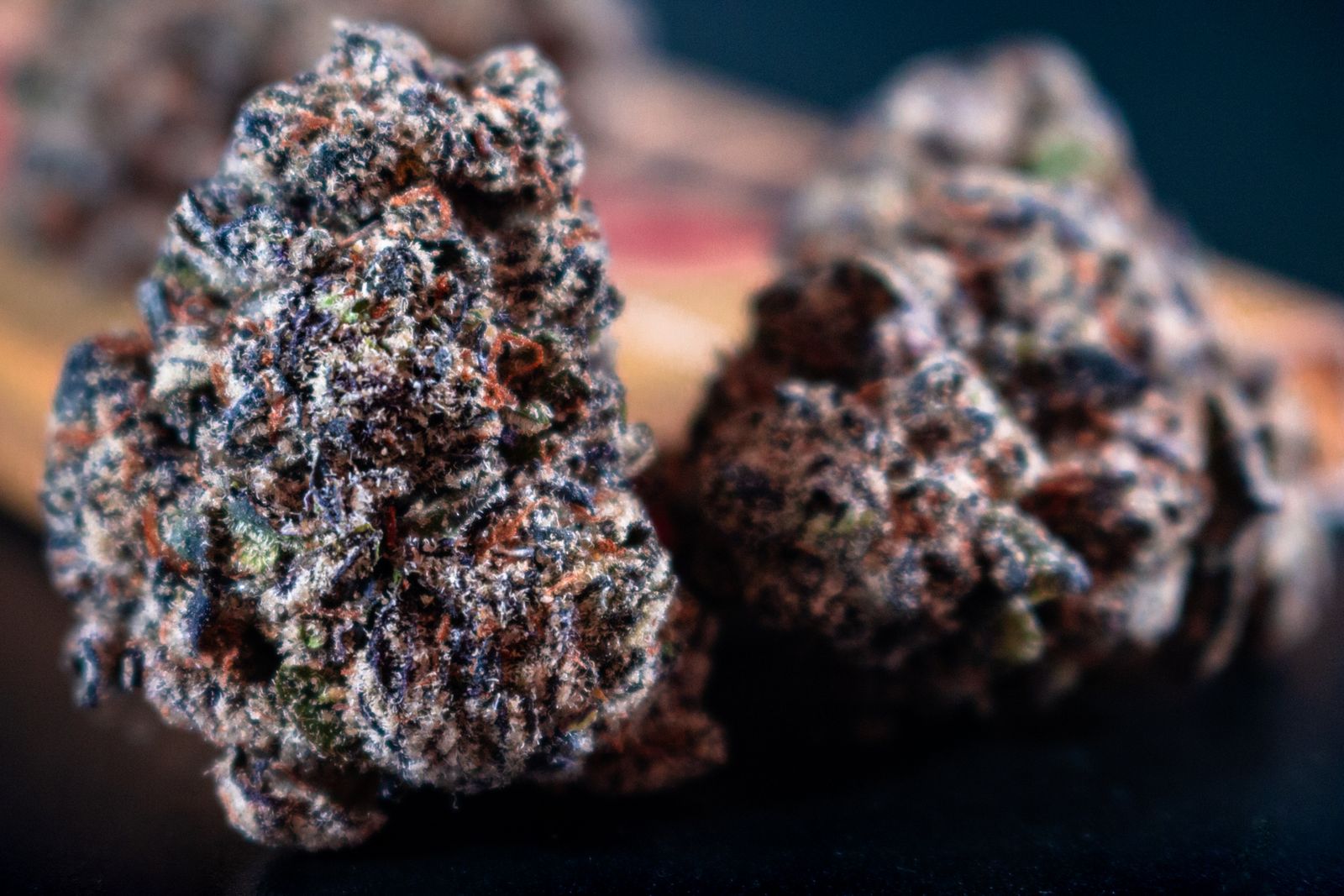
Most growers reach for blueberry genetics because of the flavour. The ones who stick with them long-term do it because of the control — specifically, how perfectly these cultivars respond to the precise, stable environment that only an indoor setup can deliver.
Why Blueberry Strains Thrive in Indoor Grows
Consistency is the single most important variable in a successful blueberry grow, and indoors is where consistency actually lives. No surprise cold fronts rolling in off the Rockies, no humid Maritime nights pushing moisture into your canopy — just the numbers you set, held steady, day after day.
Most blueberry-lineage cultivars prefer daytime temperatures between 21 and 27°C with humidity dialled back progressively as the plant transitions into flower. Indoors, hitting those targets is a matter of equipment and habit. Outdoors, it's a prayer. That's the essential difference.
Structure plays a role too. Blueberry-based genetics tend to grow shorter and bushier — think dense lateral branching and a tight nodal spacing that begs for a SCROG net. Even the more sativa-influenced crosses in this category respond well to low-stress training, allowing you to spread the canopy and flood every bud site with photons. In a well-managed tent, that translates directly to yield.
Airflow is the variable growers underestimate most. Those dense, resin-caked colas that make blueberry strains so visually rewarding are also moisture traps if air goes stagnant. A pair of oscillating fans, one at canopy level and one below, is the cheapest insurance policy in your grow room.
Finally, there's phenotype expression. The deep purples, midnight blues, and burgundy highlights that blueberry genetics are famous for only emerge under tight environmental control — specifically, a modest drop in nighttime temperature during the final two to three weeks of flower. That's nearly impossible to reliably achieve outdoors in most of Canada. Indoors, it's a thermostat adjustment.
What Makes a Strain "Blueberry"?
Every modern "blue" strain traces its flavour DNA back to one genetic anchor: DJ Short Blueberry, the legendary indica-dominant Pacific Northwest creation that redefined what cannabis could smell like. That original work established a terpene blueprint — sweet, slightly tart, unmistakably fruity, that breeders have been building on for decades.
At the molecular level, the blueberry character is primarily driven by myrcene, the most abundant terpene in the cannabis plant and the one most responsible for soft, musky-fruity aromas. Supporting players include pinene, which adds a clean brightness, and caryophyllene, which grounds the profile with a subtle spice and contributes to the earthy undertone you notice on the exhale. Together they form a terpene chord that's immediately recognisable and genuinely distinct from citrus-forward or fuel-heavy cultivars.
The colouration is a separate conversation from the aroma, though the two often arrive together. Anthocyanins — the same pigments that turn blueberries blue and autumn leaves red, accumulate in cannabis tissue when cool temperatures signal the plant to slow chlorophyll production. Not every blueberry strain will purple up indoors, but the genetic potential is there, and your environment determines whether it gets expressed.
Genetically, the category skews indica or indica-dominant. That means shorter internodal spacing, a more compact final height, and the kind of dense bud architecture that indoor growers love. It also means slightly higher sensitivity to humidity and airflow — a trade-off that favours the controlled indoor environment over the unpredictability of a Canadian season.
Blueberry Cheesecake Auto — The Compact Flavour Bomb
- ~17% THC, smooth mid-level potency with a relaxed, happy, uplifted effect
- Flavour profile: ripe cheese layered over sweet berry, with a creamy finish
- Parentage: Big Buddha Cheese × Blueberry genetics, with ruderalis for autoflowering
- Final height: approximately one metre indoors
- Light cycle: 18/6 from seed to harvest — no flip required
Buy Blueberry Cheesecake Auto Seeds Here if you want one of the most flavour-forward compact autoflowers available to Canadian indoor growers. The cross of Big Buddha Cheese and Blueberry produces something genuinely unusual: a strain where two equally assertive terpene profiles — funky, pungent cheese and sweet, jammy berry, negotiate a truce and come out as something more interesting than either parent alone.
Growing it is a study in environmental discipline. Target 21–27°C during the day with relative humidity between 40 and 70 percent, then begin stepping that humidity down as flower development progresses. Because it's an autoflower, the plant handles its own transition — you run an 18-hour photoperiod from day one and let the genetics do the scheduling. This simplifies your routine considerably, especially if you're managing multiple strains simultaneously.
The compact footprint — topping out around a metre, means you can run several plants in a standard 1.2 × 1.2 m tent without crowding. Low-stress training early in the grow, bending and tying lateral branches outward during weeks two and three, opens the canopy and ensures lower bud sites develop properly rather than staying wispy under shadow. Don't overwork it; autoflowers recover more slowly from aggressive defoliation than photoperiod plants, so keep interventions gentle and well-timed.
The reward for dialling in the environment is a harvest that smells exactly like the name promises. When cured properly — two to four weeks in sealed glass at 58–62% relative humidity, the cheese and berry notes sharpen and the smoke stays smooth, consistent with that approachable ~17% THC ceiling. Also worth exploring: Feminized Blueberry Cheesecake for growers who prefer a photoperiod plant with more control over veg length.
Blue Dream — The High-Yield Crowd-Pleaser
- Up to 29% THC, strong but balanced in effect
- Effect: uplifting, euphoric, gentle cerebral energy without anxiety
- Flavour: sweet berry with light herbal and floral notes
- Parentage: Blueberry × Super Silver Haze
- Growth habit: sativa-leaning, vigorous stretcher with strong lateral branching
Blue Dream is, by most metrics, the most commercially successful blueberry-derived cultivar ever bred. The cross of Blueberry and Super Silver Haze — two Hall of Fame genetics, produces a plant that combines fruity approachability with genuine potency, landing up to 29% THC in optimised indoor runs. Buy Blue Dream Seeds Here and you're investing in one of the most proven indoor performers in the catalogue.
The Super Silver Haze side of the equation is immediately apparent once vegetative growth begins. Blue Dream stretches. It wants vertical space, and if you don't manage that tendency early, you'll spend the back half of your grow trying to keep light hitting the lower canopy. The solution is direct: top during the vegetative stage at the fifth or sixth node, then use LST to spread the resulting colas outward. A basic SCROG setup works beautifully with Blue Dream's natural branching pattern and will dramatically increase the number of well-developed bud sites at harvest.
Despite its size ambitions, Blue Dream is genuinely low-maintenance in terms of pest and disease resistance. It handles light mildew pressure better than many other sativa-dominant crosses, which is a meaningful advantage for Canadian growers still working on dialling in their environments. Keep daytime temps at 21–27°C, maintain strong oscillating airflow through the canopy, and this plant largely takes care of itself.
Compared to the compact Blueberry Cheesecake Auto, Blue Dream demands more space and more active training — but it pays back with larger yields and a terpene complexity that rewards careful curing. The berry character is softer here than in pure blueberry strains, brightened by the herbal and citrus notes inherited from Super Silver Haze, making it one of the most versatile flavour profiles in this category.
Related options worth considering: Blue Dream Auto for growers who want the genetics without the photoperiod commitment, Blue Dream Haze for an even more pronounced Haze influence, and Super Blue Dream for a potency-focused selection from the same lineage.
Blue Haze — The Creative Sativa-Leaner
- Up to ~20% THC, lighter potency with a focused, creative, uplifting effect
- Flavour: sweet citrus up front, grounding into earthy berry on the finish
- Parentage: Blueberry × Haze (autoflowering version adds ruderalis)
- Growth habit: sativa-influenced, moderate stretch, consistent from run to run
Where Blue Dream leans on Super Silver Haze for its sativa energy, Blue Haze goes back to the source — pairing Blueberry directly with Haze genetics in a cross that delivers a brighter, more cerebral experience while keeping enough indica structure to stay manageable indoors. Buy Blue Haze Seeds Here and you're choosing a cultivar that growers return to specifically because of its predictability: when your environment stays locked in, this plant follows through every time.
The Haze influence pushes growth upward, so height management matters during veg. Run pruning at the appropriate nodes early, or use tie-down LST to keep the canopy even before flowering begins. Once you flip to 12/12, Blue Haze transitions smoothly and begins stacking buds with a structure that benefits enormously from consistent airflow — a breeze moving through the canopy at all times keeps humidity from pooling in developing colas and strengthens stems against the weight of the finished flowers.
Terpene-wise, Blue Haze sits in interesting territory. The Haze side contributes limonene and terpinolene, pushing a citrus brightness and faint floral sweetness toward the nose; the Blueberry genetics anchor those top notes with their characteristic earthy-berry base. The result is a layered aroma profile that develops noticeably through a proper cure — if you're growing this one, don't rush the jar.
For those who prefer an autoflowering format, Blueberry Haze Auto carries the same genetic character with a shorter seed-to-harvest timeline. Adjacent options in the Haze family include Blue Dream Haze for a blueberry-forward hybrid and Purple Haze for growers chasing maximum anthocyanin expression in their canopy.
Blue Crack — The Daytime Hybrid With Drive
- Up to 24% THC, true 50/50 hybrid balance
- Effect: uplifting, focused, creative — a genuinely functional daytime cultivar
- Flavour: sweet berry with notes of spice, citrus, and a bright tropical edge
- Parentage: Blue Dream × Green Crack
- Growth habit: balanced, manageable height, beginner-accessible with quality results
Blue Crack is what happens when you take Blue Dream's berry-forward elegance and cross it with Green Crack's fast-growing, energetic drive. The result is a 50/50 hybrid that brings up to 24% THC, a daytime-friendly effect profile, and a terpene character that blends sweet blueberry with a citrus-spice brightness you don't often find in pure indica-leaning blueberry cultivars. Buy Blue Crack Seeds Here and you'll understand quickly why this one earns repeat runs.
The Green Crack parentage shows up most clearly in growth rate. This plant moves with purpose during veg, putting on internodal space quickly and responding enthusiastically to the nitrogen-forward feeding programme appropriate for that phase. Transition it to a phosphorus and potassium-heavy bloom formula once flower sites begin forming, and keep your nutrients on the lighter side — Blue Crack, like most blueberry-adjacent genetics, doesn't need aggressive feeding to deliver strong results. Overfeeding risks burning the tips and muting the terpene profile that makes this strain worth growing in the first place.
Structurally, Blue Crack is one of the more forgiving plants on this list. It doesn't push to extremes in either direction — not excessively tall like an unchecked sativa, not so compact that airflow becomes a challenge. That makes it a genuinely good fit for a range of indoor setups, from a two-plant 0.6 × 0.6 m tent up to a larger multi-light room. Beginners will find it approachable; experienced growers will appreciate how cleanly it responds to training.
Related picks worth noting: God's Green Crack Auto for those who want Green Crack genetics in an autoflowering format.
Blue Knight — The Indica-Dominant Finisher
- Up to 27% THC, strong indica-leaning potency
- Effect: deeply relaxing with a creative, contemplative edge
- Flavour: sweet berry meets woody earthiness with subtle pine undertones
- Parentage: Kryptonite × Blueberry
- Growth habit: compact, dense, manageable — a natural fit for confined indoor spaces
Blue Knight earns its place on this list by being the most definitively indica of the five — and the one where environmental precision pays off most visibly in the finished product. The cross of Kryptonite and Blueberry gives you a plant that grows with confident, measured compactness, stacks dense resinous buds, and under the right conditions, produces some of the deepest purple and blue colouration you'll see in a blueberry-category cultivar. Buy Blue Knight Seeds Here if you want a heavy, flavour-rich indica finish that rewards growers who take the details seriously.
Lighting matters more with Blue Knight than with most of the strains on this list. Full-spectrum coverage — whether you're running a quality LED board, an HPS/MH combination, or a CMH, directly influences both bud density and resin development. Keep your light at the appropriate distance for your specific fixture's intensity, and aim for a photoperiod of 18/6 during vegetative growth before transitioning to 12/12 to trigger flower.
Humidity management becomes critical in the final three weeks. Start flowering at 50% relative humidity and step it down toward 40% — or even slightly below, as harvest approaches. Those tight, indica-style colas hold moisture tenaciously, and botrytis (bud rot) is a real risk if the air gets heavy and still. Pair your dehumidification with consistent fan circulation and you eliminate most of that risk before it starts.
Temperature is your tool for bringing out the genetics' visual potential. A drop of 5–8°C between daytime and nighttime temps during the final two weeks of flower triggers anthocyanin expression, shifting the buds from green toward deep blue-purple. Indoors, that's easy to engineer with a programmable thermostat or simply by adjusting your light-off temperature settings. Outdoors in most Canadian climates, you'd be hoping for it rather than controlling for it.
The autoflowering sibling, Blue Knight Auto, offers the same Kryptonite × Blueberry character in a format that removes the photoperiod requirement — a useful option for growers running mixed-light-cycle tents or who simply want a faster turnaround.
Indoor Growing Tips for Blueberry Strains
Growing blueberry genetics well indoors is less about doing anything exotic and more about doing the fundamentals exceptionally consistently. Here's how to set up each phase of the grow for maximum flavour, colour, and yield.
Lighting and Photoperiod
Run an 18/6 schedule through veg for photoperiod plants, then flip to 12/12 to initiate flowering. Full-spectrum LED boards are the current gold standard for blueberry strains — they deliver the light quality needed for both terpene development and dense bud formation without generating the excess heat that can suppress anthocyanin expression. Keep intensity appropriate for your canopy distance; DLI (daily light integral) targets of 35–45 mol/m²/day during flower produce strong results without bleaching.
Temperature and Humidity
Daytime temps: 20–27°C. Nighttime temps: 16–20°C (dropping toward the lower end in the final two weeks to trigger colour). Humidity should follow a progressive step-down protocol:
- Seedling / early veg: 65–70% RH
- Late veg / early flower: 50–60% RH
- Mid-flower: 45–50% RH
- Final two weeks: 40–45% RH
- Pre-harvest flush week: 38–42% RH
These ranges reduce the risk of botrytis in those dense blueberry-style colas while preserving the terpene richness that makes these cultivars worth growing.
Training and Canopy Management
Most indica-dominant blueberry strains respond well to topping at the fifth or sixth node during veg, followed by LST to spread the resulting colas. Sativa-leaning crosses like Blue Dream and Blue Haze benefit from a SCROG net installed before the canopy reaches the screen, allowing you to weave branches through and create an even, horizontal bud surface. Consistent pruning of lower growth — removing anything below the SCROG or below the primary lateral branches, concentrates plant energy into the productive upper canopy and improves airflow at the base of the plant.
Feeding Strategy
Blueberry genetics don't reward aggression at the feed chart. A structured, moderate approach works better:
- Vegetative phase: Nitrogen-forward NPK (e.g., 3-1-2 ratio), with secondary macros (calcium, magnesium) maintained for healthy cell structure
- Transition and early flower: Begin stepping nitrogen down; introduce phosphorus and potassium
- Mid to late flower: Low-nitrogen, high P/K formula; watch EC carefully and keep it conservative relative to heavy feeders like OG Kush-type strains
- Final flush: Plain water or a light enzyme wash for 7–14 days before harvest, depending on your medium
Overfeeding mutes terpenes — which is the exact opposite of what you want from a category defined by its aroma. When in doubt, feed less and let the plant's foliage guide you.
Watering and Root Zone Health
Indoor grows make it easy to overwater, particularly in soil. Your watering schedule should follow a wet-dry cycle: water thoroughly until 10–20% runoff, then allow the medium to dry to approximately 50–60% of its field capacity before watering again. Lift your pots — the weight difference between a saturated and a ready-to-water container is immediately obvious once you've calibrated the feel. Roots need oxygen as much as they need water; consistently wet medium suffocates them and invites pythium and other root pathogens that will compromise the terpene quality of even the best blueberry genetics.
Frequently Asked Questions About Growing Blueberry Strains
What is the easiest blueberry strain to grow indoors?
Autoflowering options are consistently the most approachable entry point. Blueberry Cheesecake Auto doesn't require a light schedule change to trigger flowering, stays under a metre tall, and moves from seed to harvest on a predictable timeline — all of which reduce complexity for newer growers or anyone working in a smaller space. The 18/6 photoperiod runs from start to finish with no management required beyond monitoring your environment.
Do blueberry strains turn purple when grown indoors?
They can, but the outcome depends on both genetics and environment. Strains like Blue Knight carry strong anthocyanin potential; Blue Dream typically stays greener regardless of temperature manipulation. The reliable trigger is a 5–8°C differential between day and night temperatures during the final two to three weeks of flower. Even with that in place, some phenotypes within a given strain will colour up dramatically while others stay predominantly green. Chasing colour at the expense of environmental stability is a mistake — a healthy, slightly green harvest at optimal temperature is more valuable than a stressed purple plant that underperformed on yield and terpenes.
What lighting setup works best for blueberry strains indoors?
Full-spectrum LED boards dominate modern indoor grows for good reason: they provide efficient coverage across both the blue-spectrum wavelengths that support vegetative growth and the red-spectrum wavelengths that drive flowering and resin production, all while generating less radiant heat than HPS. For blueberry genetics specifically, the lower heat output is meaningful — it makes maintaining the precise temperature differential needed for anthocyanin expression considerably easier.
What kind of yield can you expect from blueberry strains indoors?
With proper lighting, training, and nutrients, well-managed blueberry cultivars typically yield in the range of 400–600 g/m² indoors. Sativa-leaning crosses like Blue Dream will sit toward the higher end of that range when trained aggressively with SCROG; compact autoflowers like Blueberry Cheesecake Auto trade absolute yield for speed and simplicity, often landing closer to 350–450 g/m² in exchange for a significantly shorter crop cycle. In either case, the quality ceiling — terpene richness, resin coverage, cured flavour, is what keeps growers coming back to blueberry genetics season after season.
Whether you start with the compact, low-maintenance Blueberry Cheesecake Auto, the high-yielding Blue Dream, or the deep-indica Blue Knight, the formula is the same: stable environment, thoughtful training, conservative feeding, and patience through the cure. Get those fundamentals right, and blueberry genetics will deliver exactly what they've always promised — standout aroma, striking colour, and harvests worth talking about. For more cultivation guides across every stage of the grow, visit our Growing Marijuana resource library.
Keep Reading

How Much Does It Cost To Grow Your Own Weed in Canada?
Learn the real costs of growing weed at home, including grow tents, lights, seeds, nutrients, electricity, and how much cannabis you can harvest.
Why 5.8–6.5 Is The Ideal pH for Cannabis (And When to Adjust)
Learn why 5.8-6.5 is the ideal pH for cannabis plants, how to test your plant's pH, and how to adjust it higher or lower when you need to.
The Best Autoflowering Light Schedule For Bigger Yields
Stop guessing your autoflowering light schedule. Our guide breaks down the 18/6, 20/4, and 24/0 schedules to help you grow bigger, better plants.
Your Guide to Growing Kush Strains
Learn how to grow Kush strains with tips on lighting, feeding, training, and harvest. Get the most out of your Kush cultivars from seed to finish.