The Best Strains for Small Indoor Grow Setups
· 13 min read · Updated May 14, 2026
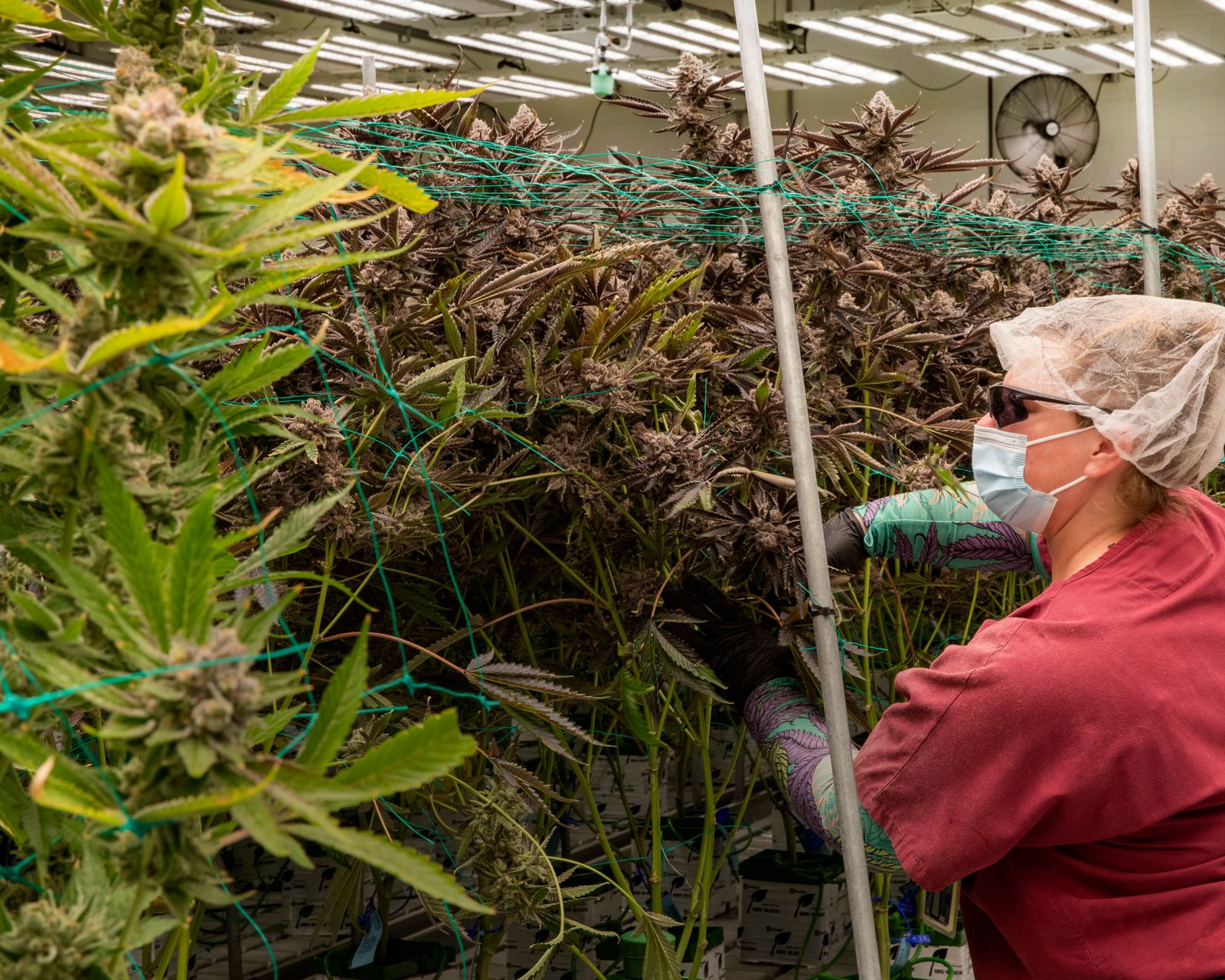
Most growers lose before they ever turn on a light — not because of bad technique, but because they chose the wrong genetics. Pick a sativa-dominant cultivar for a 1.2 × 1.2 m tent and you'll spend the back half of your grow watching stems press into the ceiling. Pick something bred for compact, efficient production and the whole game changes.
Under Canada's Cannabis Act, adults can cultivate up to four plants per household for personal use. That's four plants that deserve the right genetics from seed one.
What a Small-Space Cultivar Actually Looks Like
Before naming specific strains, it's worth building a clear picture of what you're actually hunting for when you browse a seed catalogue. The ideal candidate isn't just "short." It's a plant whose entire architecture — height ceiling, internode spacing, branching angle, flowering trigger, is optimised for life in a confined footprint.
There are four traits that matter most:
- Final canopy height under 100 cm: Anything taller risks burning on your reflector and makes defoliation awkward in a sealed tent. Indica-dominant genetics are your single most reliable proxy for this trait.
- Flowering time of 8–9 weeks or less: A shorter cycle means fewer disease-pressure days, faster reinvestment of your nutrients budget, and the real possibility of three or four harvests per year from the same footprint.
- Low stretch at flip: Many photoperiod plants double or even triple in height between the day you switch to 12/12 and the end of week three of flower. Low-stretch indica hybrids keep that multiplier well below 1.5×.
- High yield-to-volume ratio: Dense, resin-heavy colas that pack grams-per-centimetre-of-stem. Look for catalogue descriptors like "compact colas," "heavy internode stacking," and suitability for Sea of Green or SCROG configurations.
Once you internalise those four filters, you'll move through a seed catalogue ten times faster — and you'll stop impulse-buying that gorgeous 300 cm Thai sativa because it sounds exciting.
A Quick-Reference Trait Table
| Trait | Why It Matters | What to Look For |
|---|---|---|
| Compact Stature | Prevents canopy from contacting the light; keeps airflow lanes open | "Short," "bushy," or "stocky" — indica lineage is a reliable signal |
| Short Flowering Time | Faster turnover, less exposure to pest and mould pressure | Autoflowers excel here; target 8–9 weeks or under |
| Low Stretch at Flip | Makes height management predictable in sealed tents | Indica-dominant hybrids; avoid anything described as "lanky" or "stretchy" |
| High Yield-to-Size Ratio | Maximum return from every watt and every square centimetre | "Dense colas," "heavy producer," "ideal for SOG/SCROG" |
If you're just entering the hobby and want context on the regulatory and practical landscape before you commit to a setup, our deep-dive on what micro cultivators should know is worth your time before you spend a dollar on equipment.
Why Indica Genetics Dominate Compact Indoor Grows
Indica architecture evolved in the harsh, high-altitude environments of Afghanistan, Pakistan, and the Hindu Kush. Short internodes. Thick, broad leaves. Dense, rapidly-maturing colas designed to finish before the mountain winter arrives. That evolutionary pressure created exactly the plant you need in a 0.6 × 1.2 m tent.
Compare an indica-dominant hybrid against a sativa-leaning cultivar side by side in a 2 × 4 tent and the difference is stark. The sativa will stretch 60–90 cm in the first three weeks of flower alone, forcing emergency training, light raises, and supercropping sessions at 11 p.m. The indica will add perhaps 20–30 cm over the same window — predictable, manageable, and forgiving of the occasional missed training day.
Three structural advantages make indicas the consistent choice:
- Outward rather than upward growth: A bushy, horizontal canopy fills your light footprint efficiently without burning on the fixture.
- Dense bud formation: Tight internode stacking means more calyx-per-centimetre and heavier dry weights per plant.
- Environmental resilience: Classic indica lines handle minor VPD swings, brief nutrient imbalances, and imperfect humidity control with more grace than most equatorial sativas.
Predictability is the underrated metric in small-space cultivation. An indica cultivar that behaves exactly how you expect it to — staying at 80 cm, finishing in 56 days, producing dense colas, is worth more to a home grower than a higher-ceiling strain that surprises you in week four of flower.
Northern Lights: The Blueprint for an Indoor Indica
No conversation about compact indoor indicas is complete without Northern Lights, the iconic indica purebred that emerged from Afghani crosses in the 1980s and has never left the top tier of indoor cultivation. It isn't just historical reverence that keeps it relevant — it's the numbers.
Northern Lights typically tops out between 80 and 100 cm, making it perfectly suited to a 2 × 4 tent or even a large wardrobe closet. Flowering wraps in 7–9 weeks, and well-managed plants under quality LED deliver 450–550 g/m². That yield-to-footprint ratio is genuinely exceptional for a plant that demands so little vertical headroom.
If you prefer the simplicity of an automatic flowering trigger, the Northern Lights Auto preserves all that compact, resin-coated Afghani character while adding ruderalis speed — seed to harvest in roughly 70–75 days with zero light schedule management required. Both versions belong in every small-tent grower's shortlist.
Autoflowers: The Compact Grower's Express Lane
Autoflowering cultivars occupy a category of their own. The mechanics are simple: ruderalis genetics carry an internal timer that flips the plant from vegetative growth to flowering automatically, independent of your light schedule. You never need to switch from 18/6 to 12/12. You never lose a plant to an accidental light leak.
That single trait removes an entire category of error from your grow.
Beyond the automatic trigger, autoflowers are structurally compact by nature — most stay under 90 cm indoors, and their seed-to-harvest window is typically 8–10 weeks. To understand exactly how the genetics work and why they've become so popular with Canadian home growers, our primer on what autoflowering marijuana seeds are covers all the foundations in one place.
The Speed and Simplicity Advantage
Run the numbers on a 10-week autoflower cycle versus a typical 16–18-week photoperiod grow (including a 4–6 week veg) and the efficiency gap becomes obvious. You could complete four autoflower cycles in the time it takes to finish two photoperiod grows — potentially doubling your annual yield from the same square footage without upgrading a single piece of equipment.
Combine that with the manageable nutrients demand of most autoflowers (they generally want a lighter feeding schedule than photoperiod plants, especially in the first three weeks), and you have a cultivation experience that punishes fewer mistakes while rewarding consistent basic care.
Autoflowers combine compact structure with a rapid cycle and a forgiving temperament. For a grower working in a small tent, they aren't a compromise — they're an engineering solution.
Two Autoflower Standouts Worth Growing Right Now
At Pacific Seed Bank, two autoflowering cultivars consistently rise to the top of customer recommendations for compact indoor grows:
- Blueberry Auto — the indica-dominant Dutch classic in its most accessible form. Expect sweet myrcene-and-caryophyllene-dominant terpene expression, a forgiving growth habit that suits first-time growers, and dense blueberry-scented buds on a plant that rarely challenges your ceiling. Compact, flavourful, and genuinely hard to mess up.
- Northern Lights Auto — all the reliable, resinous Afghani genetics of the original in an even faster, simpler package. If your priority is maximum yield from minimum vertical space with the least possible fuss, this is the strain to reach for first.
The Best Strains for Your Specific Goals
Genetics match well to grower intent. Knowing what you want from a harvest — maximum weight, potency, flavour complexity, or sheer ease, helps narrow an enormous catalogue to a short, confident shortlist. Here are three cultivars that cover the spectrum of what compact indoor growers actually ask for.
Big Bud: Engineering Maximum Yield into Minimum Space
When yield is your primary metric, Big Bud is the answer. This indica-dominant hybrid has been a favourite of commercial-minded home growers since the 1980s for one reason: it produces absurdly dense, heavy colas on a plant that stays tidy and manageable indoors. Indoor yields regularly reach 600 g/m² — an extraordinary number for a cultivar this compact, in a flowering window of just 8–9 weeks.
The bud structure is its defining characteristic. Massive, tightly packed colas stack up on thick branches that are sturdy enough to hold the weight without staking. Terpene expression runs toward earthy, slightly sweet, classic indica. THC levels are robust without being overwhelming, making for a deeply relaxing finish to a hard day.
We offer Big Bud Auto for growers who want that same high-yield genetics with zero light schedule management. The feminised photoperiod version suits growers who want to extend the vegetative phase for maximum plant development before flip — a worthwhile strategy if you have the time.
A direct comparison of the two formats:
- Big Bud Feminized: More control over canopy size via extended veg; responds well to SCROG training; longer total cycle but a larger plant footprint at harvest.
- Big Bud Auto: Faster overall cycle; less control over timing but more predictable height; lower maintenance threshold; ideal for growers who want to maximise annual harvest cycles.
Girl Scout Cookies: Potency and Structure in One Package
Girl Scout Cookies (GSC), the legendary OG Kush × Durban Poison hybrid, earns its place in a compact tent not just because of its reputation for potency and complex terpene profile — a signature blend of caryophyllene, limonene, and myrcene that delivers earthy sweetness with a hint of mint, but because its architecture genuinely behaves itself indoors.
GSC builds a strong central cola flanked by sturdy lateral branches that don't sprawl aggressively. When you flip to flower, stretch is minimal and predictable. The plant fills out its space efficiently without pressing into tent walls or climbing toward the light.
It responds exceptionally well to Low-Stress Training. Spend twenty minutes in week three of veg gently bending and tying branches into a horizontal plane and you'll transform a modest Christmas-tree shape into a wide, flat canopy where every bud site gets direct light from your fixture. The result at harvest is dramatically more consistent bud development top to bottom — and a noticeably heavier dry weight than untrained plants of the same genetics.
Why GSC makes the cut for compact setups:
- Naturally bushy without sprawling — fills a small tent without touching the walls
- Rock-hard, resin-coated buds — dense calyx stacking means impressive dry weights from a small canopy
- Minimal stretch at flip — height stays predictable and manageable throughout flower
- Excellent LST response — branches are flexible early in veg and hold position well once tied
Training Techniques That Multiply Your Results
Genetics set the ceiling; training determines how close you get to it.
Even the most compact, well-behaved cultivar will leave yield on the table if it grows untrained as a single-cola Christmas tree shape. The lower two-thirds of that plant will be producing underdeveloped popcorn buds starved of direct light while the top cola monopolises your fixture's output. Training corrects that imbalance — and it costs nothing but time.
Low-Stress Training: The Foundation Technique
Low-Stress Training (LST) is exactly what it sounds like: you guide the plant's growth with gentle bends and soft ties rather than cuts or breaks. The goal is to flatten the canopy so that every bud site is at roughly the same distance from your light source, maximising photon exposure across the entire plant.
Here's a step-by-step approach that works well for most indica and hybrid cultivars:
- Start early: Begin LST once the plant has 3–4 nodes. Stems are flexible at this stage and bend without snapping. Waiting too long means woody, brittle stems that resist training.
- Bend the main stem: Slowly and gently curve the main stem until it runs nearly parallel to the soil surface. Move gradually over two or three days if the plant shows any resistance.
- Secure to the pot: Use soft plant ties or coated wire to anchor the bent stem to a hole in the pot rim or a low stake. Do not use anything that cuts into the stem.
- Redirect lateral branches: As side branches reach upward toward the new apex, gently pull them outward and tie them down as well, building an expanding, flat canopy.
- Maintain and adjust: Check ties every two to three days. Untie and re-anchor any branch that has outgrown its position and needs redirecting.
This process redistributes auxins — growth hormones concentrated in the apical tip, more evenly across the plant, triggering multiple lateral branches to behave as primary colas. The result is a "manifold" of equally-developing tops rather than one dominant cola and a skirt of weak popcorn.
LST turns a Christmas tree into a tabletop. More bud sites receiving direct, full-intensity light equals a heavier, more consistent harvest from every plant you put in that tent.
Lollipopping, SCROG, and When to Use Each
Once you're comfortable with LST, two natural next steps open up additional yield gains.
Lollipopping — removing the lower third to half of a plant's foliage and underdeveloped bud sites during early flower, redirects the plant's energy from weak lower growth to the main canopy above. Learn exactly what lollipopping is and how to time it correctly before you reach for the scissors; done at the right moment (typically day 10–14 of flower for most indicas), it measurably increases top-cola density. Done too late, it stresses the plant unnecessarily.
The Screen of Green (SCROG) method takes LST principles and scales them across an entire tent. A horizontal net or screen positioned 30–40 cm above the pots allows you to weave branches through openings as they grow, building an almost perfectly even canopy across the full width of your light footprint. It requires more setup than LST alone but delivers outstanding light utilisation efficiency — every watt you're paying for reaches a productive bud site.
The practical comparison between the two approaches:
- LST alone: Minimal equipment, easy to learn, suitable for autoflowers (which don't respond well to heavy defoliation or SCROG confinement), lower time investment per session.
- SCROG + LST: Higher setup effort, best suited to photoperiod feminised cultivars with a controlled veg period, delivers the most consistent canopy and typically the highest yields per square metre.
Your Most Common Small-Grow Questions, Answered Directly
How Many Plants Fit in a 2 × 2 Tent?
One to four, depending on training method and genetics. A single large indica trained with LST or SCROG can fill a 60 × 60 cm tent completely on its own. Two plants trained to spread outward works well for most compact indicas. If you're running a Sea of Green approach — many small plants in individual containers flipped to flower early, four plants in small pots is practical and productive.
The non-negotiable rule is airflow. Tight canopies in sealed tents with inadequate circulation create the humidity pockets and stagnant air that mould and powdery mildew thrive in. If you're just starting out, run one or two plants, learn how they fill your specific tent, and scale up on the next cycle.
Feminised or Autoflower: Which Is Better for a Small Grow?
Neither is objectively superior. They suit different priorities.
Feminised photoperiod seeds give you control. You determine how long the plant stays in veg, how large it gets before flower, and how much training time you have. They respond well to SCROG setups and extended LST regimens. The tradeoff is a longer total cycle and the responsibility of managing light schedules correctly.
Autoflowers give you speed and simplicity. They stay compact naturally, finish in 8–10 weeks from seed, and never require a light schedule change. They're the better choice for beginners, for growers who want frequent harvest cycles, and for anyone who values a low-maintenance grow above all else. The tradeoff is less control — you can't extend veg to recover from training stress the way you can with a photoperiod plant.
At Pacific Seed Bank, every seed in the catalogue is either feminised or autoflowering — no risk of males, no wasted space, no surprises.
What Light Does a Small Tent Actually Need?
For a 60 × 60 cm (2 × 2 ft) tent, a quality full-spectrum LED in the 100–150 W range is sufficient. For a 60 × 120 cm (2 × 4 ft) tent, target 200–250 W. Modern quantum-board LEDs deliver exceptional photon efficiency and generate far less heat than HPS equivalents — critical in a confined space where temperature management is already challenging.
The full-spectrum requirement matters. A light that covers both the blue end (400–500 nm) for vegetative growth and the red end (620–700 nm) for flower will serve you across the entire cycle without supplementation. Don't underspecify your light to save money upfront — it's the single piece of equipment with the most direct relationship to your final yield and bud density. Every harvest is the return on that investment.
Small tents produce serious harvests when the genetics, training, and environment are dialled in together. Start with compact indica or autoflowering cultivars that are genuinely engineered for your square footage, layer in basic LST early, keep your VPD and airflow consistent, and the ceiling on what a 1.2 × 1.2 m tent can produce will consistently surprise you. Check out our full catalogue at Pacific Seed Bank — with over 1,400 feminised and autoflowering cultivars, your next compact powerhouse is already in the collection.
Keep Reading

How Much Does It Cost To Grow Your Own Weed in Canada?
Learn the real costs of growing weed at home, including grow tents, lights, seeds, nutrients, electricity, and how much cannabis you can harvest.
The 5 Best Blueberry Cannabis Strains To Grow Indoors
Find the best blueberry weed strains to grow indoors, including Blue Dream, Blueberry Cheesecake, and more - and buy the seeds from Pacific Seed Bank.
Why 5.8–6.5 Is The Ideal pH for Cannabis (And When to Adjust)
Learn why 5.8-6.5 is the ideal pH for cannabis plants, how to test your plant's pH, and how to adjust it higher or lower when you need to.
The Best Autoflowering Light Schedule For Bigger Yields
Stop guessing your autoflowering light schedule. Our guide breaks down the 18/6, 20/4, and 24/0 schedules to help you grow bigger, better plants.