Pot Leaves Curling? Here Are the Causes and Quick Fixes
17 min read · , updated May 14, 2026
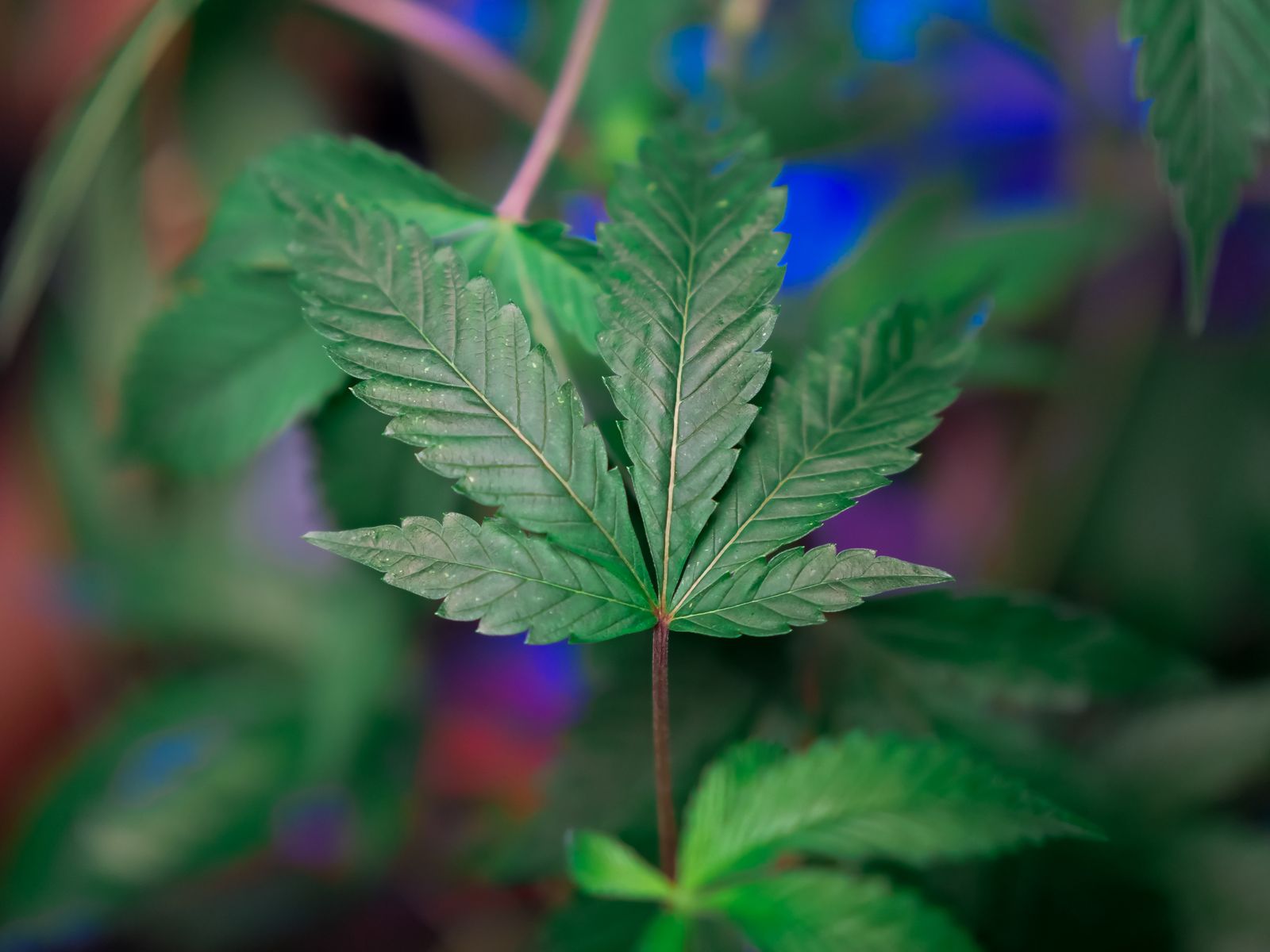
You walk into your grow room, coffee in hand, ready for a routine check — and there it is. Half your canopy is doing something it wasn't doing yesterday. Some leaves are taco-ing upward, others are clawing down like a bird of prey, and one or two look like they've simply given up entirely. Before you reach for any bottle or dial, take a breath. Curling leaves are a communication, not a catastrophe. Your plant is fluent in distress signals; your job is to learn the language.
Your First Clue: The Direction of the Curl
Direction is everything. The way a cannabis leaf curves tells you almost immediately which organ system is under stress — and that narrows your diagnostic window from dozens of possibilities down to a handful.
Leaves curling upward — forming that classic taco or canoe shape along the margins, almost always point to an environmental problem above the soil line: excessive heat, light intensity that's too high, or vapour pressure that's pulling moisture out of the leaf faster than the roots can replace it.
Leaves curling downward — the heavy, drooping "claw", typically signal a root-zone problem. Overwatering, nitrogen toxicity, or a medium that has become compacted and anaerobic will all produce that signature downward curl. The texture of the leaf seals the diagnosis: firm and swollen means too much water; brittle and papery means not enough.
Here are the five major categories that account for the vast majority of curling cases:
- Environmental stress: Temperature, light distance, airflow, and VPD imbalances.
- Watering errors: Both overwatering and underwatering produce drooping, though they feel completely different to the touch.
- Nutrient problems: Excess nitrogen is the single most common trigger for the downward claw; lockout from pH drift mimics deficiency even when the medium is fully loaded.
- Pests and disease: Spider mites, aphids, and fungal root issues create erratic, asymmetric curling that doesn't fit neatly into the up/down framework.
- Genetics: Some cultivars express mild leaf cupping as a phenotypic trait under perfectly normal conditions — a quirk, not a crisis.
Before you change a single thing: Observe for five minutes. Note which leaves are affected — top canopy only, or whole plant? One side of the room, or uniformly distributed? That context cuts your diagnostic time in half.
Use the table below as your triage tool. Match your symptom, identify the likely cause, and jump directly to the relevant section.
| Symptom | Most Likely Cause | Section to Read |
|---|---|---|
| Edges curl up like a taco or canoe | Heat or light stress | Checking Your Grow Room's Environment |
| Leaves claw downward, feel heavy and droopy | Overwatering | Tackling Common Watering Problems |
| Tips claw down, leaves are dark waxy green | Nitrogen toxicity / nutrient burn | Nutrient Issues That Cause Leaf Curling |
| Leaves curl down, feel dry and papery | Underwatering | Tackling Common Watering Problems |
| Random curling with spots, stippling, or webbing | Pests or root disease | Finding Pests and Other Hidden Stressors |
Checking Your Grow Room's Environment
If your pot leaves are taco-ing upward — margins rolling in toward the midrib to form a narrow canoe, start here. The plant isn't being dramatic; it's executing a perfectly rational survival strategy. By reducing its exposed leaf surface area, it slows transpiration and limits moisture loss under conditions that are simply too hot or too bright.
Taming the Temperature
The sweet spot for most autoflowering and feminised cultivars during the lights-on period sits between 21–29°C (70–85°F). Once you drift consistently above 29°C (85°F), heat stress becomes measurable: enzyme function in the leaf degrades, stomata clamp shut, and that characteristic upward curl sets in within hours. Some grower surveys suggest that up to 40% of first-time cultivators experience heat-related curling during their initial grow — largely because the problem develops gradually and then seems sudden.
A small oscillating fan positioned to sweep across the canopy — not blasting directly at stems, is often all it takes to break up that stagnant heat layer sitting right above the tops. If ambient room temperature is the culprit rather than canopy stagnation, you'll need to assess your exhaust capacity. A properly dialled-in grow tent setup with matched intake and exhaust CFM ratings handles heat proactively, rather than reactively.
Diagnosing Light Burn
Heat stress and light burn frequently travel together, but they're distinct problems with a subtle visual difference. Light burn affects only the uppermost leaves — the ones physically closest to the fixture, while the lower canopy looks completely healthy. Those top leaves will curl upward and often begin to turn yellow or bleach out at the tips, even as new growth pushes through normally below.
Every fixture — LED, HPS, CMH, has a manufacturer-recommended hanging distance. Respect it. But for a fast field check:
The Hand Test: Hold your palm face-down at the height of your tallest cola. If the back of your hand feels uncomfortably warm after 30 seconds, the light is too close. Raise it 5–8 cm and retest. It costs nothing and takes half a minute.
Vapour Pressure Deficit: Why Humidity Matters More Than You Think
Humidity isn't just about mould prevention — it's a direct driver of how hard your plants have to work to move water from root to leaf tip. The concept underpinning this is Vapour Pressure Deficit (VPD): the difference between the amount of moisture the air currently holds and the maximum it could hold at that temperature. When VPD is too high (air too dry relative to temperature), leaves transpire at an unsustainable rate and curl under the stress. When VPD is too low (air too humid), transpiration slows to a crawl and the conditions that breed powdery mildew and botrytis take hold.
- Seedling and early veg: Target 65–70% RH at 22–25°C.
- Mid-veg to pre-flower: Drop to 50–60% RH as stems thicken.
- Flowering: Bring it down to 40–50% RH to protect dense buds from rot.
- Final two weeks: 35–45% RH encourages resin production and reduces mould risk.
Investing in a quality thermometer/hygrometer combo — many are available for under $30 CAD, gives you all the data you need to manage VPD without guesswork. If you're fighting low humidity and watching leaves curl from excess transpiration, a simple ultrasonic humidifier placed at canopy level, with its output monitored by that hygrometer, is your most cost-effective fix. Getting temperature and humidity working together transforms your plant's ability to process nutrients efficiently and resist every other category of stress.
Tackling Common Watering Problems
Watering is simultaneously the simplest and most misunderstood skill in cannabis cultivation. Two growers can follow identical "water every X days" schedules and produce completely opposite results — one root-rotted, one bone dry, because pot size, medium composition, ambient humidity, and plant size all change the equation every single week of the grow.
Overwatering is far more common than underwatering, and it's counterintuitively more dangerous. When roots sit in saturated, oxygen-depleted medium, they begin to suffocate. Cell death follows. Root rot pathogens — Pythium species, primarily, colonise the damaged tissue with alarming speed. The leaves respond by drooping heavily downward, swollen with water that the failing root system can no longer manage. The plant looks more sad than sick, which is why overwatering often goes uncorrected for too long.
Underwatering produces a visually similar droop but with one critical difference in texture. Underwatered leaves feel thin, papery, and crisp — desiccated rather than swollen. Lift a leaf: if it flexes without resistance like dry paper, the plant is thirsty. If it feels turgid and heavy, it's waterlogged.
The Lift Test: Your Most Reliable Watering Tool
Forget finger-depth soil checks. They're too imprecise and too shallow to reflect what's happening in the root zone. The pot-lift method is foolproof.
- Water your plant thoroughly until you see runoff from the drainage holes.
- Immediately lift the pot and memorise that weight — saturated medium is your baseline.
- Return every day and lift again. No need to water until the pot feels noticeably lighter — almost alarmingly so, like it's full of dry sand.
- That's your watering window. Every cultivar, every pot size, every stage of growth will give you a different interval, and the pot tells you exactly what it is.
Key Takeaway: A plant in peak flower with a heavy canopy will drink two to three times as much water as the same plant in early veg. A fixed watering schedule fights against the plant rather than with it. Let the pot weight — not the calendar, be your guide. For a deeper look at timing and technique, our full guide on watering cannabis plants covers every growth stage in detail.
Why Drainage Is Non-Negotiable
Perfect watering technique is wasted if excess water has nowhere to escape. Cannabis roots need both water and oxygen, and they get that oxygen from the air pockets that form as the medium dries between waterings. Dense, compacted soil with poor drainage destroys those air pockets and keeps roots in a perpetual state of mild oxygen deprivation — which manifests, predictably, as persistent downward curling and slow, stunted growth.
Pots need generously sized drainage holes — multiple, not just one, and your growing medium should actively support drainage. A soil mix amended with 20–30% perlite, or a coco coir blend, creates the structure that allows both excellent water retention and rapid drainage. Coco in particular drains almost instantly, which is why it's the preferred medium for many experienced growers running high-frequency, low-volume irrigation.
One more variable that sits at the intersection of watering and plant health: the pH of your irrigation water. If you're nailing your watering cadence but still seeing droopy, stressed leaves, check your pH before anything else. For soil, target 6.0–7.0. For coco or hydroponic systems, aim for 5.5–6.5. If your source water is running alkaline — which is common across much of Canada, you'll want to learn how to raise the pH of water in both directions and find your target range precisely.
Nutrient Issues That Cause Leaf Curling
You've ruled out heat, light, and watering. Your environment is stable, your medium drains well, and yet those leaves are still clawing. The next stop is nutrition — and this is where a lot of enthusiastic growers do the most unintentional damage, usually by giving their plants too much of a good thing.
Nutrient Burn: The Nitrogen Claw
The single most recognisable nutrient-related leaf symptom in cannabis is the nitrogen toxicity claw. The leaves turn a deep, almost artificial-looking waxy green — darker than healthy plant tissue, and the tips curl sharply downward and inward, like a talon or a clenched fist. It's caused by an excess of available nitrogen overwhelming the plant's capacity to process and utilise it.
This is especially prevalent in high-input environments. According to data from Royal Queen Seeds, overfertilisation affects between 30–50% of plants in hydroponic systems, where nutrient concentration is tightly controlled by the grower and any error is immediately expressed in the root zone. A 2023 grower survey found that 28% of cultivators identified nutrient burn as the primary driver of their leaf curl issues — and if left uncorrected, the yield penalty can range from 10–20% of final production. The comparison is instructive: a plant in perfect nutritional balance produces dense, resinous buds; a chronically overfed plant diverts energy into managing toxicity rather than building flowers.
Nutrient Lockout: When the Problem Is pH, Not Feeding
Here's the scenario that trips up even experienced growers: you're feeding on schedule, your solution looks right, but your plant is showing what looks like a deficiency — yellowing, curling, slow growth. You add more nutrients. Nothing improves. You add more. It gets worse.
You're not dealing with a deficiency. You're dealing with lockout.
Cannabis roots can only absorb specific nutrients within specific pH windows. Outside those windows, the nutrients are chemically present in the medium but physically unavailable to root hairs. Iron, manganese, and zinc lock out in alkaline conditions. Calcium and magnesium become unavailable when pH crashes too low. Adding more fertiliser when lockout is the issue compounds the problem — you're increasing salt load and pushing the pH further from its ideal, not solving anything.
For soil grows, the target root-zone pH is 6.0–7.0. For coco and hydro, it's 5.5–6.5. Measure your runoff, not just your input water.
How to Diagnose and Reset: The Runoff Test
Two tools change the game entirely: a quality pH pen and a PPM/EC metre. Together, they give you a complete picture of what's actually happening in the root zone, not just what you think you put in.
- Water with pH-balanced water until you collect at least 20% of your input volume as runoff.
- Collect that runoff in a clean tray and test both pH and PPM/EC immediately.
- Runoff pH outside your target range = lockout. Runoff PPM significantly higher than input PPM = salt buildup and burn risk.
For both burn and lockout, the corrective action is the same: a thorough flush with plain, pH-balanced water. Run two to three times the container volume through the medium to dissolve and evacuate accumulated salts. Allow the medium to dry down normally, then reintroduce nutrients at roughly 50% of your previous dose, building back gradually. Once you've reset the root zone, our complete guide to nutrients for your cannabis plant will help you dial in a feeding programme that matches your cultivar's actual demands across each growth stage.
Finding Pests and Other Hidden Stressors
Environment is perfect. Watering is calibrated. Nutrient chemistry is balanced. And yet those leaves are still doing something weird — curling asymmetrically, twisting rather than folding, developing tiny bronze or silver specks alongside the curl. This is the pest pattern: erratic, inconsistent, and frustratingly difficult to pin down until you get a magnifying glass involved.
The Usual Suspects
Cannabis attracts a predictable cast of pests, and each leaves a characteristic signature:
- Spider mites (Tetranychus urticae): The most common indoor cannabis pest in Canada's dry winter climate. Look for stippled, silver-grey spots on the upper leaf surface — these are feeding scars where the mites have punctured individual cells. Turn the leaf over and look for fine, silky webbing along the midrib and in the angles between veins. By the time you see webbing, the colony is already established.
- Aphids: Soft-bodied, pear-shaped insects in green, black, or pale yellow. They cluster on new growth and the undersides of fan leaves, feeding on phloem sap and excreting a sticky substance called honeydew. Left unchecked, that honeydew becomes a substrate for sooty mould, which further compromises the leaf's ability to photosynthesise.
- Fungus gnats: The adults are harmless; the larvae are not. Fungus gnat larvae feed on root hairs and beneficial mycorrhizal networks in the medium, causing root damage that expresses as generalised wilting and drooping above the soil — symptoms nearly identical to overwatering.
Get into the habit of inspecting the undersides of your five or six largest fan leaves every single day. Populations that look manageable on Monday can be a full infestation by Thursday. Catching a colony of twenty spider mites is a completely different problem from catching a colony of two thousand.
First Line of Defence: A quality insecticidal soap or a diluted neem oil spray applied during the lights-off period handles early-stage infestations without chemical residue concerns. Apply thoroughly — top and bottom of every leaf, and repeat every three to four days for two weeks to break the reproductive cycle. Never spray under active lighting; the combination of moisture and intense light can cause significant leaf burn.
When the Problem Is Below the Surface
You've inspected every leaf surface and found nothing. The plant is still declining. Go underground.
Root-bound plants are one of the most commonly overlooked causes of persistent leaf curl and slow decline. As the root mass expands to fill the container, roots begin circling the bottom and compressing against the walls. Once that tangled mat forms, water distribution becomes uneven — some zones stay wet while others dry out completely, and nutrient uptake slows as root hairs lose contact with fresh medium. The plant above responds with generalised stress: wilting between waterings, slowed internode development, and leaves that curl and droop without any obvious environmental or nutritional cause.
The diagnostic is simple: gently tip the plant out of its pot. If you see a solid, dense root mass with almost no visible growing medium — or roots spiralling around the base, it's time to transplant into a container one to two sizes larger. Use the transplant as an opportunity to refresh the medium, work in some fresh perlite for drainage, and give those roots the physical space they need to function properly. The recovery is often dramatic and rapid.
Proactive Habits That Keep Leaves Healthy
Prevention isn't glamorous. But experienced growers who rarely deal with curling leaves aren't lucky — they're systematic. They've built a handful of consistent habits that make their grow rooms inhospitable to the conditions that cause problems in the first place.
Start With Resilient Genetics
The foundation of a low-stress grow is choosing cultivars bred for robustness. Some autoflowering and feminised strains are simply more forgiving of minor environmental fluctuations, pH drift, or inconsistent watering — particularly those with strong ruderalis genetics in their background, which evolved in harsh, variable conditions. If you've been battling recurring issues across multiple grows, your strain selection is worth reconsidering. Pacific Seed Bank Canada carries hundreds of rigorously selected autoflowering and feminised cultivars, no regular seeds, which means every plant you start is a productive female, and the catalogue includes options suited to every experience level and environmental constraint.
Build Your Toolkit Deliberately
You don't need expensive equipment to grow excellent cannabis. You do need accurate instruments. A quality pH pen and PPM/EC metre, both calibrated regularly against known solutions, eliminate the two most common sources of diagnostic error: guessing at pH and guessing at nutrient strength. A simple thermometer/hygrometer combo tracks your VPD variables in real time. Together, these three tools — available for well under $100 CAD combined, give you more actionable data than any grow book can provide in the abstract.
Your Daily Five-Minute Inspection Routine
The growers who catch problems earliest aren't necessarily the most knowledgeable — they're the most observant. A brief, structured daily check-in gives you a rolling baseline against which any change becomes immediately visible.
- Leaf colour and texture: Still that vibrant, saturated green? Any new spots, stippling, or discolouration since yesterday?
- Undersides of fan leaves: The most common pest habitat. Inspect three to five large leaves from different parts of the canopy.
- Pot weight: The lift test takes three seconds. It tells you whether to water or wait.
- Canopy shape: Are tops reaching toward the light uniformly, or is one side stressing more than the other? Asymmetric stress usually points to a localised environmental issue — a hot spot, a dead zone in airflow.
- Equipment status: Fan oscillating? Thermometer in range? Exhaust running at the right speed for the current temperature? Gear fails quietly, and the plant pays the price before you notice.
Contrast this approach with the reactive grower who checks every few days: by the time a problem is obvious enough to notice on a sporadic schedule, it's already advanced. Daily observation converts what could be a week-long crisis into a one-afternoon correction.
FAQs
Can Curled Leaves Actually Recover?
Yes — with one important distinction. Once you've correctly identified and addressed the cause, new growth should emerge flat, vibrant, and healthy within a few days. The leaves that were already curled when you made the fix may never fully flatten out, and that's completely normal. Damaged cell structure doesn't reverse. What matters is that the problem stops progressing and that fresh growth comes in clean. Don't fixate on cosmetically imperfect older leaves if the rest of the plant is clearly recovering.
Is It Normal for Lower Leaves to Curl and Yellow?
Often, yes. As a cannabis plant matures and the canopy fills in, the lower fan leaves — particularly those receiving less than 10% of the light hitting the tops, become metabolically inefficient. The plant redistributes their stored nutrients upward and sheds them. One or two yellowing, slightly curling fan leaves at the very base of an otherwise thriving plant is normal senescence, not a symptom of disease.
If the yellowing and curling are spreading upward through the plant rather than staying confined to the lowest, most shaded leaves, that's when you investigate. Our guide on yellow cannabis leaves covers the full spectrum of causes — from mobile nutrient deficiencies to light deprivation, so you can distinguish normal leaf cycling from a genuine problem.
Does the Growing Medium Affect Leaf Curl?
Significantly. Coco coir and soil behave like completely different ecosystems, and treating them the same way is one of the most common causes of chronic leaf curl in home grows. Coco is an inert substrate — it holds almost no nutrients of its own, so it requires consistent feeding every watering, whereas quality living soil can sustain a plant for weeks on its own biology. Coco also drains extremely fast, meaning it needs more frequent watering than soil. Applying a soil-frequency watering schedule to a coco grow leads directly to drought stress and curling; applying a coco-frequency schedule to soil leads straight to waterlogging. Match your practice to your medium, always. And if you're running a hydroponic system, your nutrient management needs to be even more precise, as issues escalate faster in water culture than in any solid medium. Your nutrients programme should always be calibrated to what your medium actually requires.
How Quickly Should I See Improvement?
Faster than most growers expect, actually. Correct the environmental or nutritional cause and you should see healthy new growth emerging from the apical meristem within two to four days. The previously curled leaves will likely stay deformed — again, cell damage doesn't reverse, but the rate of new damage stops immediately once the stressor is removed. That cessation of spread, combined with clean new growth pushing from the tops, is your confirmation that the diagnosis was correct and the fix has worked.
Curling leaves are never random. They follow patterns, respond to logic, and — once you understand the language, they become one of the most useful diagnostic tools you have. Build the daily observation habit, invest in basic measurement instruments, choose genetics that work with your environment rather than against it, and most leaf problems resolve themselves before they become yield-limiting. The growers who consistently harvest heavy, resinous buds aren't the ones who never encounter problems, they're the ones who spot problems early, diagnose accurately, and correct with confidence. That's a skill set any grower can build, one inspection at a time. For more expert cultivation guides and to explore our full catalogue of robust Canadian-ready genetics, visit the growing marijuana blog at Pacific Seed Bank Canada.
Keep Reading

How Much Does It Cost To Grow Your Own Weed in Canada?
Learn the real costs of growing weed at home, including grow tents, lights, seeds, nutrients, electricity, and how much cannabis you can harvest.
The 5 Best Blueberry Cannabis Strains To Grow Indoors
Find the best blueberry weed strains to grow indoors, including Blue Dream, Blueberry Cheesecake, and more - and buy the seeds from Pacific Seed Bank.
Why 5.8–6.5 Is The Ideal pH for Cannabis (And When to Adjust)
Learn why 5.8-6.5 is the ideal pH for cannabis plants, how to test your plant's pH, and how to adjust it higher or lower when you need to.
The Best Autoflowering Light Schedule For Bigger Yields
Stop guessing your autoflowering light schedule. Our guide breaks down the 18/6, 20/4, and 24/0 schedules to help you grow bigger, better plants.