Why 5.8–6.5 Is The Ideal pH for Cannabis (And When to Adjust)
12 min read · , updated May 14, 2026
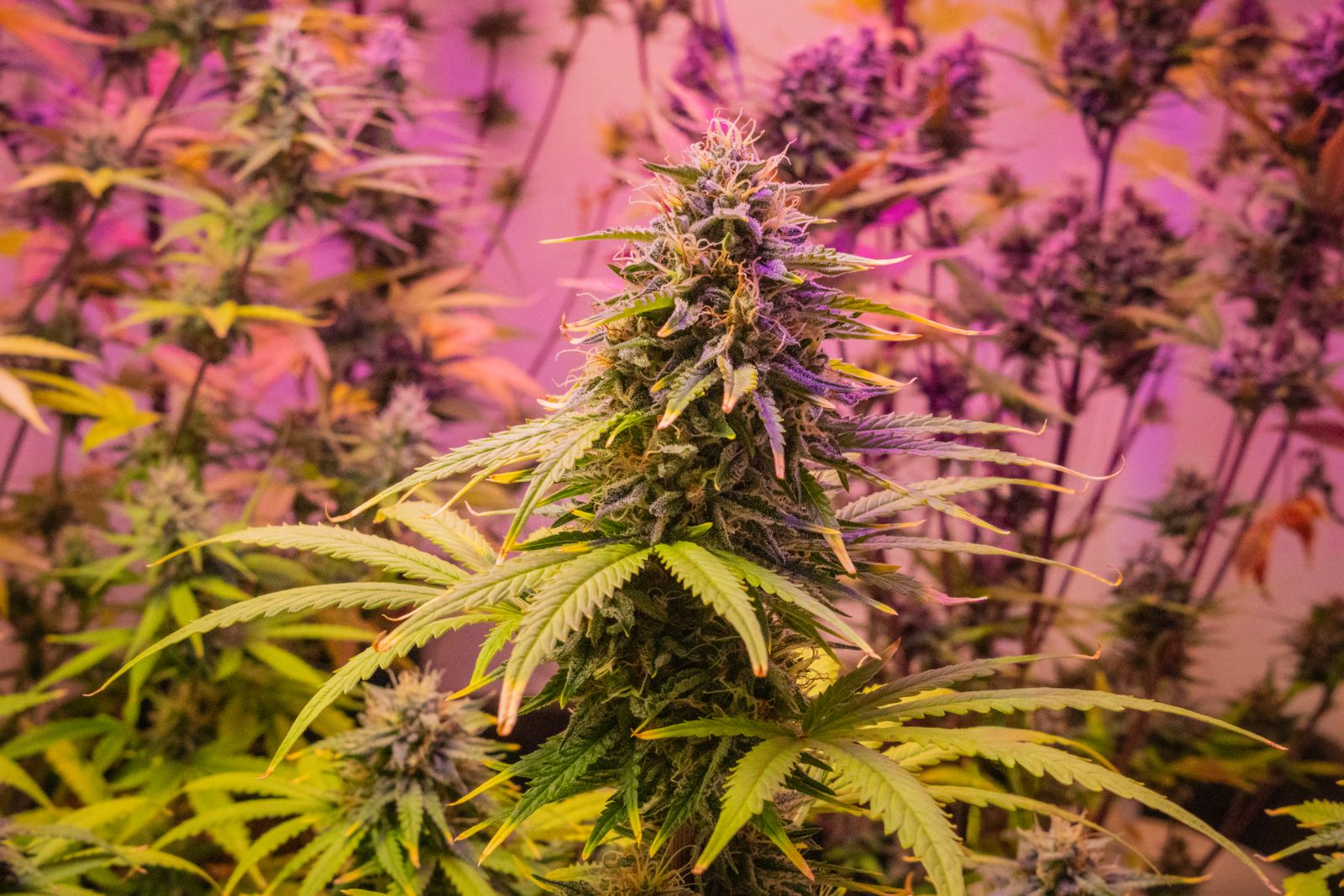
Your plant is sitting under perfect lights, drinking a carefully measured nutrient solution, and still looks like something is wrong. Leaves are yellowing at the tips. Growth has stalled. You chase an iron deficiency, then a nitrogen problem, then wonder if the genetics are just bad. Meanwhile, the real culprit — a pH reading that drifted a single point out of range, is quietly locking your plant out of everything you've been feeding it. That's how decisive pH is in a cannabis grow. Not dramatic, not obvious, just silently in control of whether all your other effort actually pays off.
The 5.8 to 6.5 range isn't arbitrary. It's the window where cannabis roots can access the full spectrum of macro and micronutrients you're providing. Step outside it consistently, and even a flawless setup will underperform. Understanding why that range exists — and precisely when to act on a reading outside it, is what separates growers who troubleshoot effectively from those who chase phantom deficiencies all season long.
What pH Actually Controls in Your Root Zone
pH is a measure of hydrogen ion concentration — how acidic or alkaline your water, soil, or nutrient solution is on a 0-to-14 scale, with 7 as neutral. Cannabis roots operate best in slightly acidic conditions, which is why the ideal range sits below that neutral midpoint.
But pH isn't just a number to log in your grow journal. It's the gatekeeper for nutrient availability.
At the root level, your plant draws in macronutrients — nitrogen (N), phosphorus (P), potassium (K), and critical micronutrients including calcium, magnesium, iron, manganese, and zinc. Each of those nutrients has a specific pH window where it's soluble and accessible to root cells. Outside that window, the nutrient doesn't disappear, it's still physically present in your medium or solution, but it bonds to molecules in ways the plant's uptake mechanisms can't work with. This is nutrient lockout, and it's entirely pH-driven.
This is the mistake that costs growers the most time and money: misreading lockout as deficiency, then adding more nutrients into a root zone that already can't absorb what's there. The fix was never more feed. It was always the pH.
Soil, Hydroponics, and Coco: Why Your Target Range Shifts by Medium
There is no single perfect pH number for cannabis. The right target depends entirely on what your roots are living in. Each medium has a different chemical relationship with pH, and understanding that relationship tells you how tightly you need to manage your readings.
Soil: 6.0–6.5, with Room to Breathe
Soil is the most forgiving medium for pH management, and the reason is buffering capacity. Organic matter, clay particles, and beneficial microbial activity all help absorb minor pH swings before they reach the root zone in a way that matters. A reading of 6.2 one feeding and 6.4 the next won't cause visible stress in a healthy living soil. That's why experienced growers using amended soil often water freely and monitor trends over time rather than chasing individual readings.
The target for cannabis in soil is 6.0 to 6.5. In that window, nitrogen, phosphorus, potassium, calcium, and magnesium are all available simultaneously — the kind of balanced uptake that drives vigorous vegetative growth and resinous flowering.
Hydroponics: 5.5–6.0, No Buffer, No Margin
Switch to a recirculating hydroponics system and the rules change immediately. There is no buffering at all. Your nutrient solution pH is your root zone pH, full stop. Any shift in the reservoir hits the roots within hours.
Most hydro growers target 5.5 to 6.0. Some deliberately let pH drift within that narrow band — intentionally cycling between 5.5 and 6.0 across feedings, to ensure that the full range of nutrients passes through an accessible window at some point during the week. It's a smart technique in systems like deep water culture (DWC), where roots are submerged continuously. A calibrated digital pH meter becomes part of the daily routine in any hydro setup, not optional equipment.
Coco Coir: 5.8–6.2, Closer to Hydro Than Soil
Coco coir occupies an interesting middle ground. It drains freely like a hydroponic medium and has little of the buffering capacity you'd expect from soil, but it does interact chemically with calcium and magnesium ions in ways that make it behave like neither category perfectly. Most experienced coco growers target 5.8 to 6.2 and treat pH management with the same discipline they'd apply to hydro — testing every feeding, adjusting after nutrients are mixed in, never assuming yesterday's number still holds.
In short: the more inert and fast-draining your medium, the tighter and lower your pH target needs to be.
What Happens When pH Drifts Too High or Too Low
The symptoms of pH problems are so similar to genuine nutrient deficiencies that misdiagnosis is the norm, not the exception. Knowing what each direction of drift looks like gives you a meaningful head start.
Low pH (Below 5.5 in Hydro, Below 6.0 in Soil)
An acidic root zone disrupts the availability of calcium and magnesium first — two nutrients that become increasingly unavailable as pH drops. You'll typically see:
- Slow, stunted growth with dark or muted leaf colouration
- Brown spotting or edge burn, particularly on older leaves
- Root browning or sliminess in hydro systems
- Overabundance of manganese and iron, which can become toxic at very low pH
The root system itself suffers in highly acidic conditions. Compromised roots mean compromised everything — uptake, immune response, structural support for the canopy.
High pH (Above 6.5 in Soil, Above 6.0 in Hydro)
High pH is statistically the more common problem for Canadian growers, largely because municipal tap water tends to run alkaline — often 7.0 to 7.5 straight from the tap. When your root zone climbs too alkaline:
- Iron, manganese, and phosphorus become locked out first
- Interveinal chlorosis (yellowing between leaf veins) appears, especially on new growth
- Leaves may come in pale, small, and underdeveloped
- Overall growth rate slows as the plant struggles to photosynthesise efficiently
- Magnesium and calcium, while still technically present, may become partially unavailable at the higher end of the alkaline range
High-pH symptoms are often mistaken for a nitrogen or iron deficiency. Growers add chelated iron or bump up their nitrogen feed, see no improvement, and conclude the genetics are weak. The genetics were fine. The pH wasn't.
The Lockout Mechanism Explained
Nutrient lockout is worth understanding at a slightly deeper level, because it explains why adding more feed never solves a pH problem. At the root surface, nutrient ions cross into the plant through specialised transport proteins in root cell membranes. Those proteins function within specific electrochemical conditions — conditions that are directly influenced by the hydrogen ion concentration in the surrounding solution. When pH is too high or too low, those membrane proteins either bind nutrients in forms they can't transport, or the surrounding chemistry simply overwhelms the transport mechanism. The nutrient sits at the door but cannot get in. Flooding the solution with more of that nutrient only increases the concentration of something that still can't be absorbed.
Fix the pH first. Then, and only then, reassess whether you actually need to adjust your feeding programme.
How to Test pH Accurately at Every Stage
If you're not testing, you're guessing. And guessing at pH is how a smooth grow becomes a troubleshooting exercise. There are three points in the system worth monitoring regularly, each telling you something different.
- Input water or nutrient solution: This is your baseline. Test your tap water on its own before adding anything — that tells you what you're working with before nutrients shift the pH. Then mix your nutrients completely, let the solution settle for a minute, and test again. This final pre-feed number is what you adjust to hit your target range. Managing your water pH at this stage is the single most impactful habit you can build.
- Soil slurry test: For in-pot soil, mix a small sample from the root zone with an equal volume of distilled water, let it sit for 15 minutes, and test the liquid. This approximates the pH your roots are actually experiencing, independent of what you're pouring in. It's particularly useful when you suspect buildup from hard water or accumulated nutrient salts.
- Runoff pH: After watering to the point where liquid drains from the pot bottom, collect and test that runoff. The difference between your input pH and your runoff pH tells you exactly what's happening inside the medium. A runoff reading that's consistently higher than input suggests alkaline mineral buildup; lower suggests acidic drift from decomposing organic matter or salt accumulation. Wide gaps — more than 0.5 to 1.0 — are a flag worth acting on.
For tools: a quality digital pH meter is non-negotiable. pH strips are fine for a rough sanity check, but their margin of error is too wide for precise adjustments. Calibrate your meter weekly using a two-point calibration solution (4.0 and 7.0 buffer solutions are standard), and store the probe tip in storage solution or distilled water — never let it dry out.
How to Adjust pH: Raising, Lowering, and Knowing When to Stop
Adjusting pH is a simple process done badly by a lot of growers, usually because they overcorrect. Small, deliberate changes are the method. Large swings stress the root zone more than a moderate out-of-range reading does.
Lowering pH (pH Down)
The standard commercial pH-down solutions are phosphoric acid-based and highly effective. Add a small amount — start with a few drops per litre, stir thoroughly, and retest. Repeat incrementally until you land in your target range. Citric acid is sometimes used as a natural alternative, but it's less stable over time and can interact unpredictably with some nutrient formulations.
Raising pH (pH Up)
Commercial pH-up solutions are typically potassium hydroxide-based. The same principle applies: add incrementally, mix completely, test, and repeat. Baking soda is occasionally mentioned as a home remedy, but it introduces sodium into the root zone and can disturb overall electrolyte balance — not a practice worth repeating beyond a genuine emergency.
The Correct Adjustment Sequence
The order of operations matters more than most growers realise:
- Mix your nutrients into water completely.
- Check the pH of the full solution — not plain water.
- Adjust pH up or down as needed.
- Retest and confirm before feeding.
Testing plain water and adjusting before adding nutrients is the single most common pH workflow mistake. Nutrients — especially phosphorus-heavy bloom formulas, drop pH significantly. If you adjust your water to 6.2 and then add nutrients that pull it to 5.6, you've been feeding your soil plants at the wrong range the whole time without knowing it.
When to Adjust and When to Leave It Alone
A reading of 6.6 in a soil grow when your target is 6.0–6.5 is not an emergency. Your plants aren't aware of that 0.1 point. Consistent patterns over multiple feedings are what matter — if runoff is climbing session over session, that's actionable. If it's holding steady and your plants look healthy, adjusting for the sake of a perfect number creates more instability than it prevents.
Step in when you see a consistent drift of 0.5 or more outside your target range, when runoff and input diverge significantly, or when you're seeing visible symptoms that correlate with pH-related lockout. Outside those situations, stable and slightly imperfect beats perfectly unstable every time.
The Most Common Cannabis pH Mistakes (And How to Stop Making Them)
Most growers who struggle with pH aren't making one big error. They're making several small ones that compound over a grow cycle. Here's where experience most consistently separates from habit:
- Not testing runoff. Input pH alone is an incomplete picture. If mineral salts are building up in your medium, you won't see it until the runoff diverges — and by then, you've already had multiple feedings at the wrong root zone pH.
- Using an uncalibrated meter. Digital pH meters drift. A probe that's been sitting uncalibrated for three weeks can read 0.3 to 0.5 points off — enough to push your actual adjustments into the wrong direction entirely. Weekly two-point calibration is the standard for serious growers.
- Ignoring tap water baseline. Hard water from Canadian municipalities can run 7.0 to 7.8 out of the tap. If you don't know your starting point, every calculation that follows is off. Test your source water — before nutrients, before adjustment — every time you start a new batch.
- Adjusting pH before adding nutrients. As described above, this produces a false sense of control. The solution your plants drink is the post-nutrient pH, not the pre-nutrient pH.
- Overcorrecting on single readings. One off number is noise. Two or three in the same direction is a trend. React to trends.
- Letting pH meters dry out. A probe tip that dries out loses accuracy fast. Store it wet, clean it after use, and replace it on the manufacturer's schedule.
Consistency in technique — same order of operations, same calibration schedule, same testing points every session, eliminates most of the variation that makes pH management feel complicated.
FAQs
What is the best pH for cannabis plants?
Most growers keep cannabis pH between 5.8 and 6.5, with the precise target depending on the medium. Soil sits best at 6.0–6.5, hydroponics at 5.5–6.0, and coco coir at 5.8–6.2. That overall range supports steady uptake of both macronutrients and micronutrients and helps prevent lockout in virtually any setup.
How often should you check cannabis pH?
In hydroponic systems, daily checks are standard — pH can shift meaningfully in a recirculating reservoir overnight. In soil, testing every feeding or every two to three days is generally enough to catch drift before it becomes a problem. Runoff pH should be checked at least once a week regardless of medium.
Can cannabis grow in high pH soil?
It can grow, but it won't perform. High pH progressively locks out iron, magnesium, and phosphorus, producing visibly stunted, chlorotic plants that never realise their genetic potential. You'll get yield, but it'll be a fraction of what the strain is capable of. More importantly, the nutrients you're spending money on won't be doing their job.
What happens if pH is off for one feeding?
One off feeding is usually not a crisis. Cannabis plants can handle isolated swings — it's sustained drift outside the target range, across multiple feedings, that causes the visible symptoms and meaningful yield impact. If you catch a bad reading, correct it on the next feed and monitor closely. The plant will generally recover without additional intervention.
pH management isn't the most exciting part of cannabis cultivation — it doesn't have the tactile satisfaction of training a canopy or the anticipation of watching trichomes develop under a loupe. But it's foundational in a way nothing else quite matches. Get it right, and every other input you provide, your genetics, your Growing Marijuana knowledge, your nutrient programme, your environmental controls, actually works the way it's supposed to. That's the practical takeaway: dial in pH first, and most of what follows becomes easier. For more cultivation guides built around the same level of depth, explore our full range of articles on Growing Marijuana at Pacific Seed Bank Canada.
Keep Reading

How Much Does It Cost To Grow Your Own Weed in Canada?
Learn the real costs of growing weed at home, including grow tents, lights, seeds, nutrients, electricity, and how much cannabis you can harvest.
The 5 Best Blueberry Cannabis Strains To Grow Indoors
Find the best blueberry weed strains to grow indoors, including Blue Dream, Blueberry Cheesecake, and more - and buy the seeds from Pacific Seed Bank.
The Best Autoflowering Light Schedule For Bigger Yields
Stop guessing your autoflowering light schedule. Our guide breaks down the 18/6, 20/4, and 24/0 schedules to help you grow bigger, better plants.
Your Guide to Growing Kush Strains
Learn how to grow Kush strains with tips on lighting, feeding, training, and harvest. Get the most out of your Kush cultivars from seed to finish.