When to Transplant Cannabis Seedlings: A Grower's Guide
· 14 min read · Updated May 14, 2026
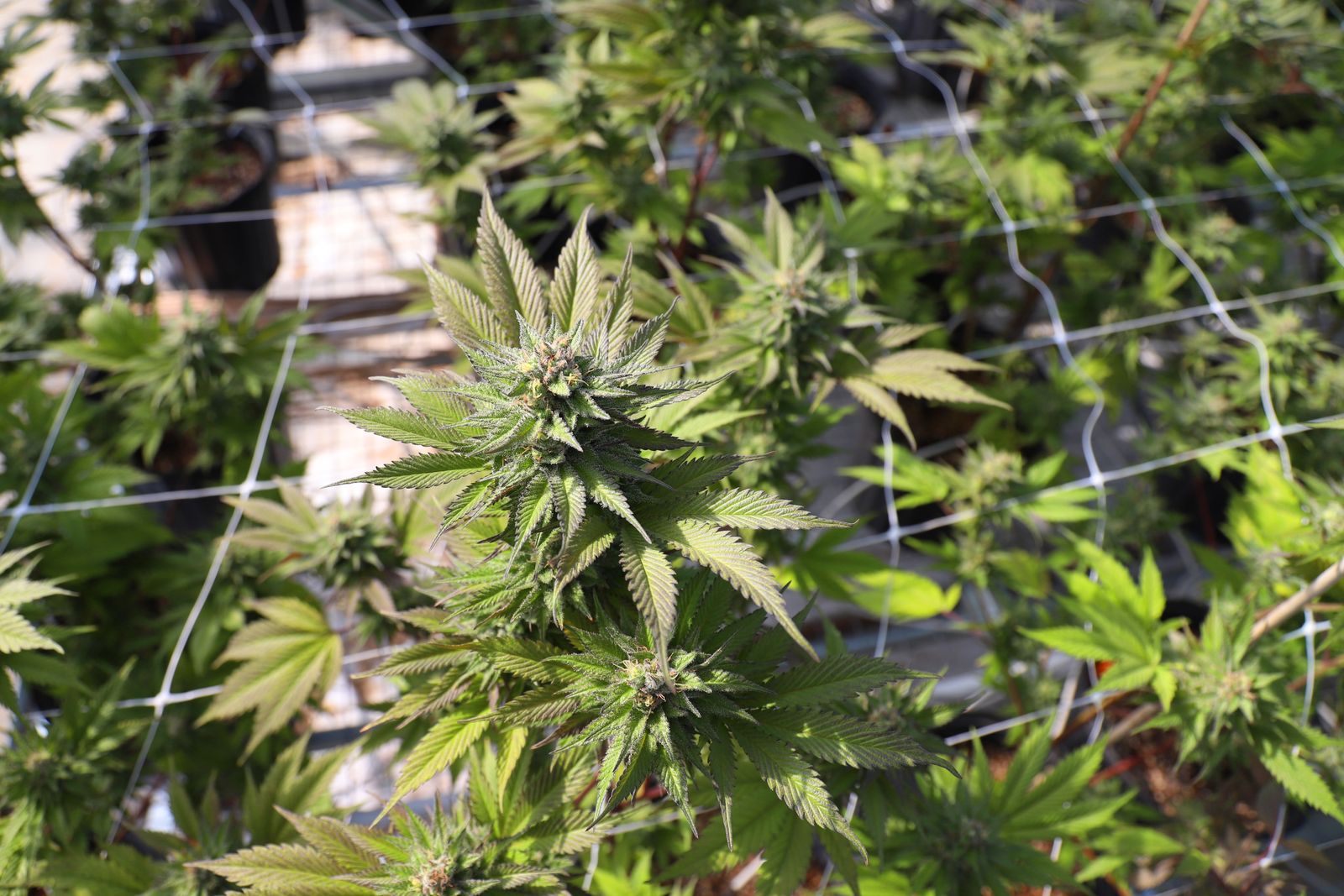
Two to three weeks after germination — that's your transplant window, and missing it in either direction costs you more than you might think. Wait too long and you're staring at a root-bound plant whose tangled roots can't absorb water efficiently; move too early and you're asking a fragile seedling to handle a major life event before it has the metabolic horsepower to recover. Nail the timing, and you set the stage for explosive vegetative growth that carries all the way through to harvest.
Reading the Signs: Knowing When Your Seedling Is Ready to Move
Cannabis seedlings are remarkably communicative — if you know what to look for. The challenge isn't that the signals are subtle; it's that first-time growers often second-guess themselves and either act impulsively or wait far too long out of anxiety.
Don't overthink it. Your plant will tell you.
The very first leaves you see are the cotyledons — small, rounded, and nothing like the iconic serrated foliage you associate with cannabis. Think of them as the seedling's emergency ration pack: a finite energy store to get things moving. They are not an indicator of transplant readiness. What you are waiting for are the true leaves, the classically shaped, serrated sets that signal active photosynthesis and genuine metabolic momentum. Once you have two to three sets of true leaves, the plant has enough energy production capacity to absorb the stress of a move without skipping a beat.
Below the soil, the story is equally important. A seedling growing in a solo cup or small starter pot will eventually push white, healthy roots through the drainage holes at the bottom. Seeing a few of those bright white tips is your green light. What you don't want to see is a dense, circling tangle of roots — a condition called being root bound, which means the plant has already outgrown its space and has begun to restrict its own growth. The goal is to catch the root ball when it is cohesive enough to hold its shape during the move, but not yet strangling itself.
General plant vigour matters too. A stem that stands upright without support, deep green foliage, and an overall appearance of eager, upward energy are all signs of a seedling ready for a bigger home. A pale, spindly, or drooping plant should be nursed back to health in its current pot before you subject it to the additional stress of a transplant.
Use this table as your at-a-glance checklist before you pick up a single pot:
| The Sign | What to Look For | Why It Matters |
|---|---|---|
| Leaf Count | At least 2–3 sets of true, serrated leaves (not the round cotyledons) | Confirms the plant is photosynthesising vigorously enough to recover from move stress |
| Root Development | White, healthy roots visible at drainage holes but not tangled or circling | Root ball holds its shape during transfer without being root bound |
| Plant Size | Plant height is roughly 2–3× the width of its current container | Indicates the canopy has outpaced the container's capacity to support further growth |
| Overall Health | Sturdy stem, vibrant green colour, no wilting or yellowing | A healthy plant recovers from transplant shock far faster than a struggling one |
For a deeper dive into everything that happens before this moment — germination, paper-towel methods, humidity domes, and seedling lighting, our guide on how to start your cannabis seeds indoors covers the full early-stage picture.
The Art of a Stress-Free Transplant
Technique separates a seamless transplant from a week of recovery time. The fundamentals are simple, but executing them with care makes all the difference.
Start with preparation, not the plant. Before you touch a single seedling, have the destination pot filled with fresh medium, a hole dug in the centre that matches the approximate volume of your starter pot, and a watering can within reach. Fumbling for equipment with a bare root ball sitting on the bench is exactly how you introduce unnecessary stress.
Water your seedling one to two days before the planned transplant. This is one of the highest-leverage moves in the entire process. Moist soil clings to the root mass, turning a fragile cluster of roots into a compact, handleable ball. Dry, crumbly soil falls apart and exposes roots to air — which is precisely what you are trying to avoid.
When it is go time, remember one critical rule: never grab the stem. The stem at this stage is surprisingly fragile, and compressing it can cause internal damage that the plant will struggle to recover from. Instead, invert the starter pot with your palm flat over the soil surface and the seedling's stem resting gently between two fingers. A firm tap or a light squeeze on the sides of the pot is usually enough to release the root ball cleanly. A butter knife traced around the inside edge of a stubborn pot will free it without forcing.
Minimise the time roots spend exposed to open air. Have everything staged and ready so the root ball moves from old container to new in a matter of seconds, not minutes.
Set the root ball into the pre-formed hole, backfill with medium, and tamp it down gently — firmly enough to eliminate air pockets, lightly enough to preserve the aeration your roots need. Finish with a thorough but gentle watering to settle the medium around the root ball and make first contact between new soil and roots.
Timing within the day matters more than most growers realise. Transplanting in the evening — or for indoor growers, in the final hour before lights-off, gives the plant several uninterrupted hours of darkness to recover, rehydrate, and begin re-establishing root contact with new medium before facing the energy demands of intense light. It is a low-effort tweak with a measurable payoff in recovery speed.
Here is your complete stress-free transplant checklist:
- Prepare the destination pot first: fill it with medium and dig the receiving hole before touching the seedling.
- Water 1–2 days in advance: moist soil creates a cohesive root ball that survives the move intact.
- Invert, never pull: support the soil surface with your palm and let gravity do the work.
- Move in seconds: root exposure to open air should be as brief as possible.
- Backfill and pat gently: eliminate air pockets without compacting the medium.
- Water in lightly: helps the medium settle and initiates contact between roots and fresh soil.
- Transplant at lights-off or dusk: reduces the immediate light-stress load on a recovering plant.
Choosing the Right Containers for Healthy Roots
The pot is not just a vessel — it is an active participant in your plant's biology. Choose poorly and you will fight overwatering, oxygen deprivation, and root restriction for the entire grow. Choose well and the container quietly does half your work for you.
The foundational principle is potting up progressively: start small and move to incrementally larger containers as the plant grows. A tiny seedling in a 19-litre pot cannot possibly consume the water in all that medium quickly enough. The result is chronically wet soil, low oxygen availability at the root zone, and the perfect conditions for root rot. By contrast, a seedling in a 400 mL cup drinks its container down in a predictable cycle, keeps roots oxygenated between waterings, and develops a dense, healthy root architecture.
A typical size progression for feminised photoperiod cultivars looks like this:
- Germination to early seedling: 200–400 mL solo cup or starter plug
- Seedling to early veg: 1-gallon pot (approximately 3.5 litres)
- Mid-veg to full flower: 3- to 5-gallon final container (approximately 11–19 litres)
Indoor growers typically transplant once or twice before initiating flower. Outdoor growers running long veg periods may pot up three or four times to build genuinely large root systems before the Canadian summer reaches peak intensity.
Fabric Pots vs. Plastic Pots
These are the two dominant options, and they work quite differently. Plastic pots are inexpensive, reusable, and moisture-retentive — excellent for maintaining consistent hydration in dry climates or during hot Canadian summers. Their weakness is airflow: roots that reach the walls have nowhere to go and begin circling, risking the same root-bound condition you worked so hard to avoid at transplant time.
Fabric pots, made from breathable textile material, solve this problem through a process called air pruning. When a root tip reaches the fabric wall and encounters dry air, it naturally desiccates and stops elongating. The plant responds by branching laterally, creating a dense, fibrous root ball with dramatically more surface area for nutrient and water absorption. Fabric pots also prevent overwatering almost entirely — excess moisture simply wicks through the material. For growers new to cannabis cultivation, fabric pots reduce two of the most common rookie errors simultaneously.
Fabric pots are, genuinely, a big shift — and the good news is they are widely available across Canada at most hydroponic supply shops for a very reasonable price.
Regardless of material, drainage holes are non-negotiable. Stagnant water at the bottom of a sealed container depletes oxygen and creates anaerobic conditions where root rot thrives. If a pot you want to use does not have drainage, drill or punch holes before you plant anything in it.
Special Rules for Autoflowering Cultivars
Autoflowers operate on a fixed biological timer that begins counting down the moment the seed germinates. Unlike photoperiod plants, which you can hold in vegetative stage almost indefinitely by controlling light cycles, an autoflowering cultivar will transition to flower after two to four weeks regardless of what you do. That compressed schedule changes the transplant calculus entirely.
Every single day of recovery time from transplant shock is a day the plant is not building vegetative mass that will later support flower sites. For photoperiod strains, a two-day stall is a minor inconvenience. For an autoflower, it can represent a meaningful reduction in final yield.
The One-and-Done Method
The safest strategy is to avoid transplanting autoflowers entirely. Germinate directly into the final container — a 3- to 5-gallon fabric pot is the most common choice, and let the plant live its entire life in one home. Yes, watering a small seedling in a large pot requires care and restraint, but the trade-off is zero transplant shock and the full, uninterrupted growth potential of the plant's brief veg window.
For cultivars like those in our autoflowering range, this approach consistently produces the best structure, branch count, and yield. The plant's energy goes entirely into growth from day one, rather than into root repair.
When You Have No Choice But to Transplant
Space constraints are real. When you are popping a dozen seeds simultaneously, starting all of them in 5-gallon pots is simply not practical. If you need to use starter cups, the transplant window for autoflowers is dramatically narrower than for photoperiod plants.
Research on autoflowering cultivar transplanting shows the stakes clearly: plants moved at 15 days from germination demonstrated strong root development and acceptable recovery. Those transplanted at 22 or 29 days suffered height reductions of up to 55% and branch number reductions of up to 68% compared to plants seeded directly into large containers. Overall yield was slashed by 40% or more when the move happened after that critical 15-day mark.
The practical takeaway: the second you see two sets of true leaves and white roots at the drainage holes of your starter cup — which for an autoflower can happen as early as 7 to 10 days after sprouting, the transplant needs to happen immediately. Do not wait for a "better moment." There is no better moment.
| Method | Advantages | Disadvantages |
|---|---|---|
| Direct seeding into final pot | Zero transplant shock; full growth potential preserved; simplest execution | Requires large pots from day one; watering discipline needed for tiny seedling in large medium volume |
| Starter cup to final pot | Space-efficient for germinating multiple seeds; easier watering management early on | High stunting risk if timing is off even slightly; requires precise execution and close daily monitoring |
For most growers — and especially those new to autoflowering genetics, the direct-seeding approach wins every time.
Post-Transplant Aftercare and Troubleshooting Shock
The transplant itself is only half the job. The first five to seven days in a new container are when the plant is most vulnerable, and the care you provide during this window determines how quickly it gets back on track.
Think of aftercare as a brief period of deliberate de-escalation. You are reducing every variable that could add stress while the root system reintegrates with fresh medium.
The Post-Transplant Protocol
- Watering: Give a gentle, thorough watering immediately after transplanting to close any air gaps around the root ball. For the following three to five days, keep the medium consistently moist — not saturated. The roots are not yet exploring the full volume of new medium and cannot handle waterlogged conditions. Water in a ring around the perimeter of the root ball to encourage outward root growth.
- Lighting: Dial back intensity for the first 24–48 hours. For indoor growers, raising your light fixture a few centimetres or reducing intensity by 20–30% removes one stressor while the plant focuses on root repair rather than photosynthesis.
- Nutrients: Do not feed for at least one week after transplanting. Fresh medium contains enough baseline nutrients to sustain the plant through recovery. Introducing a full feeding regiment to a stressed root system causes nutrient burn, compounding the problem significantly.
- Training: Hold off on any high-stress techniques. If you were planning to top or apply aggressive LST, give the plant a full week to settle before you start. Low-stress adjustments like gently repositioning branches are acceptable after 48–72 hours if the plant looks recovered. Our guide on pruning covers the right timing in detail.
Identifying and Addressing Transplant Shock
Even a textbook transplant can produce a day or two of visible stress. This is normal, not a crisis. The key is distinguishing between temporary, self-resolving stress and symptoms that require intervention.
Wilting or drooping leaves are the most common post-transplant symptom. The disturbed root system is temporarily unable to deliver water at the rate the canopy demands. Keep the medium consistently moist (not wet), reduce light intensity, and give the plant 24–36 hours. In the vast majority of cases, it recovers without any further action.
Yellowing leaves after transplant typically point to either overwatering or an early attempt at feeding. If leaves are turning yellow, allow the medium to dry out slightly before the next watering and hold all nutrient inputs for at least another week.
Stalled or absent growth for two to three days is completely normal and expected. The plant is redirecting energy to root establishment. As long as the foliage is a healthy green and not wilting severely, patience is the only intervention required. Once the root tips make contact with fresh medium and begin exploring their new environment — usually within three to five days, growth resumes with noticeable intensity.
Watch the plant closely for the first 24–48 hours. That is the window in which most transplant shock symptoms appear, and catching them early gives you time to course-correct before any lasting damage occurs.
Frequently Asked Questions: Transplanting Cannabis Seedlings
The same questions come up from growers at every level. Here are direct, honest answers to the most common ones.
What Happens If I Wait Too Long?
A root-bound plant is in genuine trouble. The roots have filled the container, begun circling the base, and can no longer absorb water and nutrients efficiently. Visible signs include stunted new growth, yellowing lower leaves, and a plant that wilts quickly despite regular watering. If you pull the plant and find a dense, tightly wound root mass, gently tease the outer roots apart with your fingers before placing it in the new container — this encourages them to grow outward rather than continuing to circle. Recovery is possible, but expect a setback of several days to over a week depending on severity.
Can I Transplant During Flower?
In a word: no. A flowering cannabis plant is allocating the bulk of its metabolic resources toward bud production, not root repair. Transplanting at this stage introduces stress precisely when the plant can least afford it. The resulting shock can stall resin production, reduce final yield, and in severe cases trigger hermaphroditism as the plant's stress-response system activates. Complete all transplanting during the vegetative stage, well before any flower sites begin to form. The sole legitimate exception is a genuine emergency — a shattered pot, for example, and even then, expect some impact on harvest quality.
How Many Times Should I Transplant?
The right number depends on what you are growing:
- Feminised photoperiod cultivars: Most home growers transplant two times — from starter cup to a 1-gallon vegetative pot, then into a 3- to 5-gallon flowering container. Growers running long outdoor seasons sometimes add a third up-pot to achieve larger overall plant size.
- Autoflowering cultivars: The target is zero transplants. Germinate directly into the final pot. If space constraints force you to use a starter cup, transplant only once and do it before day 15 from germination.
Each transplant creates a brief stress event in exchange for access to fresh medium and expanded root volume. The goal is to give your plants the space they need to thrive without subjecting them to any unnecessary interruptions in their growth cycle.
Transplanting is one of those foundational skills that, once internalised, becomes second nature — and the plants will show their appreciation in denser root systems, faster vegetative development, and heavier harvests. Read the leaves, watch the roots, choose the right containers, and give your plants the recovery window they need. Visit Pacific Seed Bank Canada to explore our full catalogue of premium feminised and autoflowering genetics, all lab-tested and backed by a germination guarantee. You can also browse the full Growing Marijuana library for guides on every stage of the grow cycle. Find your perfect strain and get growing today, your next harvest starts with a healthy transplant.
Keep Reading

How Much Does It Cost To Grow Your Own Weed in Canada?
Learn the real costs of growing weed at home, including grow tents, lights, seeds, nutrients, electricity, and how much cannabis you can harvest.
The 5 Best Blueberry Cannabis Strains To Grow Indoors
Find the best blueberry weed strains to grow indoors, including Blue Dream, Blueberry Cheesecake, and more - and buy the seeds from Pacific Seed Bank.
Why 5.8–6.5 Is The Ideal pH for Cannabis (And When to Adjust)
Learn why 5.8-6.5 is the ideal pH for cannabis plants, how to test your plant's pH, and how to adjust it higher or lower when you need to.
The Best Autoflowering Light Schedule For Bigger Yields
Stop guessing your autoflowering light schedule. Our guide breaks down the 18/6, 20/4, and 24/0 schedules to help you grow bigger, better plants.