How to Plant Germinated Seeds for a Perfect Start
11 min read · , updated May 14, 2026
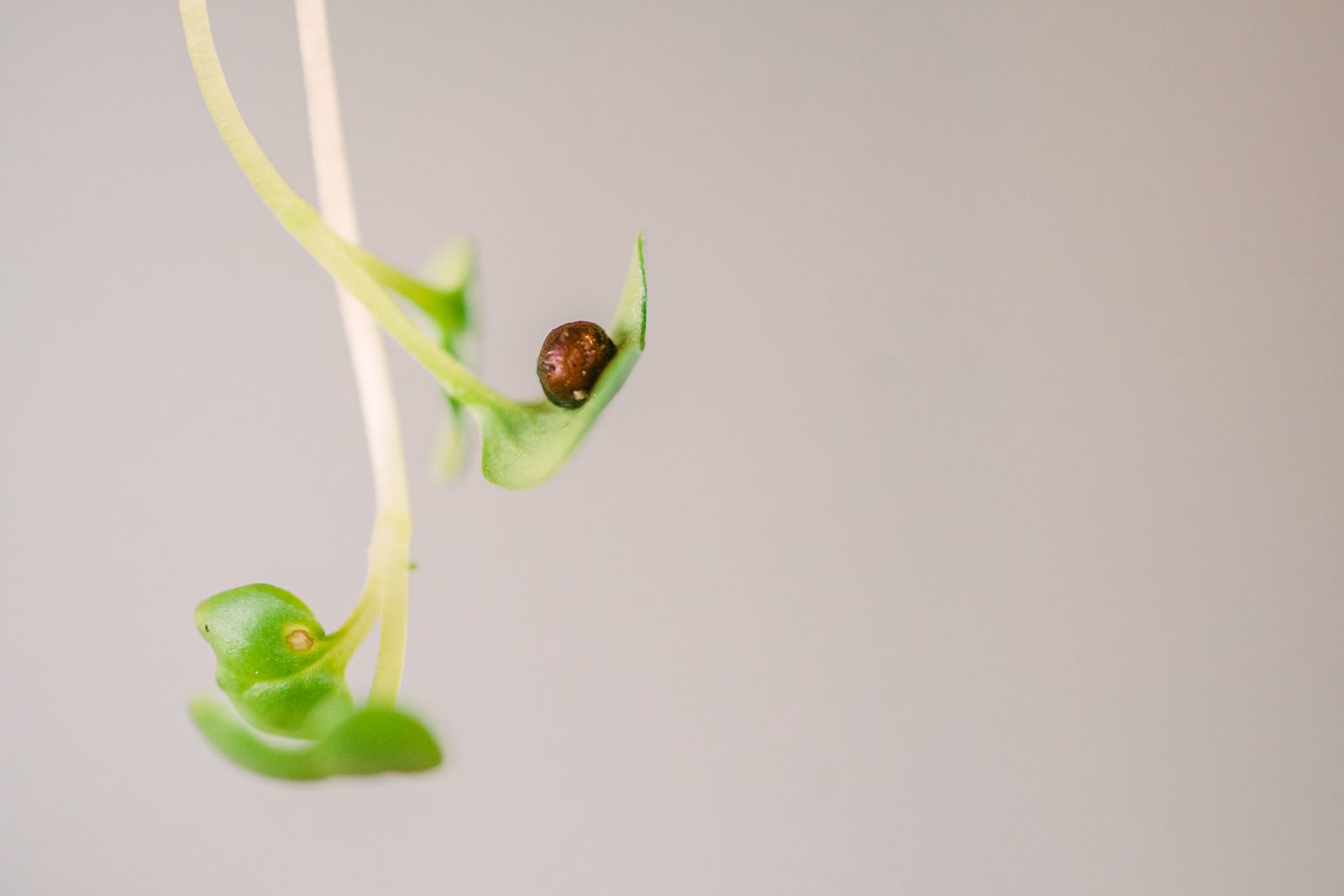
That tiny white tail poking out of the paper towel is one of the most exciting sights in cannabis cultivation — and also one of the most mishandled moments. Research from commercial nursery operations consistently shows that improper post-germination technique accounts for a disproportionate share of early seedling losses, dwarfing problems caused by poor genetics or bad soil. The seed did its job. Now it's your turn.
From Paper Towel to Pot: Understanding What's at Stake
The moment your taproot emerges, the clock starts. That root is operating on stored cotyledon energy — a finite reserve the seedling will burn through as it pushes toward its first light. Every unnecessary minute spent exposed, every careless pinch of fingers, every poorly aimed stream of water is a tax on that reserve. Get the transition right, and your plant barely notices the move. Get it wrong, and you're chasing recovery for the first two weeks of the grow.
If you haven't yet reached the taproot stage, our guide on how to germinate marijuana seeds for beginners will walk you through the paper towel method, glass-of-water technique, and everything in between before you arrive at this critical handoff.
Professional nurseries planting high-value vegetable crops treat pre-germinated seeds with the same reverence a jeweller gives a loose diamond. They standardise planting depth at 0.5–1.5 cm and handle seeds with instruments rather than bare fingers. That discipline reduces seedling losses by 20–30% compared to direct dry-seed sowing. Cannabis is no different.
The whole point of this stage is elimination — removing every obstacle between your seedling and its first set of true leaves. Depth, orientation, moisture, and touch are the four variables that decide whether your seedling sprints or stumbles.
Here is the full transplant sequence at a glance:
- Moisten your medium — pre-wet your soil or coco until it holds its shape when squeezed but releases no free water.
- Make the hole — use the eraser end of a pencil to press a pocket 0.5–1.5 cm deep. No deeper.
- Pick up by the shell — grip the seed casing with clean tweezers; never touch the taproot with bare fingers.
- Orient correctly — lower the seed taproot-first, pointing straight down.
- Cover loosely — brush a pinch of medium over the hole. Do not compress it.
- Mist gently — a few passes with a spray bottle to settle the surface without disturbing the seed.
That's the entire operation. Delicate, yes — but not complicated.
Choosing the Right First Home for Your Seedling
Container choice is as consequential as any other variable at this stage, and growers routinely underestimate it. The wrong vessel — too large, too dense, too airless, can set back a vigorous strain by a week or more.
The Growing Medium
Your seedling's roots are thread-thin and exert almost no force. The medium must yield to them willingly. Dense, compacted garden soil is the worst possible choice: it harbours pathogens, packs under watering, and starves roots of oxygen. Stick to one of these three proven options:
- Seed-starting mix: Engineered to be light, porous, and low in nutrients. Standard potting soils often run "hot" — meaning fertiliser levels high enough to chemically burn the delicate roots of a seedling that hasn't yet developed the capacity to process them.
- Coco coir: Derived from coconut husk, coco is sterile, pH-stable, and strikes an excellent balance between moisture retention and aeration. It's a strong choice for growers who want precise control over their feeding programme from day one.
- Peat pellets: Compressed discs of peat moss that expand with water into a self-contained root environment. The convenience is real — when it's time to transplant, the entire pellet goes into the new pot, eliminating root disturbance entirely.
Whatever you choose, drainage is non-negotiable. A container without drainage holes is a container that will eventually kill your plant. For a thorough breakdown of how these and other options compare across the full grow cycle, our guide on how to choose the right cannabis growing medium covers every scenario in detail.
Container Size: Start Small vs. Go Straight to the Final Pot
This is where the decision splits depending on what you're growing.
Starting small — a 12-oz solo cup with drainage holes punched in the bottom, or a 1-litre nursery pot, makes overwatering nearly impossible. The limited soil volume dries out quickly, encouraging roots to push outward aggressively in search of moisture. The trade-off is a transplant later, which carries some shock risk if handled carelessly.
Planting directly into the final 5- or 7-gallon container eliminates transplant shock entirely, but demands more disciplined watering technique. In a large pot, a small seedling's roots occupy only a fraction of the available medium. Water that saturates the outer zones of soil will sit stagnant and anaerobic, inviting root rot. You must water in a tight circle around the seedling stem until the root mass fills out.
For autoflowering cultivars, the final-pot approach is mandatory. Autos run on an internal genetic clock — typically 70 to 90 days from seed to harvest, and any transplant stress that triggers even a brief recovery period represents a meaningful percentage of their total lifespan. The math doesn't forgive it. For photoperiod feminised seeds, starting small is perfectly sensible; they have the vegetative flexibility to absorb a careful transplant without consequence.
The Perfect Planting Technique, Step by Step
Precision here is the difference between a seedling that emerges in 24 hours and one that labours for five days — or never appears at all.
Taproot Length: The Right Moment to Plant
Resist the urge to wait for an impressively long root. The ideal taproot length at planting time is 6–12 mm (a quarter to a half inch). Short enough to be rigid and manageable; long enough to confirm vigorous germination. A taproot beyond 15 mm becomes fragile and prone to kinking during the transfer — a kinked taproot is a permanent injury that no amount of careful aftercare fully reverses.
Depth and Orientation
At 0.5 to 1.5 cm, the cotyledons emerge within a day or two in warm conditions and have enough stored energy to break the surface cleanly. Plant deeper, and the seedling may exhaust itself before it sees light. Plant shallower, and "helmet head" — the seed casing stuck to the cotyledons, becomes a real risk, along with a stem too flimsy to support itself.
The taproot always goes down. This is not a suggestion — it is orientation with the plant's own physiology. Roots grow toward gravity; stems grow toward light. Give the plant the head start of correct orientation and it doesn't have to spend energy correcting itself underground.
The Cover
Once the seed is in the hole and the tweezers are set aside, the covering is the final act. A loose pinch of medium brushed over — not pressed down, is all that's required. Think "dusting," not "packing." The seedling will push through a light layer with almost no resistance. It will struggle noticeably against compacted soil.
Creating the Ideal Environment After Planting
Your role shifts the moment that seed is in the ground. You are no longer a transplant technician — you are a climate manager. The three variables that govern the next five to seven days are moisture, light, and atmosphere.
Watering Without Drowning
Overwatering is, without question, the single leading cause of seedling death among new growers. A freshly planted seed in a small pot needs almost no water. The medium was pre-moistened before planting; there is nothing left to do but maintain surface dampness.
For the first week, a spray bottle is your only watering tool. Three to five misting passes over the surface is enough to keep the seed's immediate environment humid without saturating the medium below. The target texture is a wrung-out sponge: damp to the touch, but releasing no free water when squeezed.
Once the seedling emerges and develops its first true leaves, shift to watering a small ring around the stem — perhaps 5 cm out from centre. This intentional strategy forces roots to extend outward in search of moisture, building the expansive root architecture that supports heavy yields later.
When in doubt, wait another day. A seedling that's slightly thirsty will recover in hours. One that's been sitting in waterlogged medium for two days may not recover at all.
Light: Less Is More at This Stage
A common error is interpreting "seedlings need light" as "seedlings need powerful light." They don't. A fragile two-day-old sprout has no need for a 600W HPS or a high-intensity quantum board dialled to full power. The chlorophyll in the cotyledons is fully capable of photosynthesising under modest illumination.
- T5 fluorescent: Keep the fixture 10–15 cm (4–6 inches) above the seedling canopy.
- Low-wattage LED (100W or under): Start at 30–45 cm (12–18 inches) and adjust by observation.
- Light schedule: 18 hours on / 6 hours off is the standard for seedlings and early vegetative growth.
- Stretching: If the stem is elongating rapidly and the seedling looks like it's trying to escape the pot, the light is too far away. Close the gap by 5 cm at a time.
- Pale or scorched cotyledons: The light is too close or too intense. Back it off.
If you're assembling your first indoor setup and unsure what equipment actually suits this stage, our resource on the simplest starter grow setup for first-time cultivators gives you a practical, no-fluff gear list.
Temperature and Humidity
Seedlings thrive in conditions that mirror a warm, humid spring day. The target ranges are specific:
- Temperature: 21–26°C (70–78°F), as stable as possible. Fluctuations above or below this range slow growth noticeably.
- Humidity: 60–70% relative humidity. Below 50%, the seedling's transpiration rate outpaces its ability to uptake water through its immature root system, causing stress. Above 80%, damping-off fungi become a genuine threat.
The easiest way to maintain humidity is a dome — even a clear plastic cup inverted over the seedling works perfectly. Lift it twice a day for five minutes to allow fresh air exchange and prevent CO₂ depletion. Remove the dome permanently once the first true leaves are fully unfurled.
Common Mistakes That Kill Seedlings in the First Two Weeks
Every experienced grower has a list of early-grow regrets. Here are the ones that appear on almost every list, with the corrections that prevent them.
Overwatering — The Patient Zero of Seedling Failure
Covered above, worth repeating here because it cannot be overstated. A tiny seedling in a large pot occupies perhaps 10% of the available root zone. Water that migrates to the outer soil sits anaerobic and stagnant. Fungus gnat larvae and pythium root rot both require saturated conditions to establish — conditions that an overzealous watering hand creates in minutes.
Wait until the top 2–3 cm of medium is dry to the touch. Then wait one more day. You are not neglecting your plant; you are training it.
Planting at the Wrong Depth
Too deep: the seedling exhausts its cotyledon reserves before it breaks the surface. It dies underground and you never know why. Too shallow: the seed casing catches on the cotyledons, leaves remain closed, and photosynthesis cannot begin. Or the stem emerges with so little anchor that it flops sideways at the slightest disturbance.
The pencil-eraser trick gives you a consistent hole every time: roughly 0.5 cm per pass, two passes maximum. Simple, repeatable, correct.
Feeding Too Early
The cotyledons are not decorative. They contain the seedling's first complete nutritional package — everything required to support growth until the root system is mature enough to feed from the medium. Introducing fertiliser before the plant has two to three sets of true leaves risks chemical root burn at the most vulnerable moment in the plant's life. Even then, open with a quarter-strength solution and observe the response before escalating.
Impatience and Interference
Three days after planting with no visible sprout is not a crisis. Five days is not a disaster. Digging into the medium to check on progress, however, is both. Once that seed is in the ground, your only tools are environment management and patience. Prodding the medium can sever a hair-thin root that was days away from emerging on its own.
If seven full days pass without emergence, the most likely culprits are overwatering, excessive depth, or a non-viable seed. Start fresh. Do not excavate.
Stretched Seedlings: The Fix
A tall, spindly stem with widely-spaced internodes is a light-starved seedling, not a fast-growing one. Move the light source 5 cm closer. If the stem has already stretched significantly, carefully mound additional medium around the base to provide support — up to the level of the lowest leaves if necessary. Cannabis stems will develop roots along any buried section, turning a liability into an asset.
Strain Selection: Setting Your New Technique Up for Success
All of the technique above works across the full catalogue of genetics, but certain strain characteristics make the seedling stage more forgiving — especially for growers who are still calibrating their environment and touch.
Autoflowering strains reward the direct-to-final-pot approach discussed earlier. Their compressed lifecycle means every week in the seedling stage is a meaningful fraction of the total grow. Choose robust, well-established auto genetics and the seedling phase tends to be fast and decisive — most pop within 48 to 72 hours under correct conditions and establish quickly.
Feminised photoperiod strains give you more runway. Because you control the transition to flower by shifting to a 12/12 light schedule, you can hold a photoperiod plant in vegetative growth long enough to fully recover from any early-stage hiccup. This makes them a forgiving choice if you're still developing your seedling technique.
At Pacific Seed Bank, both autoflowering and feminised cultivars are available across a wide range of terpene profiles, cannabinoid percentages, and growth structures. Whether you're drawn to fast-finishing, resin-heavy indicas or stretchy, aromatic sativas with complex flavour, the seed is the foundation — and the technique you've just absorbed is what unlocks its potential.
Explore the full library of strains and grow guides in our Growing Marijuana resource section, and put this knowledge to work on your next pop.
The taproot is already doing its job. Give it the right start, and every step that follows gets easier.
Keep Reading

How Much Does It Cost To Grow Your Own Weed in Canada?
Learn the real costs of growing weed at home, including grow tents, lights, seeds, nutrients, electricity, and how much cannabis you can harvest.
The 5 Best Blueberry Cannabis Strains To Grow Indoors
Find the best blueberry weed strains to grow indoors, including Blue Dream, Blueberry Cheesecake, and more - and buy the seeds from Pacific Seed Bank.
Why 5.8–6.5 Is The Ideal pH for Cannabis (And When to Adjust)
Learn why 5.8-6.5 is the ideal pH for cannabis plants, how to test your plant's pH, and how to adjust it higher or lower when you need to.
The Best Autoflowering Light Schedule For Bigger Yields
Stop guessing your autoflowering light schedule. Our guide breaks down the 18/6, 20/4, and 24/0 schedules to help you grow bigger, better plants.