How to Grow Cannabis in a Greenhouse: The Ultimate Canadian Guide
16 min read · , updated May 14, 2026
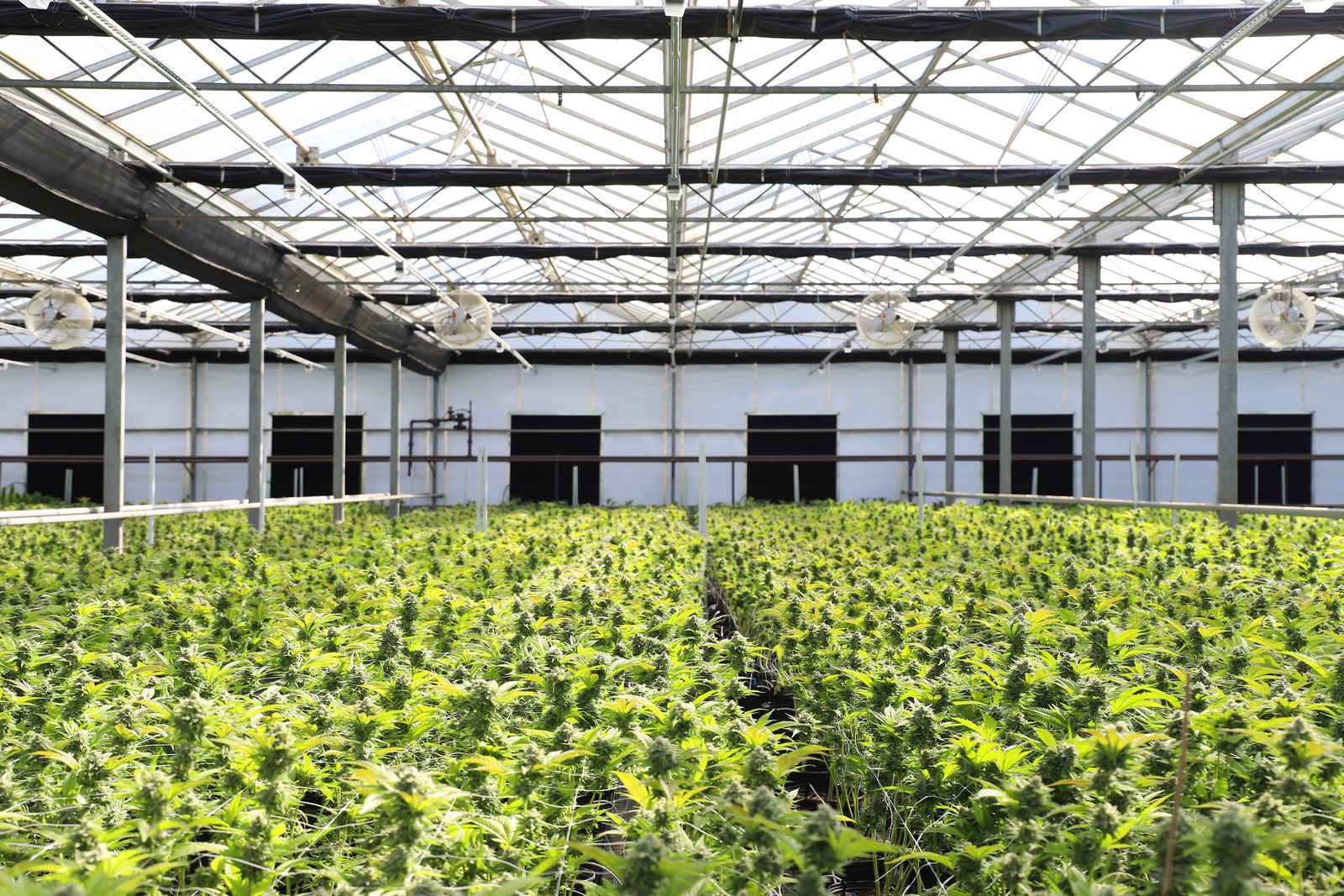
Most Canadian growers chase the cheapest electricity rate or the best LED fixture. The growers who consistently pull the heaviest, most resinous harvests outdoors? They build a greenhouse — and let the sun do the heavy lifting. Greenhouse cultivation threads a needle that pure indoor and pure outdoor growing can't: real photons from a 93-million-mile fusion reactor, combined with the climate control that protects your investment through a Canadian spring frost or a sudden August hailstorm. The result is vigorous growth, lower operating costs, and harvests that a basement tent simply can't match gram-for-gram.
This guide covers everything you need to succeed: structure selection, soil science, light manipulation, pest management, feeding strategy, and the curing process that separates good cannabis from great cannabis. Whether you're working with feminized photoperiod strains that reward precision light control or autoflowering varieties that thrive on the long Canadian summer days, the greenhouse is your most powerful cultivation tool.
Why Greenhouse Growing Makes Sense in Canada
Canada's climate is an asset and an obstacle at the same time. Summers deliver long, generous photoperiods — ideal for cannabis, but the shoulder seasons are unpredictable, and a single hard frost can wipe out an unprotected crop before it ever reaches peak ripeness. A greenhouse solves both problems at once.
Natural sunlight is categorically superior to any artificial source for cannabis cultivation. The sun delivers the full electromagnetic spectrum — including ultraviolet wavelengths that stimulate terpene and cannabinoid production, at an intensity that even the best 1,000-watt HPS or commercial LED bar cannot match at comparable cost. A south-facing greenhouse in British Columbia, Ontario, or Quebec captures photosynthetically active radiation (PAR) values that would require tens of thousands of dollars in lighting infrastructure to replicate indoors.
Beyond photon economics, the practical advantages stack up quickly:
- Weather protection: Heavy rains, hail, wind, and sudden temperature drops are mitigated. Botrytis (bud rot) — the single most devastating threat to outdoor Canadian grows — is far easier to manage when moisture is controlled.
- Extended season: A heated or double-walled polycarbonate greenhouse can push your start date four to six weeks earlier in spring and protect plants well into October, dramatically increasing your window for late-flowering photoperiod genetics.
- Discretion: Opaque or shade-cloth coverings reduce visibility. Carbon filters and ozone generators integrate easily into a closed greenhouse environment, giving you odour management comparable to an indoor setup.
- Lower operating costs: No full-time lighting infrastructure. Heating costs during warm months are minimal. Even with supplemental LED lighting for early-season vegetative growth, your energy bill is a fraction of an equivalent indoor run.
- Regulatory alignment: Under Canada's Cannabis Act, personal cultivation of up to four plants per household is legal federally. A greenhouse is a legitimate, discreet, and compliant structure for that cultivation.
One counter-intuitive reality: greenhouse-grown cannabis often develops denser trichome coverage and more complex terpene profiles than the same genetics grown indoors. The mild UV exposure and natural day-night temperature swings that a well-managed greenhouse allows — particularly the 10–15°C temperature differential between day and night in late flower, are stress signals that push resin production in ways a climate-controlled indoor room rarely achieves.
Choosing and Setting Up the Right Greenhouse Structure
The structure is your foundation. Getting this decision right saves you headaches for every subsequent grow.
For most Canadian personal growers, a polycarbonate-panel greenhouse in the 8×12-foot to 10×16-foot range is the sweet spot. It accommodates four to eight large plants in fabric pots or raised beds, provides enough headroom for training (more on that below), and can be sourced from Canadian retailers for $800–$2,500 CAD depending on frame quality and insulation rating.
Key Structural Features to Prioritise
- Glazing material: Twin-wall or triple-wall polycarbonate panels outperform single-layer polyethylene film in every meaningful metric — insulation value (R-2 to R-3.5 vs. near zero for film), lifespan (10–15 years vs. 2–4 years), and diffusion quality. Diffused light penetrates the canopy more evenly than direct beam light, reducing hot spots and improving bud development on lower branches.
- Frame material: Galvanised steel or heavy aluminium withstands Canadian snow loads and high winds. Avoid lightweight PVC-only structures if you're in a zone that receives more than 30 cm of snow accumulation.
- Orientation: Orient the ridge of the greenhouse east-to-west so the south-facing wall captures maximum light during the lower sun angles of spring and fall. In Canada's northern latitudes, this matters more than it does closer to the equator.
- Ventilation openings: Roof vents positioned at the apex are non-negotiable. Heat stratifies at the top of any enclosed space; without a high exit point, temperatures on a sunny June afternoon can exceed 40°C and stall plant growth entirely. Supplement with oscillating fans at canopy level to maintain continuous air circulation.
- Blackout capability: If you plan to manipulate the photoperiod for early flowering (a significant greenhouse advantage), choose a structure that can accept blackout curtains or panels without major modification.
A lean-to greenhouse built against a south-facing wall of your home captures reflected radiant heat from the wall, gives you easy access to power and water, and often qualifies as a permanent structure requiring a building permit in some Canadian municipalities — so check your local bylaws before you pour a foundation.
Soil, Containers, and Plant Placement
Genetics aside, nothing influences your final yield more than the root environment. Cannabis is simultaneously sensitive to overwatering and highly responsive to a rich, biologically active rhizosphere. Get the substrate right and the plant does most of the work for you.
The best greenhouse medium for most Canadian growers is a living soil blend. A practical recipe that performs well across most photoperiod and autoflowering varieties:
- 40% base compost — fully finished, thermophilic compost provides slow-release nutrition and microbial life.
- 30% coco coir or peat moss — improves water retention and provides structure. Coco coir is the more sustainable option; peat moss is more acidic (pH ~3.8–4.5) and requires lime amendment to bring the medium to the target range of pH 6.0–7.0.
- 20% perlite or pumice — aeration and drainage. Cannabis roots need oxygen; a compacted, anaerobic root zone is where rot and pathogenic fungi take hold.
- 10% worm castings — the single most effective biological amendment available to a home grower. Castings improve soil structure, introduce beneficial microbes, and provide a broad spectrum of chelated micro-nutrients.
For containers, 20- to 45-litre fabric pots are the greenhouse standard. The air-pruning effect of fabric walls prevents root circling, encourages lateral root development, and passively regulates moisture by allowing evaporation from the side walls. Larger containers (65–100 litres) support genuinely massive plants — think 300–600 g per plant from a well-trained photoperiod strain in a full Canadian summer, but require more soil and more water to maintain.
Spacing determines airflow as much as any fan you install. As a baseline, allow at least 60 cm of clear space between the canopy edges of adjacent plants during vegetative growth, and expand to 90 cm once flowering begins and plants widen significantly. Place taller sativa-dominant or sativa-leaning hybrid varieties toward the back (north side) of the greenhouse and shorter indica-dominant plants toward the front, so no plant shades another during the low-angle morning and evening sun periods.
Watering frequency drops considerably in a greenhouse compared to exposed outdoor cultivation. The enclosed environment retains humidity and reduces transpiration-driven moisture loss. Rather than watering on a calendar schedule, invest in a digital soil moisture metre and water only when readings indicate the medium has dried adequately in the upper third of the root zone. This single habit prevents the majority of root-health problems greenhouse growers encounter.
Timing, Light Manipulation, and the Canadian Photoperiod
This is where greenhouse growing pulls decisively ahead of every other cultivation method for Canadian growers who want maximum control over their season.
Cannabis is a short-day, long-night plant. Photoperiod-sensitive varieties initiate flowering when uninterrupted darkness exceeds approximately 12 hours — a threshold that natural Canadian daylight doesn't cross until mid-August at most latitudes. Left to nature's schedule, photoperiod plants won't begin flowering until late August and won't be harvest-ready until late October or November, right when temperatures are dropping and mould pressure is spiking.
A greenhouse changes the equation entirely.
Light deprivation (light dep): Heavyweight blackout tarps or automated blackout curtains allow you to create artificial "night" periods starting in June or early July, triggering flowering six to eight weeks ahead of the natural photoperiod. A plant that begins flowering on July 1 can reach full maturity and harvest readiness by mid-September — warm, dry conditions, peak terpene expression, and zero frost risk. Many experienced Canadian greenhouse growers run two full photoperiod cycles per season using this technique.
Supplemental lighting for vegetative extension: In early spring — March through May, natural daylight hours are still short. LED grow lights on a timer extending the day to 18 hours allow you to push plants through the vegetative stage aggressively before transitioning to blackout-induced flowering. Full-spectrum quantum board LEDs are the preferred choice: they run cool enough not to overheat the space and consume far less electricity than HID alternatives.
Autoflowering varieties sidestep the photoperiod challenge entirely, flowering based on age rather than light cycle. In a Canadian greenhouse, an auto started in May under supplemental spring lighting can reach harvest in August — a clean, low-maintenance run. The trade-off is that autos offer less training flexibility and generally lower per-plant yields than a well-managed photoperiod plant given a full season.
Pest and Disease Management in the Greenhouse Environment
A greenhouse reduces many pest and disease vectors, but it doesn't eliminate them. The enclosed, warm, slightly humid microclimate that cannabis loves is also attractive to a handful of opportunistic insects and fungal pathogens. Consistent scouting — not reactive spraying, is the foundation of a clean greenhouse.
Check the undersides of leaves every two to three days during vegetative growth and every four to five days during flowering. Most infestations are manageable if caught at the first generation; they become serious problems only when populations have been building undetected for two to three weeks.
Common Greenhouse Cannabis Pests
- Spider mites — the most serious greenhouse threat. Fine webbing on lower leaf surfaces is the first sign. Thrive in hot, dry conditions; maintain relative humidity above 45% during the day to reduce their reproduction rate.
- Aphids — cluster on new growth and under leaves. Introduce ladybugs or use a targeted knockdown treatment before populations establish.
- Whiteflies — flying adults are visible when you disturb foliage; yellow sticky traps are an effective monitoring and control tool.
- Thrips — leave characteristic silver streaking on leaf surfaces. Particularly damaging to young seedlings and clones.
- Fungus gnats — larvae damage roots; adults are a nuisance. Caused by consistently overwatered soil. Allow the top 5 cm of medium to dry completely between waterings.
Neem oil — specifically cold-pressed, azadirachtin-rich neem, remains the most versatile broad-spectrum treatment available to home growers under the Cannabis Act framework. Apply as a foliar spray in the early morning or evening when temperatures are below 25°C to prevent phytotoxic leaf burn. Always spot-test a single leaf 24 hours before a full application. Insecticidal soaps (potassium salts of fatty acids) complement neem well against soft-bodied insects. Cease all foliar applications at least two weeks before harvest.
Fungal diseases — particularly powdery mildew and botrytis, are the other major threat. Both are dramatically reduced by strong airflow. When you do spot a white powdery coating on leaf surfaces (powdery mildew) or grey fuzzy decay on buds or stems (botrytis), act within hours, not days. Prune and bag affected tissue immediately, increase ventilation, lower relative humidity to 45–50% RH during lights-on, and never water late in the afternoon, wet foliage overnight is an open invitation for fungal colonisation.
Companion planting inside or at the perimeter of the greenhouse can meaningfully reduce pest pressure. Basil, dill, marigolds, and chrysanthemums all have documented repellent or confounding effects on common cannabis pests and create a diverse microhabitat that supports beneficial predatory insects.
Feeding Your Greenhouse Cannabis Plants
Greenhouse plants, particularly large photoperiod varieties given a full Canadian summer, grow substantially larger than their indoor counterparts — and they're hungrier. A 45-litre fabric pot in a south-facing greenhouse can support a plant that consumes two to three times the nutrient volume of the same genetics in a 20-litre indoor pot. Your feeding programme needs to scale accordingly.
The nutritional arc of a cannabis plant follows a consistent pattern across all cultivation methods:
- Seedling and early veg (weeks 1–3): Minimal inputs. A rich living soil provides everything required. Over-feeding seedlings is the most common beginner mistake.
- Active vegetative growth (weeks 3–8+): Nitrogen is the dominant macronutrient. An N-P-K ratio of approximately 3-1-2 drives the rapid stem elongation and leaf area expansion characteristic of this phase. Monitor foliage — deep green, waxy leaves indicate adequate N; pale, yellowing new growth signals deficiency. During the vegetative stage, nitrogen drives structural development that determines how large a canopy you can ultimately support.
- Transition and early flower (weeks 1–3 of 12/12 or natural flip): Reduce nitrogen, begin ramping phosphorus and potassium. Many growers use a 1-3-2 ratio through mid-flower.
- Peak flower (weeks 4–7 of flowering): Phosphorus and potassium dominate (ratios of 0-3-3 or similar). Calcium and magnesium become critical micronutrients as bud sites swell; cannabis is a heavy Ca/Mg feeder relative to most other crops.
- Late flower and flush (final 1–2 weeks): Taper feeding significantly. Many organic growers simply stop amending and rely on reverse osmosis or pH-balanced water to gently draw down residual nutrients.
Always start new products at 50% of the manufacturer's recommended dose and increase only if the plant demonstrates clear demand. Watch your leaves. Burnt, crispy tips indicate nitrogen or salt toxicity; yellowing between leaf veins signals an iron or magnesium deficiency; curling leaves can point to overwatering, heat stress, or calcium deficiency depending on whether they're curling up or downward. The leaves tell you everything — learn to read them before you reach for a product.
For greenhouse growing specifically, organic nutrients are strongly recommended over synthetic salt-based fertilisers. Organic amendments — compost teas, fish emulsion, kelp meal, bat guano, worm casting extracts, feed the microbial community in your soil, which in turn solubilises and delivers nutrients to roots in bioavailable form. This buffered, slow-release mechanism is inherently more forgiving than a salt-based programme and produces measurably better terpene expression in the finished product. Soil biology is your silent growing partner; invest in it.
Training Techniques That Maximise Greenhouse Yields
A greenhouse gives you vertical and horizontal space that indoor tents rarely offer. Use it. Trained plants in a greenhouse can deliver two to four times the yield of an untrained plant in the same container by maximising the canopy surface area exposed to direct sunlight.
Low-stress training (LST) — bending and securing lateral branches outward with soft ties during vegetative growth, is the most accessible technique. It costs nothing, requires no cuts, and creates a wide, flat canopy that intercepts far more light than a single apical cola. Begin LST as soon as the plant has four to six nodes and continue adjusting throughout vegetative growth.
Topping — removing the apical meristem (growing tip) above the second or third node, redirects the plant's auxin-driven apical dominance into two equal colas. Top once for two main colas, twice for four. Allow at least one week of recovery between topping events. Greenhouse plants with generous root volume recover quickly and reward multiple topping events with enormous, even canopies.
SCROG (Screen of Green) — suspending a horizontal net or screen at 40–60 cm above the pot and weaving branches through it as they grow, is particularly effective in greenhouse settings where you want to limit height while maximising canopy. Once 70–80% of the screen is filled, flip to the flowering photoperiod (or deploy your blackout system) and allow the plant to develop a solid wall of bud sites just above screen level.
Regardless of which training method you choose, defoliation — selectively removing large fan leaves that shade bud sites, should happen in two strategic passes: once at the transition to flowering (removing 20–30% of the largest leaves to open up bud sites) and once again at approximately three weeks into flowering. Never remove more than a third of the plant's leaf area at one time.
Harvesting, Drying, and Curing for Peak Quality
Everything you've invested in greenhouse infrastructure, soil biology, and training technique comes down to these final weeks. Rushed harvesting and poor curing destroy terpene profiles and degrade the cannabinoid experience more thoroughly than almost any cultivation mistake made earlier in the grow.
Reading harvest readiness: Trichome assessment under a 60–100× jeweller's loupe or digital microscope is the most precise method available to home growers. Monitor trichomes on the calyx surface, not the sugar leaves (which mature faster). The progression: clear (not ready) → cloudy/milky (peak THC, energetic effects) → amber (THC degrading to CBN, more sedative character). Most growers targeting a balanced effect harvest when approximately 70–90% of trichomes are cloudy and 10–20% have turned amber. Pistil colour change (from white to orange-red) is a secondary indicator but less precise than trichome assessment.
Drying: Cut whole branches and hang them upside down in a dedicated dark space with strong air circulation but no direct airflow aimed at the buds. Target conditions: 15–21°C, 45–55% relative humidity, complete darkness. This slow, cool dry — typically 10–14 days, preserves terpene integrity and prevents "hay smell" caused by rapid chlorophyll breakdown. Rushing the dry by introducing heat or high-speed fans is the most common post-harvest mistake Canadian growers make.
Curing: Once buds feel dry on the outside but the stems still bend without snapping, transfer them loosely into wide-mouth glass mason jars at approximately 60–65% relative humidity (a Boveda or Integra humidity pack maintains this passively). Burp the jars — open fully for five to fifteen minutes, once or twice daily for the first two weeks, then once every few days for weeks three and four. A minimum four-week cure transforms adequately dried cannabis into something genuinely exceptional: expanded terpene complexity, smoother combustion, and noticeably enhanced flavour. Many experienced growers extend curing to eight to twelve weeks for premium results.
Strain Selection for Canadian Greenhouse Growing
The right genetics amplify every advantage the greenhouse gives you. The wrong genetics fight the environment at every turn.
For Canadian greenhouse growers using natural photoperiod timing or light deprivation, look for strains with a proven track record of mould resistance and the ability to complete flowering before the first hard frost — typically before mid-October at most Canadian latitudes. Indica-dominant and indica-leaning hybrid genetics tend to have shorter, denser structure suited to training, and finish flowering in 56–63 days, well ahead of autumn conditions. Sativa-dominant varieties can be stunning in a greenhouse with a light-dep setup, allowing you to trigger flowering in July and complete the run in September with full terpene and cannabinoid expression.
Autoflowering feminized strains are ideal for growers who want a simpler, lower-maintenance greenhouse run. Autos can be staggered — starting new seeds every three to four weeks, to produce a near-continuous harvest throughout the Canadian summer without any photoperiod management. The best modern autoflowering genetics deliver 400–600 g/m² and THC levels competitive with photoperiod strains.
Browse the full catalogue of feminized and autoflowering options curated for Canadian growers in our Growing Marijuana resource hub to find genetics matched to your greenhouse setup and regional climate.
Is a Greenhouse Right for You?
The honest answer is: for most Canadian personal cultivators, yes — decisively.
Greenhouse growing occupies a genuinely privileged position in the cultivation spectrum. You get real sunlight — the most photon-dense, spectrally complete light source on earth, at zero cost per hour. You get weather protection that makes the difference between a 400 g plant and a mouldy disappointment in a bad Canadian August. You get photoperiod control that gives you harvest timing flexibility no outdoor grow can offer. And you get all of this at a fraction of the ongoing operating cost of a comparable indoor setup.
Start simple. One solid structure, quality soil, four well-chosen plants, and the discipline to check them every day. Master your environment one variable at a time — light first, then feeding, then training, then curing. Each harvest sharpens your instincts and deepens your understanding of how your specific microclimate, your chosen genetics, and your soil biology interact. The growers who build the most impressive greenhouse operations didn't start with complexity. They started with curiosity, and they paid attention.
Your greenhouse is waiting. The Canadian summer is finite and generous. Build it right, choose your genetics well, and the season will reward you.
Keep Reading

How Much Does It Cost To Grow Your Own Weed in Canada?
Learn the real costs of growing weed at home, including grow tents, lights, seeds, nutrients, electricity, and how much cannabis you can harvest.
The 5 Best Blueberry Cannabis Strains To Grow Indoors
Find the best blueberry weed strains to grow indoors, including Blue Dream, Blueberry Cheesecake, and more - and buy the seeds from Pacific Seed Bank.
Why 5.8–6.5 Is The Ideal pH for Cannabis (And When to Adjust)
Learn why 5.8-6.5 is the ideal pH for cannabis plants, how to test your plant's pH, and how to adjust it higher or lower when you need to.
The Best Autoflowering Light Schedule For Bigger Yields
Stop guessing your autoflowering light schedule. Our guide breaks down the 18/6, 20/4, and 24/0 schedules to help you grow bigger, better plants.