Your Guide to Growing Kush Strains
14 min read · , updated May 14, 2026
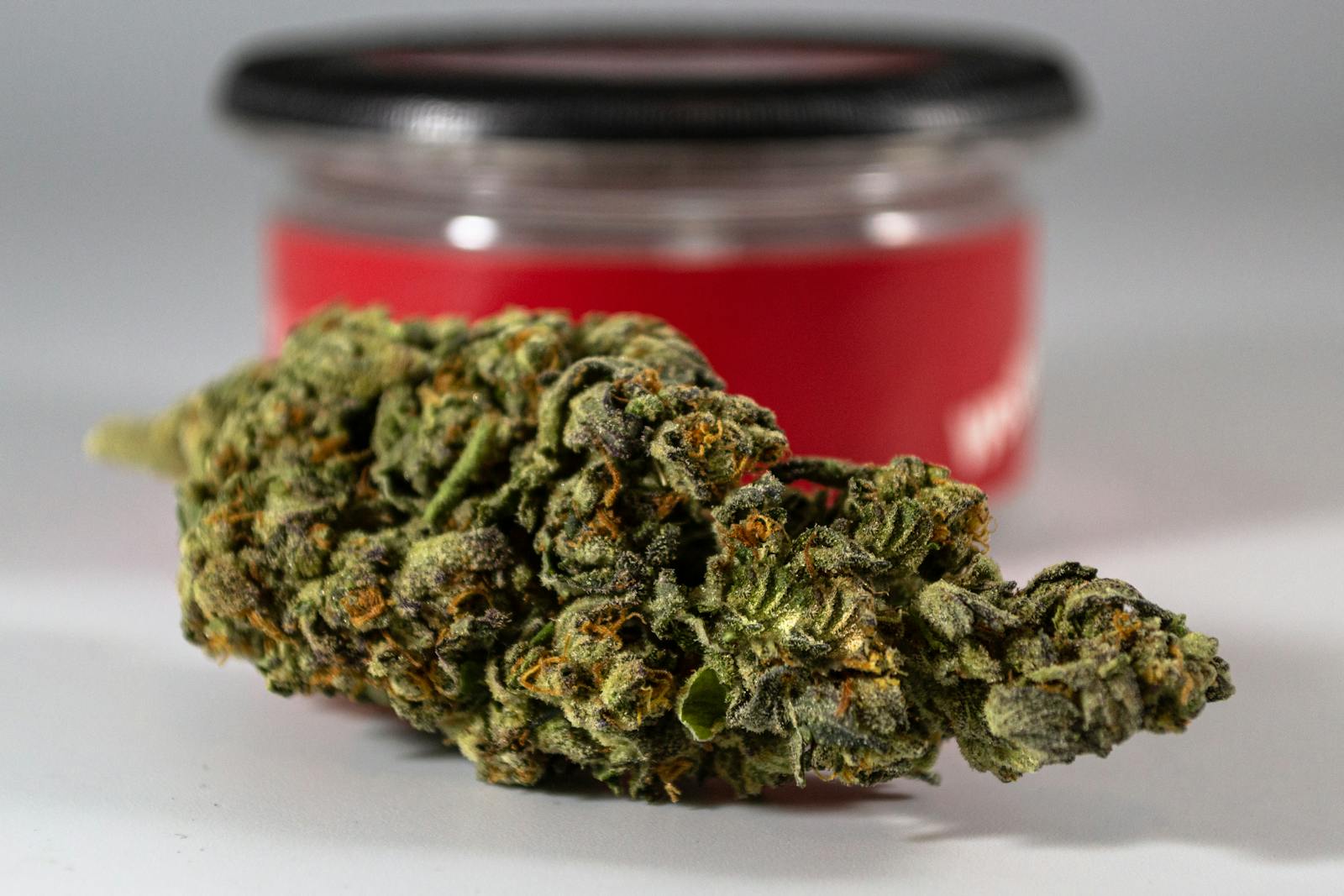
The Hindu Kush mountain range sits at roughly 3,500 metres elevation, battered by cold nights, rocky soil, and a short season that punishes anything fragile. The cannabis plants that survived those conditions for millennia became the foundation of some of the most reliable, resin-loaded genetics in the world. That's not history for its own sake — it's the reason Kush strains behave the way they do in your grow room right now.
Growing Kush isn't complicated, but it rewards growers who understand why these plants are built the way they are. From managing airflow through dense canopies to picking between feminised and autoflowering formats, a handful of well-timed decisions separates a good harvest from a great one. This guide covers all of it — genetics, environment, structure, training, and the specific cultivars worth running.
What Are Kush Strains?
Kush genetics carry the fingerprint of their origin: compact, fast-finishing, cold-tolerant, and covered in trichomes. When cannabis plants had nothing but thin mountain air, short summers, and cool nights to work with, they evolved towards efficiency — smaller stature, dense flower structure, and heavy resin production as a UV defence. Every modern Kush cultivar you grow indoors under LED panels is, in some meaningful way, still running that same mountain software.
Structurally, Kush plants are unmistakable. Tight internodal spacing means nodes stack close together, building chunky bud sites rather than airy, stretched colas. Wide, dark-green fan leaves are typical of the indica dominance in most Kush lines. Height stays manageable — most feminised Kush cultivars top out between 60 cm and 120 cm indoors, making them ideal for Canadian growers working with low basement ceilings or standard 1.2 m grow tents.
Terpene profiles run deep and earthy. Myrcene is usually the lead player, delivering that musky, slightly herbal base that defines the Kush aroma. Caryophyllene adds a peppery, spiced edge. Some phenotypes open up with subtle sweetness or even citrus on the back end, but that grounded, resinous smell is the signature. If you've ever opened a jar of properly cured Kush and paused — that's myrcene doing its job.
Genetic stability is another hallmark. Because Kush lines have been selected and stabilised over decades, feminised Kush seeds tend to produce uniform, predictable plants from run to run. For growers who want consistent results and don't have time to chase phenotype lottery tickets, that reliability is worth a lot.
The Core Kush Cultivars Worth Running
Decades of breeding have produced hundreds of Kush-adjacent strains, but a handful of core cultivars keep reappearing in serious grow rooms. They share the classic Kush framework — compact, dense, fast, while each bringing something distinct to the table.
OG Kush
OG Kush, the California-bred legend with Chemdawg and Hindu Kush lineage, leans hybrid rather than full indica. That means you'll see a bit more vertical stretch during the first two weeks of flower — expect 30–50% height increase, and stronger lateral branching than a straight Afghani line. The payoff is a complex terpene profile that layers earthy pine with a sharp, almost fuel-like top note from limonene and caryophyllene. Yields indoors tend to hit 400–500 g/m² under a well-dialled 600W or equivalent LED. If you prefer a hands-off light schedule, OG Kush in autoflowering format finishes the whole cycle in roughly 70–75 days from seed.
Bubba Kush
Bubba Kush, a deeply indica-leaning cultivar with Afghan roots and a hint of Pre-98 Bubba genetics, is the go-to for growers working in tight spaces. Plants regularly stay under 80 cm indoors, with dense, almost brick-like colas that swell through a 8–9 week flower period. The aroma sits firmly in chocolate-coffee-earth territory with a hint of sweet hash — one of the more distinctive nose-profiles in the Kush family. Because those buds pack so tightly, airflow management is non-negotiable. The Bubba Kush autoflowering feminised version makes quick work of the cycle while keeping that signature structure intact.
Purple Kush
Purple Kush, a pure indica cross of Hindu Kush and Purple Afghani, is one of the most visually striking cultivars in the Kush family. The anthocyanin pigments responsible for its colour are temperature-sensitive — drop your night temps to around 15–18°C during the final two to three weeks of flower and the leaves and calyxes shift into rich deep purple tones that make harvest photos genuinely impressive. Growth pattern mirrors Bubba Kush: squat, branchy, and easy to manage. It's an excellent choice for newer growers who want a visually rewarding, forgiving first run.
Master Kush
Master Kush is the strain breeders point to when they want to illustrate stable, old-school Hindu Kush genetics. Developed in Amsterdam from two pure Hindu Kush landrace lines, it grows with a predictability that experienced cultivators genuinely appreciate — compact plants, consistent node spacing, dense bud development, and minimal reaction to minor environmental fluctuations. If you push too hard on nutrients with most strains, you pay for it. Master Kush tends to forgive and carry on. Flowering runs 7–9 weeks, and the earthy, citrus-touched flavour profile cures beautifully.
These four cultivars represent the backbone of the Kush family. Run any one of them and you'll develop an intuition for Kush growth patterns that transfers directly to every other Kush cultivar you try.
The Full Range: More Kush Strains to Explore
Beyond the core four, the Kush family stretches into an impressive range of flavour profiles and growth formats. Whether you're chasing tropical fruit notes, candy sweetness, or a fast autoflower cycle, there's a Kush-based cultivar that fits the brief.
- Woody Kush — earthy, resinous, and true to old-school Kush structure
- Platinum Bubba Kush — Bubba genetics elevated with Platinum OG, adding extra trichome density
- Kush Mints — a modern cross with Animal Mints that delivers a cool, minty-fuel profile over classic Kush density
- Tangerine Kush — citrus-forward and bright, with limonene-heavy terpenes over an earthy Kush base
- Blueberry Kush — Blueberry × OG Kush cross with sweet berry aromatics and strong indica structure; also available as Blueberry Kush Auto for faster cycles
- Mango Kush — tropical, myrcene-rich, with a mango-banana nose that's hard to mistake; Mango Kush Auto brings the same profile in a seed-to-harvest format under 80 days
- Khalifa Kush — developed in collaboration with Wiz Khalifa, a refined OG Kush selection with extra resin expression
- Mickey Kush — sativa-leaning hybrid that brings Kush density to a more open, fruity profile
- Kandy Kush — OG Kush × Trainwreck with a sweet candy-citrus twist on classic Kush structure
- Cotton Candy Kush — sweet, floral, and approachable, with softer indica growth patterns
- Lemon OG Kush — bright lemon-fuel terpene stack over OG Kush genetics
- Platinum Purple Kush — colour, resin, and potency all pushed to the upper end of the Kush spectrum
- Tango Kush — fruity and vibrant, with enough Kush backbone to keep structure tight
- Krishna Kush — deeply rooted in Hindu Kush landrace genetics, earthy and traditional
- Sour Kush — Sour Diesel × OG Kush, a diesel-and-earth combination with extra energy in the profile; also available as Sour Kush Auto
- Kobain Kush Auto — fast-cycling autoflower with potent Kush genetics and a straightforward grow
- Pine Tar Kush — a rare, resinous Pakistani landrace selection with a sharp pine-tar and hash aroma unlike anything else in the Kush family
Indoor vs. Outdoor Growing for Kush Strains
Here's the honest comparison: indoor growing gives you precision, outdoor growing gives you simplicity, and Kush cultivars handle both unusually well. The choice comes down to what you want to control and what you're willing to leave to nature.
Growing Kush indoors lets you dial every variable — lighting spectrum and intensity, temperature differentials between day and night, CO₂ levels, and most importantly, humidity. That last point matters enormously with Kush. Dense buds create micro-environments inside the cola where moisture lingers. Keeping relative humidity below 50% once you're two to three weeks into flower significantly reduces botrytis risk. Kush's compact height means standard 1.2 m × 1.2 m tents accommodate four to six plants comfortably, and the bushy lateral growth makes SCROG training under a single horizontal net highly effective for maximising light coverage.
Growing Kush outdoors in Canada is more viable than many growers expect, precisely because of that mountain heritage. Kush cultivars tolerate cooler overnight temperatures in the 12–15°C range — the kind of late-summer nights that stress tropical sativa hybrids, without losing vigour. In British Columbia, Ontario, and Quebec, outdoor Kush grows in well-drained soil with a south-facing aspect can produce impressive results with minimal infrastructure. Harvest typically lands in late September to mid-October for feminised cultivars, comfortably before the first hard frost in most Canadian growing regions.
Greenhouse cultivation sits at an appealing middle point. Natural sunlight drives photosynthesis more efficiently per dollar than any artificial source, while a poly-tunnel or glass structure moderates humidity and extends the season by four to six weeks on either end. For Canadian growers in shorter-season provinces, a greenhouse effectively unlocks cultivars that wouldn't finish outdoors in time.
One practical note: wherever you grow, spacing plants adequately is not optional with Kush. These are naturally bushy plants, and crowding them accelerates humidity build-up in the canopy exactly when you can least afford it — late flower.
Ideal Growing Conditions for Kush Plants
Getting the environment right for Kush doesn't require obsessive precision, but the following parameters make a measurable difference in final bud density and terpene development.
Temperature
Maintain 22–26°C during lights-on periods. A drop to 18–20°C during lights-off isn't just tolerable — it's beneficial. That temperature differential (known as DIF) keeps internodal spacing tight and, in cultivars like Purple Kush and Platinum Purple Kush, triggers anthocyanin expression in the final two weeks of flower. Avoid sustained temperatures above 28°C; heat stress degrades terpenes and causes buds to foxtail rather than stack.
Humidity and VPD
Vapour pressure deficit (VPD) is a more accurate guide than RH alone, but as a practical baseline:
- Seedling stage: 65–70% RH
- Vegetative: 55–65% RH
- Early flower (weeks 1–4): 45–55% RH
- Late flower (weeks 5–harvest): 40–45% RH
Kush buds are dense enough that botrytis can establish in the core of a large cola before it's visible on the surface. Keeping humidity on the lower end through late flower, combined with good airflow, is your primary defence.
Nutrients
Kush cultivars don't need to be pushed hard on nutrients to perform. In fact, overfeeding is the single most common mistake growers make with these strains. A balanced NPK during veg — roughly a 3:1:2 ratio, transitions to a lower-nitrogen, higher-phosphorus-and-potassium programme in flower. Organic amendments like bat guano, kelp meal, and worm castings in a well-draining soil mix suit Kush genetics particularly well, producing complex terpene profiles that synthetic-heavy programmes sometimes flatten out. Watch for early signs of nutrient sensitivity (slight claw on lower fan leaves) and back off immediately.
Soil and Root Environment
Well-draining, slightly acidic soil (pH 6.0–6.5 for soil, 5.8–6.2 for coco or hydro) gives Kush roots the oxygen they need. Heavy, compacted growing media holds moisture too long for plants predisposed to dense bud structure. A perlite addition of 20–30% in a standard potting mix significantly improves drainage and aeration.
Airflow
A steady, gentle breeze moving through the canopy — never blasting directly at stems, controls humidity, strengthens stalks through mild mechanical stress, and prevents the stagnant air pockets that invite fungal issues. Two oscillating fans in a standard grow tent, positioned at canopy level and below, is a simple baseline that works consistently.
Understanding Kush Plant Structure and How to Train It
The compact, bushy architecture of Kush cultivars is both their greatest asset and their primary management challenge. Understanding how they grow is the first step to shaping them into maximum-yield canopies.
Tight node spacing means that within a few weeks of vegetative growth, a Kush plant can look impressively full. That's great for bud site density — every node becomes a potential cola. But it also means the inner canopy shadows quickly, lower bud sites receive little useful light, and airflow through the centre of the plant becomes restricted. Left unmanaged, the interior of a mature Kush plant in week 6 of flower is a humidity trap.
Three training approaches work particularly well with Kush genetics:
- Low-Stress Training (LST): Begin bending and tying lateral branches outward during early veg — as soon as secondary growth is 10–15 cm long. Kush's strong branching responds well to LST, spreading the canopy wide and bringing multiple bud sites to an even height. This is the lowest-effort, highest-return technique for Kush in a tent.
- Topping or FIMing: Remove the apical tip once the plant has 4–5 nodes to redirect growth energy into lateral branches. Kush cultivars recover quickly from topping — their hardy genetics shrug off the stress faster than many sativa-leaning strains. Combined with LST after the recovery, this creates a flat, multi-topped canopy ideal for even light distribution.
- SCROG (Screen of Green): Stretch a horizontal net at 30–40 cm above the pot and train branches through the screen as they grow. Kush's natural lateral spread makes SCROG highly effective, and the net physically supports heavy colas through late flower. Yields of 500–600 g/m² are achievable with experienced SCROG management of vigorous feminised Kush lines.
Defoliation timing matters. A moderate defoliation session — removing large fan leaves that block bud sites or restrict airflow, at the transition to flower and again at week 3–4 of flowering allows light to penetrate the inner canopy and reduces the humidity risk in dense Kush growth. Don't strip the plant bare; remove the leaves blocking light, not all of them.
For autoflowering Kush cultivars, keep training gentle. LST works well right through the cycle, but avoid topping or heavy defoliation unless you have experience with the specific cultivar — autos have fixed life spans and don't recover from high-stress techniques as reliably as photoperiod plants.
Harvest Cues, Drying, and Curing Kush
Kush strains are worth finishing properly. Harvesting even a week early costs you terpene development and cannabinoid potency that no amount of feeding or training can recover. The final two weeks of flower are when Kush buds swell their last 10–15% and the terpene profile locks in.
Read the trichomes, not just the calendar. Under a 60–100× jeweller's loupe or a digital microscope, trichome heads shift from clear (immature) to cloudy white (peak THC) to amber (THC degrading to CBN). For classic Kush effects — heavy, sedating, body-forward, harvest when 70–80% of trichomes are cloudy with 10–20% amber. For a slightly more cerebral effect, harvest earlier, at peak cloudy with minimal amber.
Pistil colour is a secondary cue. When 70–90% of white pistils have darkened and curled inward, you're in the harvest window. Cross-reference with trichomes for confidence.
Drying Kush properly means a slow, cool environment: 15–18°C, 55–60% RH, total darkness, and seven to fourteen days of hang drying before any trimming or jarring. Dense Kush buds retain moisture at their core long after the surface feels dry. Rushing this stage is one of the most common reasons a well-grown Kush harvest ends up harsh and headache-inducing.
Curing in sealed glass jars, burped daily for the first two weeks then weekly for four to eight weeks, transforms a good Kush harvest into an exceptional one. The enzymatic and anaerobic processes during cure break down residual chlorophyll and develop the complex earthy, spiced, sometimes sweet flavour notes that define well-finished Kush. A properly cured Kush — say, a jarred Master Kush or Pine Tar Kush at six weeks of cure, smells and smokes like a different product than the same flower rushed to a bag at ten days dry.
FAQs
What makes Kush strains different from other cannabis cultivars?
Kush cultivars descend from Hindu Kush mountain landrace genetics, which bred them for compact stature, dense bud structure, heavy resin production, and resilience to cooler temperatures and shorter seasons. That combination of traits makes them structurally distinct from equatorial sativa lines and notably more consistent than many hybrid cultivars. The earthy, myrcene-and-caryophyllene-dominant terpene profile is also characteristic of the family in a way that's immediately recognisable.
Are Kush strains good for beginner growers?
They're one of the better choices for newcomers, yes. Kush cultivars are genetically stable, tolerant of minor feeding errors, and forgiving of small environmental fluctuations that might cause more damage in sensitive sativa-leaning strains. Master Kush and Purple Kush are particularly well-regarded entry points. The one area beginners need to stay attentive to is airflow and humidity management around those dense buds — that's where most beginner Kush grows run into trouble.
How long do Kush strains take to flower?
Most feminised Kush cultivars flower in 7–9 weeks. Pure indica lines like Purple Kush and Bubba Kush tend to finish at the shorter end of that range (7–8 weeks), while hybrid Kush lines like OG Kush typically run 8–9 weeks. Autoflowering Kush cultivars complete the full cycle — seed to harvest, in 65–80 days depending on the cultivar.
Do Kush plants grow better indoors or outdoors?
Kush cultivars perform well in both environments. Indoors gives you precise control over the conditions that matter most — humidity, temperature differential, and lighting spectrum, which typically translates to heavier, cleaner yields. Outdoors works well in most Canadian climates given Kush's tolerance for cool nights and shorter seasons, though good air circulation and spacing are essential. Greenhouse growing combines the best of both and is worth considering for Canadian growers dealing with variable fall weather.
Kush genetics have earned their reputation through decades of consistent performance across climates, grow styles, and cultivation skill levels. Whether you start with a classic like OG Kush or explore the broader catalogue through cultivars like Kush Mints or Pine Tar Kush, the same core principles apply: manage airflow, respect humidity in late flower, train early, and give the cure the time it deserves. Get those fundamentals right and Kush will deliver exactly what it's been delivering since those first mountain plants came down to cultivation — dense, resinous, deeply aromatic buds that hold up to scrutiny. For more cultivation guides across all strain families, visit our Growing Marijuana resource centre.
Keep Reading

How Much Does It Cost To Grow Your Own Weed in Canada?
Learn the real costs of growing weed at home, including grow tents, lights, seeds, nutrients, electricity, and how much cannabis you can harvest.
The 5 Best Blueberry Cannabis Strains To Grow Indoors
Find the best blueberry weed strains to grow indoors, including Blue Dream, Blueberry Cheesecake, and more - and buy the seeds from Pacific Seed Bank.
Why 5.8–6.5 Is The Ideal pH for Cannabis (And When to Adjust)
Learn why 5.8-6.5 is the ideal pH for cannabis plants, how to test your plant's pH, and how to adjust it higher or lower when you need to.
The Best Autoflowering Light Schedule For Bigger Yields
Stop guessing your autoflowering light schedule. Our guide breaks down the 18/6, 20/4, and 24/0 schedules to help you grow bigger, better plants.