How to Plant Cannabis Seeds for Beginners
· 9 min read · Updated May 14, 2026
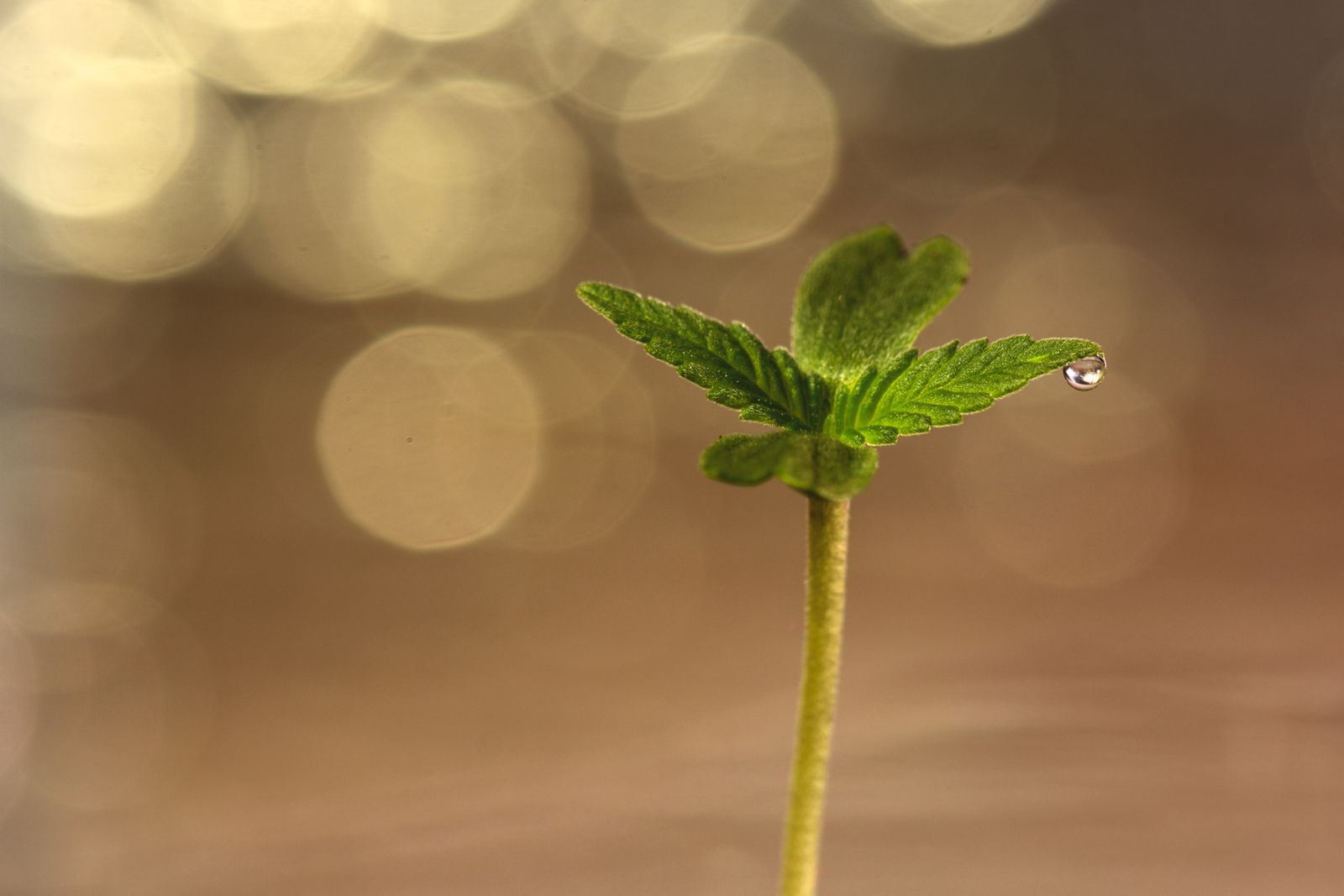
Most first-time growers kill their seedlings in the first two weeks — not during germination, not at harvest, but in the quiet window right after planting, when a seedling is too young to tolerate mistakes and too small to show obvious distress until it's too late. Get those early days right and the rest of the grow follows naturally. Get them wrong and you're back to square one.
With over 2,000 strains available to Canadian cultivators and a legal personal-cultivation limit of four plants per household under the Cannabis Act, every seed counts. This guide walks you through exactly how to plant cannabis seeds successfully — from germination cues through soil prep, watering discipline, and strain selection, so your first grow rewards you with the harvest it deserves.
Germinating Your Seeds Before They Hit Soil
You cannot rush the step that comes before planting. Dropping an ungerminated seed directly into a pot and hoping for the best is one of the most common beginner mistakes, and it wastes both time and genetics.
Once you have sourced high-quality cannabis seeds — ideally from a reputable Canadian retailer like Pacific Seed Bank Canada, where seed viability and genetic authenticity are taken seriously, your first job is coaxing those seeds to reveal their tap roots. Cannabis seeds require three things to break dormancy: warmth (ideally 22–25°C), consistent moisture, and darkness. That's it. Nothing more complicated than that.
The most reliable method for beginners is the Water Glass/Paper Towel combination. Soak your seeds in a glass of room-temperature, pH-neutral water for 12–24 hours, then transfer them between two damp paper towels on a plate, seal the whole setup inside a plastic bag, and place it somewhere consistently warm — the top of a refrigerator, a seedling heat mat set to 24°C, or a high shelf above a light fixture all work well. Check every 12 hours. For a complete walkthrough of every popular germination technique and their trade-offs, see our dedicated guide on how to germinate marijuana seeds for beginners.
Your seeds are ready to plant when a white tap root emerges from the shell and reaches roughly 2–5 mm in length. At that point, treat them like the living organisms they are — handle them only with clean tweezers, never with bare fingers. The oils and pressure from fingertips can bruise or contaminate a tap root that has taken days to develop.
How to Plant Germinated Seeds: A Step-by-Step Method
The mechanics of planting are straightforward, but precision at each stage matters more than most beginners expect. A seedling's first 10–14 days above soil set the trajectory for everything that follows.
Start with the right containers. Seedling trays with individual cells, or small pots between 7 and 10 cm (roughly 3–4 inches) wide, are ideal for the seedling stage. Avoid jumping straight into a large 10-litre container — the excess soil volume holds too much moisture relative to the tiny root system, creating anaerobic pockets and root rot risk. You want the medium to dry slightly between waterings so the roots are encouraged to search outward.
Your growing medium needs to be light and airy: a quality seedling mix or a peat-perlite blend works well. Critically, it must sit at the correct pH for cannabis — between 6.0 and 7.0 for soil, and 5.5 to 6.5 for soilless or coco coir media. Outside that range, nutrient uptake locks out regardless of how well you've fed your plants. Test your medium before you plant, and test your water before you pour.
Here is the planting sequence, step by step:
- Moisten your medium first. Water your seedling mix until it's evenly damp — not saturated, not bone dry. You should be able to squeeze a handful and have it hold its shape without dripping water.
- Make a shallow planting hole. Use a pencil, a chopstick, or the tip of your finger to create a hole roughly 1–1.5 cm (about half an inch) deep. Any deeper and the seedling wastes precious energy pushing toward the surface.
- Orient the seed correctly. Lower the germinated seed root-tip-down, shoot-tip-up. If the seed is curled and the orientation is unclear, plant it on its side — the seedling will self-correct within a day or two.
- Cover gently. Tap loose soil lightly over the hole. Do not press hard. The emerging cotyledons need to push through the surface, and compacted soil can pin them down.
- Water with care and precision. Use a small measuring cup, a spoon, or a spray bottle. Apply water in a ring around the seed rather than directly on top of it, encouraging roots to spread outward. Use water with a pH of 6.0–6.5. Tap water in many Canadian municipalities runs alkaline (often pH 7.5–8.0), so test it before use rather than assuming it's safe.
- Establish the right environment immediately. Place your pots under a gentle light — a T5 fluorescent or low-intensity LED at 45–60 cm is ideal — and maintain ambient air temperature at 24–28°C. Keep relative humidity between 65–70% during the seedling phase to support transpiration through underdeveloped root systems.
- Be patient. Most seeds break the surface within 2–5 days of planting. Do not dig them up to check on them. Do not add more water because you're worried. Overwatering is the single leading cause of seedling death.
Seven Mistakes That Kill Seedlings Before They Have a Chance
Knowing what to do is only half the education. Experienced growers earn their knowledge partly by learning — often the hard way, what not to do. These are the most damaging mistakes beginners make in the seedling stage, and every one of them is entirely avoidable.
- Overwatering or underwatering. The medium should cycle between slightly moist and lightly dry. Lift the pot — if it feels heavy, skip the water. Seedling roots need oxygen as much as moisture.
- Sealing pots under a plastic dome or wrap. This traps humidity, invites damping-off fungus, and starves roots of fresh air exchange. If you use a humidity dome, keep vents open.
- Cold, dark germination environments. Temperatures below 18°C slow germination dramatically and stress seedlings. A cold basement corner is not a nursery.
- Exposing seedlings to frost or outdoor cold. Canadian springs are deceptive — a warm April afternoon can be followed by a frost overnight. Indoor seedlings should stay indoors until nighttime lows are consistently above 10°C.
- Fertilising seedlings too early. A well-formulated seedling mix carries enough nutrition for the first 2–3 weeks. Adding fertiliser before the plant has a true root system causes nutrient burn and can be fatal. Wait until the second set of true leaves has developed.
- Using water with incorrect pH. This bears repeating because it is that important. Even a half-point of pH drift can trigger iron or calcium deficiencies that look alarming and are often misdiagnosed.
- Applying organic teas, compost extracts, or pesticides to seedlings. These inputs, however beneficial to mature plants, overwhelm the tiny seedling's root zone. Keep the seedling stage simple and clean.
Choosing the Right Seeds for Your First Grow
Here's the truth that seed catalogues rarely say plainly: the single biggest factor in whether a beginner's first grow succeeds is strain selection, not technique.
It matters enormously that the seeds that you buy come from a verified, reputable source with stable genetics. A seed with inconsistent lineage can express wildly different phenotypes — one plant stretching two metres while a sibling stays squat, or flowering windows that differ by three weeks, making it nearly impossible to manage a uniform grow. Start with verified genetics and you eliminate an enormous variable.
Beyond quality, the indica-sativa-hybrid spectrum shapes every aspect of the grow experience:
- Indica-dominant strains tend to stay compact (60–120 cm), finish flowering in 8–9 weeks, and produce dense, resinous buds associated with body relaxation and sedative effects. For indoor Canadian growers with limited ceiling height, they're often the practical choice.
- Sativa-dominant strains can stretch dramatically — upward of 200 cm or more — and carry longer flowering periods of 10–14 weeks. Their cerebral, energising effects are highly prized, but the extended timeline and vigorous growth demand more management from the grower.
- Hybrid strains sit between these poles, blending effect profiles and growth characteristics. Many modern hybrids have been specifically bred to combine the manageable size of an indica with the flavour complexity and effect of a sativa — an excellent middle ground for beginners.
- Autoflowering strains transition from vegetative growth to flower based on age rather than light cycle, typically finishing seed-to-harvest in 70–90 days regardless of photoperiod. For first-time indoor or balcony growers in Canada's shorter growing season, autos remove much of the complexity around light scheduling entirely.
Beginners consistently do best with low-maintenance strains that have earned a reputation for resilience: plants that tolerate minor pH swings, recover quickly from overwatering errors, and don't demand surgical precision with nutrients. Autoflowering indica-dominant hybrids are the classic starting recommendation — forgiving, fast, and compact enough for a grow tent or spare room.
Planning Your Space Before the First Seed Goes In
That seedling sitting in a 10-cm pot today could be a 200-cm sativa in twelve weeks. Growers who don't plan for vertical height end up training desperately — bending and tucking plants into horizontal scrog nets as a corrective measure rather than a deliberate cultivation choice.
Before you plant a single seed, measure your available height. A typical grow tent ranges from 120 cm to 200 cm tall; subtract 45–60 cm for lights and airflow equipment, and what remains is your usable plant height. That number should directly inform which strain you choose. Indicas and autoflowering varieties are inherently better suited to low-ceiling spaces. If you have the vertical room and the experience, a tall sativa rewards patience with extraordinary yields and aromatic complexity — but it is not a beginner's first plant.
Horizontal space matters equally. Under the Cannabis Act, Canadian home cultivators are permitted up to four plants per household. Four indica-dominant plants in a 120 cm × 120 cm tent, trained with low-stress techniques (LST) and a light topping at the fifth node, can yield 300–500 g/m² from a quality feminised strain in the right conditions. Plan your canopy with that geometry in mind from day one.
Airflow is the overlooked dimension of space planning. Good circulation keeps humidity in the ideal 40–60% range during flowering, prevents mould in dense canopies, and strengthens stems through mild mechanical stimulation. At minimum, you need an oscillating fan inside the space and an exhaust fan with a carbon filter exchanging the full air volume every 1–3 minutes.
Building Good Habits from the First Day
The growers who produce exceptional results — grow after grow, season after season, are not necessarily the ones with the most expensive equipment. They are the ones who keep records, notice small changes early, and build disciplined daily habits from the very beginning.
Start a simple grow journal. Note the date of germination, the date of planting, your watering volumes and pH readings, ambient temperature and humidity, and any observations about leaf colour, growth rate, or unusual symptoms. What looks like an insignificant detail in week two can be the key diagnostic clue in week six when something unexpected appears.
Water when the medium needs it, not when the calendar says to. Feed when the plant shows early signs of demand, not on a fixed schedule. Observe your plants every single day — not to intervene, but to understand what healthy looks like so you recognise stress the moment it begins.
For more expert cultivation guidance across every stage of the grow cycle, from seed selection through harvest and cure, explore the full Growing Marijuana resource library at Pacific Seed Bank Canada. The knowledge is there; the only remaining ingredient is your attention.
Plant well, observe closely, and respect the biology — cannabis is a remarkably capable plant when you give it a sound foundation from the very first day.
Keep Reading

How Much Does It Cost To Grow Your Own Weed in Canada?
Learn the real costs of growing weed at home, including grow tents, lights, seeds, nutrients, electricity, and how much cannabis you can harvest.
The 5 Best Blueberry Cannabis Strains To Grow Indoors
Find the best blueberry weed strains to grow indoors, including Blue Dream, Blueberry Cheesecake, and more - and buy the seeds from Pacific Seed Bank.
Why 5.8–6.5 Is The Ideal pH for Cannabis (And When to Adjust)
Learn why 5.8-6.5 is the ideal pH for cannabis plants, how to test your plant's pH, and how to adjust it higher or lower when you need to.
The Best Autoflowering Light Schedule For Bigger Yields
Stop guessing your autoflowering light schedule. Our guide breaks down the 18/6, 20/4, and 24/0 schedules to help you grow bigger, better plants.