The Lowdown On Cannabis Trichomes
10 min read · , updated May 14, 2026
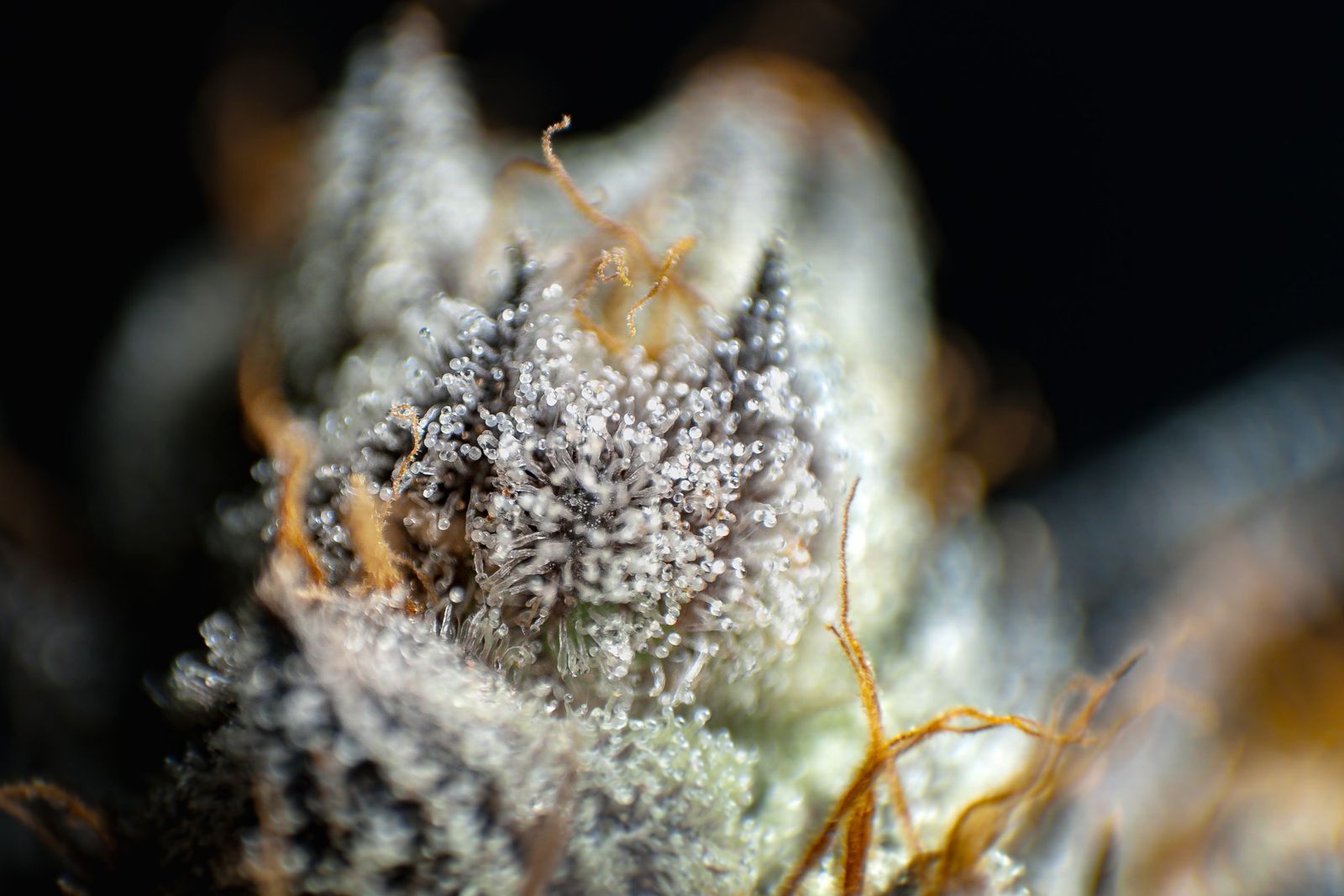
That glistening white frost coating a perfectly ripe cannabis bud isn't decoration — it's the plant's entire chemical arsenal, packed into structures smaller than a human hair. Understanding cannabis trichomes is, without exaggeration, the single most important thing a grower or buyer can do to unlock better harvests, more potent medicine, and a deeper appreciation for what separates a world-class cultivar from a mediocre one.
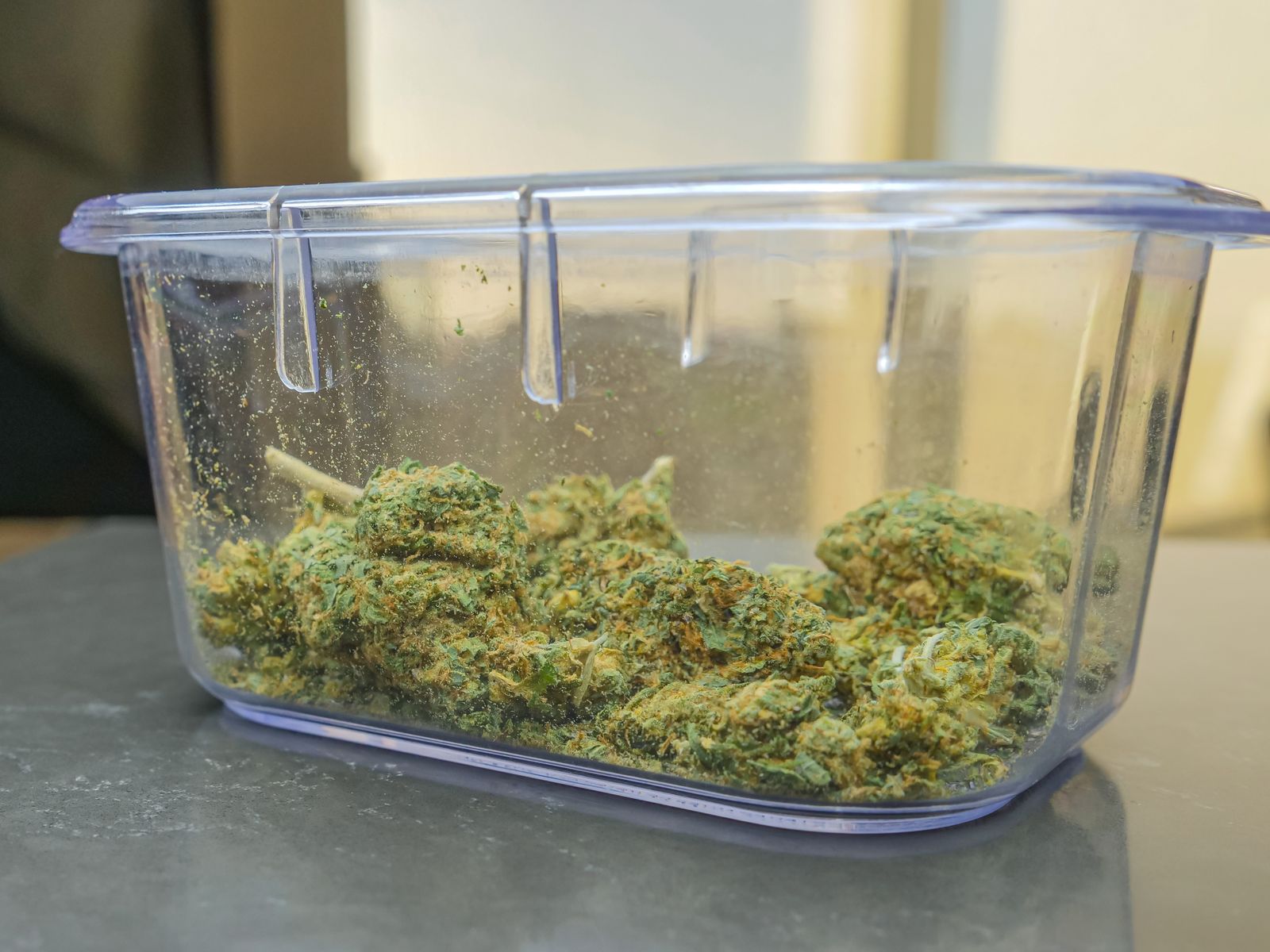
The blanket of crystalline resin you see on premium flowers is responsible for producing cannabinoids like THC and CBD, the aromatic terpenes that give each strain its signature scent and flavour, and the flavonoids that contribute to colour and therapeutic nuance. Everything that makes cannabis cannabis lives inside the trichome. The plant itself is just the scaffolding.
What Are Cannabis Trichomes, Exactly?
The word comes from the Greek Tríchōma — "growth of hair", and the name fits. Under a jeweller's loupe or a decent digital microscope, trichomes look like something from a science-fiction film: translucent mushroom-shaped stalks topped with bulbous, resin-filled heads, blanketing the surface of flowers and sugar leaves in dense, shimmering colonies.
They are, in the most precise horticultural sense, epidermal secretory structures. In plain English: tiny biological factories that synthesise and store hundreds of known compounds, including over 100 distinct cannabinoids, scores of terpenes, and a range of flavonoids. Their distribution across the cannabis plant isn't random — trichome density is highest on the calyxes and bracts of female flowers, which is precisely why well-developed colas carry so much more potency than fan leaves or stems.
Trichomes aren't unique to cannabis. Carnivorous plants like sundews use similar structures to trap insects. Many Mediterranean herbs produce aromatic trichomes to deter herbivores in dry, exposed climates. On cannabis, their evolutionary purpose is multilayered:
- Their bitter taste and overwhelmingly pungent smell make cannabis flowers unappealing to animals that might otherwise graze on or damage the plant
- Trichomes act as a physical barrier against insects and certain fungal pathogens
- The resinous coating buffers the plant against harsh wind in exposed growing environments
- UV-absorbing compounds within the trichome head function as a natural sunblock, protecting developing seeds from radiation damage
Nature, it turns out, engineered the perfect preservative long before humans thought to apply resin to anything.
The Three Types of Cannabis Trichomes
Not all trichomes are created equal. Three distinct types appear on cannabis, and understanding their differences changes how you read a plant — whether you're scouting for harvest timing, selecting genetics for extraction, or simply trying to understand why one strain photographs more beautifully than another.
- Bulbous trichomes are the smallest of the three, measuring just 10–15 micrometres in width — roughly one-fifth the diameter of a human hair. They are scattered across the entire plant surface, including stems and large fan leaves, and while they produce cannabinoids and terpenes, their tiny size severely limits their output. You cannot see these with the naked eye; even a standard jeweller's loupe struggles. They are, functionally, the foot soldiers: present everywhere, productive in a modest way, easy to overlook.
- Capitate sessile trichomes are the middle tier, growing to 20–30 micrometres — roughly the diameter of a single wool fibre. They feature a discernible head and a short stalk, and they're far more abundant than bulbous trichomes. They contribute meaningfully to the plant's overall cannabinoid and terpene profile, but they remain too small to see without magnification.
- Capitate-stalked trichomes are the ones that matter most to growers, extractors, and anyone trying to assess quality by eye. Ranging from 50 to 100 micrometres wide, they are visible to the naked eye as the "frost" or "crystals" on premium buds. They have a pronounced stalk topped with a large, resin-packed gland head — and that head is where virtually all meaningful cannabinoid and terpene biosynthesis occurs. These trichomes appear in the greatest density on flower bracts and are the primary target for both hand-trimmed kief collection and solventless extraction.
The comparison is stark: a bulbous trichome at 15 micrometres holds a fraction of the resin volume of a fully developed capitate-stalked trichome at 100 micrometres. When experienced growers talk about "trichome coverage" or "frosty genetics," they are referring almost exclusively to capitate-stalked density — and for good reason. High-resin cultivars selected specifically for extract production will often express trichome heads so dense and swollen they begin to fuse at peak ripeness, creating the solid resin sheets prized for rosin and ice-water hash.
The Trichome Life Cycle: From Plastid to Potency
Trichome development is tightly coupled to the plant's own reproductive timeline. The cycle begins in earnest as cannabis transitions into its bloom phase — typically triggered by a shift to a 12/12 light cycle for photoperiod strains, or by internal maturation cues in autoflowering varieties.
In the earliest days of flowering, trichome initials emerge along the epidermis of developing calyxes. At this stage they are small, structureless, and chemically inert. As the plant pushes energy into floral development, specialised cells at the base of each trichome stalk begin transporting plastids — the organelles that carry fatty acid precursors, upward into the expanding gland head. Inside the head, these precursors are metabolised through a cascade of enzymatic reactions, ultimately producing the cannabinoid acids (THCA, CBDA, CBGA, and dozens more) and the terpene compounds that give each cultivar its distinct aromatic identity.
Light spectrum plays a decisive role in this process. Broader-spectrum light — particularly light that includes UV-B wavelengths, has been shown to stimulate cannabinoid and terpene synthesis within the trichome head, helping plants create higher concentrations of cannabinoids than they would under narrower, UV-deficient sources. This is one reason serious indoor growers are revisiting UVA/UVB supplementation during late flower, and why greenhouse cultivation, which passes natural sunlight through glass, can produce surprisingly resinous results compared to fully sealed indoor rooms running only HPS or blue-spectrum LED.
Genetics set the ceiling. Environment determines how close you get to it.
Beyond light, trichome rate and ultimate density are shaped by temperature, vapour-pressure deficit (VPD), and even minor physical stressors during the vegetative and early-flowering periods. Running VPD in the 1.0–1.5 kPa range during peak flower is widely associated with dense trichome expression and reduced susceptibility to botrytis — two outcomes every Canadian grower chasing quality wants simultaneously.
Reading Trichomes to Nail Your Harvest Window
This is where the science becomes the most practical skill you can develop as a grower. Trichome colour is the most reliable harvest indicator available — more accurate than pistil colour, more precise than a calendar countdown, and far more informative than squeezing a calyx and guessing.
The colour progression follows a predictable arc:
- Clear / translucent — trichomes are still producing and accumulating cannabinoids. THC concentration is building but has not peaked. Harvesting here yields a racy, often anxious effect with less therapeutic depth. Too early.
- Cloudy / milky white — cannabinoid synthesis has peaked. THCA concentration is at its maximum. The effect at this stage tends toward energetic, clear-headed, and cerebral. This window is ideal for sativa-leaning cultivars or consumers prioritising potency.
- Amber — THCA is beginning to degrade into CBN through oxidation and enzymatic activity. The effect shifts progressively toward sedative, body-heavy, and narcotic. A portion of amber trichomes in the mix adds physical depth and is often preferred by indica-leaning consumers or those using cannabis for sleep and pain.
The consensus best practice: begin flushing or preparing for harvest when roughly 50–70% of capitate-stalked trichomes have turned fully cloudy, with 10–20% showing amber. This window balances maximum THC with the entourage complexity that amber trichomes contribute. For a more sedative harvest, push toward 30–40% amber before cutting.
You will need magnification to do this properly. A 30–60x jeweller's loupe works at minimum; a 100x digital microscope with a screen gives you a far clearer picture. Check trichomes on the calyx bracts, not on the sugar leaves — leaves tend to amber faster and will give a misleadingly advanced reading.
Proceed with caution once you are in that window. Trichomes are fragile structures, and several common factors cause rapid degradation:
- Physical contact — handling buds roughly during late flower or trimming breaks trichome stalks and ruptures gland heads, spilling resin and accelerating oxidation
- Heat — temperatures above 25–27°C in the drying room accelerate terpene volatilisation and cannabinoid degradation
- Light — UV and even visible light degrade cannabinoids post-harvest; dry and cure in darkness
- Oxygen — exposure to air converts THCA to THC, then continues degrading THC to CBN; use airtight curing vessels with controlled humidity (58–62% RH)
- Time — even under ideal storage conditions, trichome-derived compounds degrade; properly cured cannabis stored in a cool, dark, sealed environment retains quality for 12–18 months
Trichome Extraction: From Kief to Live Rosin
The concentrated resin inside capitate-stalked trichome heads is the target of every extraction method in the cannabis industry, from the simplest home technique to the most sophisticated commercial process. Understanding what you're doing — separating trichome heads from plant matter, makes every method make more sense.
Mechanical dry extraction (kief) is the most accessible starting point. Running dry, properly cured cannabis over a fine mesh screen or through a multi-chamber grinder causes capitate-stalked heads to shear from their stalks and collect as kief — a powdery, golden-green concentrate that can run anywhere from 30% to over 60% total cannabinoids depending on screen mesh and input quality. Add kief to a bowl, roll it into a joint, or press it into hash.
Ice-water (bubble) hash takes the same mechanical separation principle and adds cold water and agitation. Cold temperatures make trichome heads brittle and easier to separate; water acts as the medium. The collected material is dried and graded by micron size. At its finest — full-melt, six-star bubble hash, this is among the cleanest, most flavour-forward cannabis concentrates available, preserving the terpene profile better than most solvent methods.
Solventless rosin applies heat (typically 60–90°C) and pressure to flower, kief, or bubble hash, forcing the resin from trichome heads into a collected slab. No solvents, no purging, no residual chemistry — just heat, pressure, and the grower's understanding of the source material.
Solvent-based extractions — using butane (BHO), propane, CO₂, or ethanol, are more efficient at stripping trichome heads but introduce chemistry that requires careful purging. These methods dominate the licensed producer market under Canada's Cannabis Act, where closed-loop systems and residual solvent testing are regulatory requirements.
Whatever method you pursue, quality in equals quality out. A cultivar with dense, well-developed capitate-stalked trichomes, harvested at peak cloudy and handled with minimal physical contact, will outperform a mediocre input at every step of the extraction process.
Protecting Trichomes Through Trim, Dry, and Cure
The work isn't done at harvest. In many ways, the 10–14 days following the cut are where trichome integrity is most at risk — and where the gap between good cannabis and exceptional cannabis is either closed or widened irreversibly.
Trim with sharp, clean scissors and handle branches by the stem wherever possible. Dry in darkness at 18–21°C with 50–60% relative humidity, targeting a slow, 10–14 day dry rather than a rushed 4–5 day cycle. Fast drying volatilises terpenes before they can stabilise and collapses trichome structure. The slow dry allows the remaining chlorophyll to break down and lets enzymatic activity within the trichome continue its work at a controlled rate.
Move into sealed glass jars once stems snap cleanly. Burp jars twice daily for the first week, then daily through week two, then weekly through month one and beyond. Use Boveda 62 or equivalent two-way humidity packs to maintain 58–62% RH. Store jars in a cool, dark space — a dedicated curing cabinet, a cool basement, or even a temperature-controlled refrigerator kept above 15°C.
After four to eight weeks of proper curing, the terpene profile deepens, the cannabinoid acids continue their gradual, partial decarboxylation, and the overall aromatic complexity of the flower reaches a peak that freshly dried cannabis simply cannot match. This is the final expression of everything the trichomes produced during the plant's life — and it deserves to be treated accordingly.
For broader reading on cannabis cultivation science, genetics, and Canadian growing guides, the Marijuana Facts section covers everything from seed selection to post-harvest technique.
Trichomes are the reason cannabis is cannabis. Every grow decision you make — lighting spectrum, harvest timing, drying temperature, curing duration, either protects or degrades the biochemical work those microscopic factories spent weeks building. Treat them with that respect, and the plant will reward you with the full depth of its potential: richer flavour, more precise effect, and a product that honours both the genetics and the grower's craft.
Keep Reading
Do Pot Seeds Go Bad? The Real Scoop on Seed Shelf Life
Do pot seeds go bad? Yup. Find out how long cannabis seeds last, how to spot bad ones, and the best storage tricks to keep your seeds viable for years.
Cannabis Terms Explained: Vocabulary For New Growers
Cannabis Seed Storage Tips for Maximum Shelf Life