Can Drug-Sniffing Dogs Smell Your Cannabis?
· 9 min read · Updated May 14, 2026
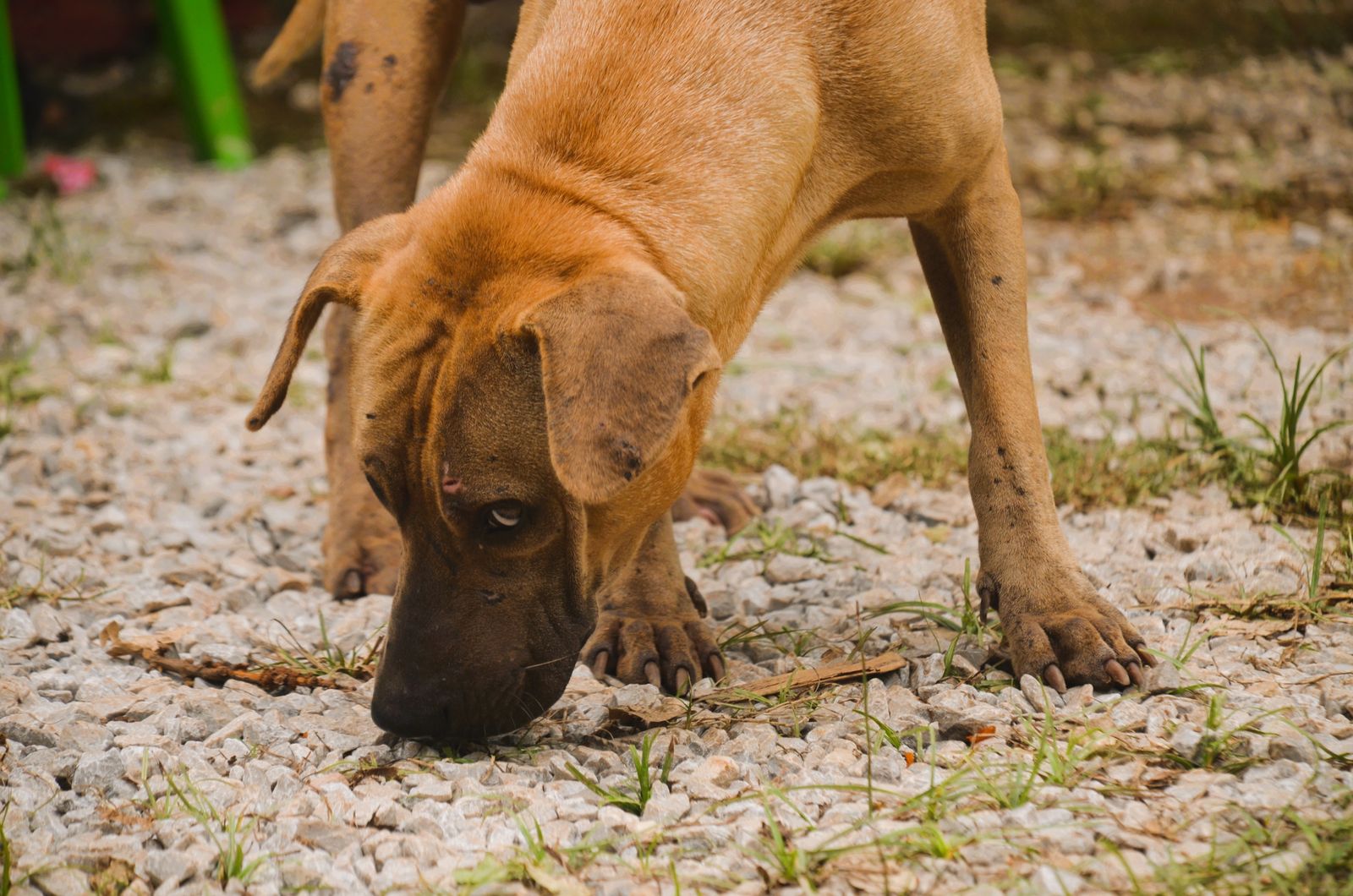
You're standing in the security line at YVR, double-checking your carry-on for the third time, when a German Shepherd in a service vest locks eyes with you. Your pulse spikes — even though you know you're clean. That reaction is practically universal among Canadian cannabis consumers, and it raises a genuinely interesting legal and biological question: can drug-sniffing dogs actually detect your weed, and does it even matter now that cannabis is legal from coast to coast?
The truth is, yes — those dogs almost can smell cannabis on you, your bag, or even your jacket from a session the night before. A dog's olfactory system is estimated to be 10,000 to 100,000 times more sensitive than a human's, capable of detecting odour compounds in concentrations measured in parts per trillion. Cannabis, with its rich terpene profile, myrcene, caryophyllene, limonene, pinene, is practically a beacon to a trained nose. But here's where it gets interesting: with legal marijuana now firmly established across Canada under the Cannabis Act, the legal authority that once backed up a dog's alert has become a genuinely complicated question, one that law enforcement, legal scholars, and courts are still working through.
What Drugs Are Drug-Sniffing Dogs Actually Trained to Detect?
Before we dive into the legal grey zone, it helps to understand what these animals are actually trained to find. The comparison between cannabis and other controlled substances matters enormously in the post-legalisation world, and police departments across Canada have had to reckon with the fact that their dogs don't know the difference between a legal eight-gram personal stash and a trafficking-level seizure.
According to canine training authorities, most police dogs are trained to alert on seven substance categories:
- Marijuana
- Cocaine
- Methamphetamine
- Heroin
- Opiates
- Ecstasy (MDMA)
- LSD
That's a broad mandate, and cannabis sits alongside some of the most dangerous and destructive substances known to pharmacology. To a Belgian Malinois or a Labrador Retriever working an airport corridor, those distinctions are meaningless — the dog alerts on the odour it was trained to recognise, full stop. It cannot distinguish between a gram of your favourite feminized cultivar carried within the legal 30-gram public possession limit and a kilo of cocaine in a checked bag. That chemical blindness is at the heart of the enforcement problem Canada now faces.
In theory, with cannabis now regulated rather than prohibited, police dogs should be refocusing their considerable talents on the six remaining categories of prohibited substances. In practice, the transition has been slower and more legally tangled than anyone anticipated in October 2018.
What Law Enforcement Is Actually Saying
The voice of frontline canine policing on this issue belongs largely to Sgt. Tom Bechthold of the Edmonton Police Canine Department, whose candour has been refreshingly practical. "To train on something that we knew was just a matter of time before it was legal just doesn't make any sense to us," he told the Toronto Star, referring to cannabis inclusion in canine training programmes. Bechthold noted that his unit of 14 police dogs conducted roughly 40 drug searches annually before legalisation; in 2018, the year the Cannabis Act came into force, that number dropped to 28. The trajectory is clear.
The harder question — what happens when a dog trained on cannabis alerts on a person who is legally carrying, was picked up by Steven Penny, a professor in the faculty of law at the University of Alberta. His framing cuts directly to the constitutional core of the issue.
"If what [the dogs] are smelling is a product that people are legally entitled to possess, then that raises the question of whether the police would then have grounds to obtain a warrant to open the container or conduct a search of the location."
Professor Penny goes further. "I think it really is going to be difficult for police to convince courts on the basis of a positive indication that they are then entitled to conduct a search when it is entirely possible and perhaps even probable that what the dog is indicating is the possession of a lawful substance." That's not an activist lawyer speaking — that's a constitutional law academic flagging a real vulnerability in the evidentiary chain that drug-dog alerts have historically anchored.
The analogy is apt: a dog alerting on someone carrying legally prescribed opioids, or even a strong-smelling herbal supplement, and that alert being used as probable cause for a search, would be constitutionally untenable. Cannabis now occupies that same awkward position — simultaneously a training target and a legal consumer product.
The Retraining Challenge: Why "Training by Quantity" Is Harder Than It Sounds
Colorado, which legalised recreational cannabis in 2014 and gave the rest of the world a four-year head start on these questions, offers a practical case study. Denver-area police departments explored retraining dogs to alert only on quantities of cannabis exceeding the state's legal possession limit. The logic is sound: the law permits up to an ounce (28 grams) for personal possession, so a dog calibrated to ignore small quantities but flag commercial-scale amounts would remain a useful enforcement tool without generating constitutionally suspect alerts.
The problem, as Sgt. Grant Hignell from the Alberta Police Dog Training Centre explains, is biological rather than bureaucratic. "Training by quantity is very difficult because of the fact that there still is an odour." A dog's nose doesn't have a volume dial. The volatile terpene compounds that make cannabis so detectible — that earthy myrcene base, the spicy caryophyllene kick, the bright citrus lift of limonene, are present whether you're carrying a single pre-roll or a kilogram of dried flower. Odour concentration diminishes with quantity, but the signal doesn't disappear, and asking a dog to apply a legal threshold to a biological stimulus is asking it to do something fundamentally outside its cognitive toolkit.
Compare the two approaches side by side:
Full cannabis de-training: Dogs are retrained to ignore cannabis entirely, eliminating the constitutional search problem but also removing them from any cannabis quantity-enforcement role. Expensive and time-consuming, but legally clean.
Quantity-threshold retraining: Dogs are conditioned to ignore small cannabis odours and alert only on larger concentrations. Theoretically preserves an enforcement role, but practically unreliable given canine olfactory sensitivity and legally risky if courts challenge the calibration evidence.
Neither option is a perfect solution, and Canadian police services have been arriving at different conclusions depending on their jurisdiction, budget, and caseload mix.
Marijuana Laws and What the Cannabis Act Actually Permits
It's worth being precise here, because "legal cannabis in Canada" doesn't mean an anything-goes environment. The Cannabis Act established a regulated framework, and the possession limits, consumption restrictions, and distribution rules within that framework are real and enforceable. Here is what adult Canadians are legally permitted to do under federal law:
- Possess up to 30 grams of dried cannabis (or its equivalent in other forms) in a public place.
- Cultivate up to four cannabis plants per household from legally obtained seeds or seedlings.
- Share up to 30 grams with another adult without commercial exchange.
- Purchase cannabis from a provincially licensed retailer.
- Make cannabis-based edibles, topicals, or concentrates for personal use.
Exceeding those possession limits remains a criminal offence. Distributing to minors, operating an unlicensed retail operation, and importing cannabis across international borders — including into Canada from abroad, are all still serious offences. That last point is critical for the airport context: CBSA officers and their canine partners at international border crossings are operating under a different mandate than a municipal police officer at a bus terminal. Crossing an international boundary with cannabis, regardless of the quantity or the direction of travel, is still prohibited under federal law. The drug dogs at Pearson's international arrivals hall are not operating in a legal grey zone; they remain fully empowered to flag cannabis for border enforcement purposes.
Domestic air travel within Canada is a different matter. You are legally permitted to carry up to 30 grams on a domestic flight, and CATSA's role is security, not drug enforcement. However, if a police canine unit is present at a domestic terminal and a dog alerts on a passenger, the legal authority to search based solely on that alert — now that cannabis is legal, is exactly the muddy constitutional territory Professor Penny is describing.
Airport Rules, Traveller Anxiety, and the Practical Reality
Let's be honest about something: airports can be stressful. We don't need to add extra searches to the mix. The anxiety that flickers through even a law-abiding cannabis consumer when a drug dog approaches is a real quality-of-life issue, and it's one that the post-legalisation regulatory framework has not yet fully resolved.
Sgt. Hignell acknowledges that "not all marijuana will be legal" in Canada even under the current framework — meaning unlicensed, illicit-market cannabis remains a legitimate enforcement target. If a dog alerts on a passenger who produces a government-licensed product in a sealed, labelled container within the legal possession limit, the practical outcome is likely a brief conversation and a wave-through. If the same dog alerts and the passenger is carrying unlabelled product, an amount exceeding 30 grams, or, at an international checkpoint, any cannabis at all, the enforcement picture changes entirely.
The most pragmatic reading of where this ends up looks something like this:
- International airports: Cannabis dogs remain fully active and authorised. Bring zero cannabis through international arrivals or departures.
- Domestic terminals: Dogs may still be present, but their legal authority to trigger a search based solely on a cannabis alert is constitutionally contested. Know your limit (30 g), keep product in its original licensed packaging, and carry your receipt if possible.
- Street-level policing: Alert-based searches for cannabis alone are increasingly difficult to justify in court, a reality that most Canadian police services are quietly adapting to.
- Large-quantity or illicit-market cannabis: Still very much an enforcement priority; dogs trained on cannabis remain relevant to trafficking investigations.
As for the dogs themselves — the German Shepherds, Malinois, and golden retrievers who have spent years of training and active service on the cannabis file, their futures are rather charming to contemplate. Bechthold notes that retiring police dogs typically go home with their handlers, the officers who raised them, trained alongside them, and know their individual quirks better than anyone. The dog who spent a decade alerting on terpene signatures at Edmonton's bus depot may well be spending its golden years on an acreage in Strathcona County, occasionally lifting its nose at the neighbour's backyard grow.
The Bottom Line for Canadian Cannabis Consumers and Growers
Yes, a drug-sniffing dog can smell your cannabis — almost including the residue from last night's session. But whether that detection carries any legal consequence depends entirely on context: where you are, how much you have, whether it's licensed product, and whether you're crossing an international border.
For the home grower working within the four-plant household limit — perhaps cultivating a terpy, resin-drenched cultivar that fills the grow room with myrcene and caryophyllene, the domestic legal framework is on your side. Staying within the rules, purchasing seeds from a reputable Canadian source, and understanding the possession limits that govern transport are the practical steps that keep any interaction with a drug-dog unit entirely unremarkable.
The enforcement landscape is still evolving. Courts will continue to weigh in on the constitutional validity of cannabis-based dog alerts as search justification. Police services will continue retraining, retiring, or repurposing their canine units as caseloads shift. And the 30-gram limit will continue to be the number every Canadian consumer should have memorised before they step out the door.
For more on how Canadian cannabis law intersects with everyday life — from workplace testing to cultivation rights, explore the full Marijuana Lifestyle section here at Pacific Seed Bank. The legal landscape has shifted enormously since 2018, and staying informed is the most practical thing a Canadian grower or consumer can do.