Marijuana Cocktails: How To Drink Your Weed
8 min read · , updated May 14, 2026
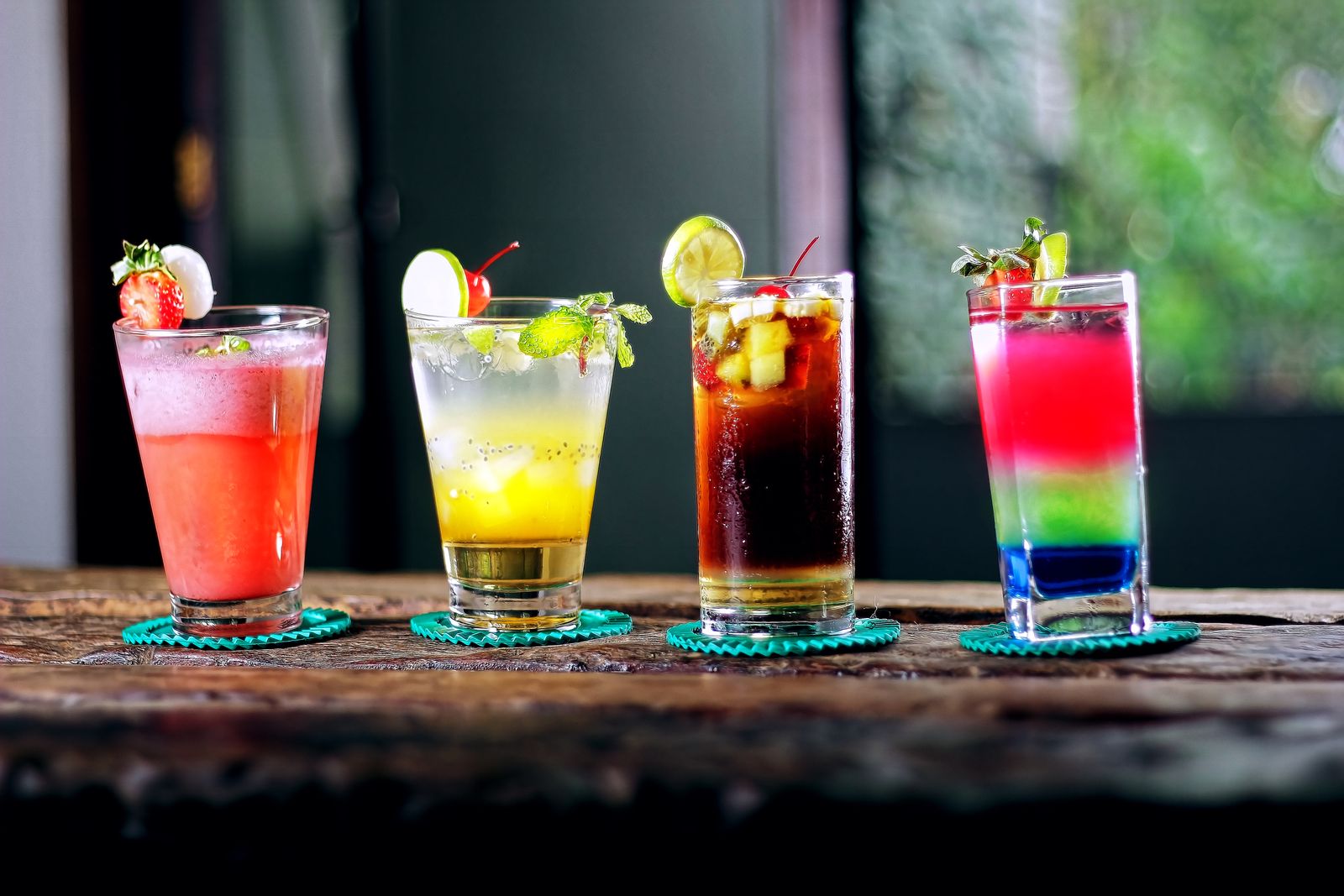
Most cannabis consumers have never considered that the most sophisticated way to enjoy their next session might involve a cocktail shaker, a fine-mesh strainer, and a bit of patience — but that oversight is rapidly changing. Canna-mocktails and marijuana-infused spirits are rewriting the social ritual of "happy hour," and the science behind getting it right is more fascinating than you'd expect.
Why Alcohol and Cannabis Are a Complicated Couple
Before you start free-pouring tequila over a pile of ground flower, it's worth understanding what happens when ethanol and cannabinoids share the same bloodstream.
Research consistently shows that alcohol accelerates THC absorption, often producing a more intense and less predictable experience than either substance delivers alone. That can flip your intended mood entirely — easygoing becomes anxious, soothed becomes panicked, pleasantly elevated becomes uncomfortably spun. For most people, a cold beer alongside a light session is entirely manageable. Hard spirits, vodka, gin, tequila in large doses, are a different conversation, and they demand real respect.
The practical takeaway: the recipes below lean heavily toward alcohol-free canna-mocktails as your starting point. These are the new edibles — drinkable, dose-controlled, and genuinely delicious. When we do venture into infused spirits, we walk through every safeguard worth knowing.
The Birth of the Marijuana Cocktail
The canna-beverage movement has deeper roots than most people realise, but its modern identity crystallised around 2018.
Lyden Henderson, working out of Outbound Brewing, is widely credited as one of the earliest commercial pioneers of nonalcoholic, cannabis-infused beer in North America. His first attempt was, by his own admission, spectacularly bad. "It tasted kind of like I was drinking milk that had been sitting in the refrigerator for two or three months," he told Rolling Stone. "It had the worst texture. It was one of the grossest things I had ever tried in my life." Unappetising chunks of plant matter floating in liquid. A texture that defied any appetite.
That failure launched Henderson into months of collaborative research, iterating batch after batch until the result was genuinely craveable. His finished product contains 10 mg of THC or 20 mg of CBD per serving — a benchmark that has since become something of an industry standard for responsible single-serving dosing.
Henderson's journey matters because it illustrates the central challenge every home mixologist will face: cannabis and beverages are not naturally compatible, and the gap between a chunky, grassy mess and a smooth, effective drink requires both chemistry and craft.
Step One — Decarboxylation: The Non-Negotiable Foundation
You can be the most creative mixologist in your neighbourhood, but if you skip decarboxylation, your canna-cocktail is nothing more than an expensive glass of lawn clippings.
Raw cannabis flower contains THCA — tetrahydrocannabinolic acid, a non-intoxicating precursor that your body cannot use directly. Heat converts THCA into the THC your endocannabinoid system actually responds to. Without that conversion, you'll feel nothing, no matter how generously you dose. The same principle applies to CBDA converting to CBD.
There are three reliable home methods:
- Oven method — the most accessible, ideal for beginners
- Mason jar method — reduces terpene loss and aromatic volatilisation
- Sous vide method — the most precise temperature control, minimal odour
For most Canadian home growers, the oven is all you need. Here's the process:
- Preheat your oven to 225°F (107°C) and position the rack in the centre.
- Line a baking sheet with aluminium foil.
- Break your dried, cured flower into coarse, rice-sized pieces — don't pulverise it into powder yet.
- Spread it evenly across the lined tray and cover loosely with a second sheet of foil to trap volatiles.
- Bake for approximately 45 minutes, then remove and allow to cool completely before handling.
The lower temperature preserves more of the aromatic terpene profile — those fragrant compounds like myrcene, limonene, and linalool that will ultimately lend complexity to your finished drink. Rush the process at 300°F and you'll activate your cannabinoids while scorching every terpene that made your particular strain worth choosing in the first place.
Strain selection matters here. A terpene-rich cultivar like a Haze-dominant sativa will carry citrus and pine notes into your cocktail base in a way a blunt, resinous indica simply won't. Choose your flower intentionally.
The Fat-Solubility Problem — and How Craft Brewers Solved It
Here's the chemistry that stops most beginners cold.
THC and CBD are fat-soluble (lipophilic) compounds — they bind readily to fats and oils, but they actively resist bonding with water. This is precisely why all the marijuana bakers out there reached for cannabutter and coconut oil rather than trying to stir raw flower into their brownie mix. Fat carries cannabinoids efficiently. Water repels them.
The implications for beverages are significant:
- Cannabinoids dropped directly into a water-based drink will clump, float, separate, and pool unevenly — meaning your dosing becomes wildly inconsistent from first sip to last.
- Bioavailability drops sharply; much of what you've dosed never absorbs properly through the digestive lining.
- The flavour profile turns green, bitter, and grassy in a way that overwhelms anything else in the glass.
Commercial cannabis beverage producers solve this through nanoemulsification — a process that uses ultrasonic waves or high-shear homogenisers to break cannabinoid-oil droplets down to sizes below 100 nanometres. At that scale, they integrate into water-based liquids without separating, dramatically improving both consistency and onset speed (often 15–20 minutes, versus 60–90 minutes for traditional edibles).
At home, you work around the problem rather than solving it outright. The most practical approach is to infuse a fat-based carrier — coconut oil, glycerin, or a cream component, and build your drink around that infused fat rather than trying to add raw cannabis to water. Cannabis-infused simple syrup made with glycerin is another popular home technique: glycerin is not a true fat but it binds cannabinoids far better than plain water, and it integrates smoothly into almost any drink.
Compare your two home options side by side:
Infused coconut oil: High cannabinoid absorption, rich mouthfeel, works beautifully in warm drinks (hot chocolate, golden milk lattes, herbal teas), less suited to cold clear cocktails due to cloudiness and solidification at low temperatures.
Cannabis-infused vegetable glycerin tincture: Stays liquid at any temperature, mixes into cold drinks far more cleanly, slightly lower bioavailability than a fat-based carrier but significantly more versatile for cocktail applications. This is the home mixologist's go-to.
Making Your Own Canna-Mocktails and Infused Spirits
Mocktails are the smartest entry point — clean flavours, controlled dosing, no alcohol complicating the experience. Once you're comfortable, infused spirits offer a more adventurous (and more demanding) path.
The Canna-Mocktail Foundation
Build any mocktail using a cannabis-infused glycerin tincture as your base cannabinoid delivery system. Start with 5–10 mg THC equivalent per serving until you know how your body processes the combination of ingredients. A citrus-forward mocktail — fresh lime, agave syrup, sparkling water, a slice of jalapeño, pairs beautifully with a limonene-dominant strain, letting the terpene chemistry of the cannabis echo in the flavour of the drink itself.
Infusing Spirits: The Slow Path Worth Taking
For a true cannabis margarita, you'll need to infuse your tequila first. Patience is the active ingredient.
- Grind your decarbed flower to a fine, powdery texture.
- Add approximately 3.5 g (⅛ oz) of ground flower to a 750 ml bottle of tequila.
- Seal, shake vigorously, and store in a cool, dark place.
- Shake once daily for a minimum of two days; up to four weeks for a richer infusion.
- Strain thoroughly through a fine-mesh sieve, then through cheesecloth to remove all plant material.
From there: 2 oz of your cannabis tequila, fresh lime juice, a measure of Grand Marnier, simple syrup, and a salt-rimmed glass. Apply the same process to create a "Buddy" Mary (cannabis-infused vodka with a full Bloody Mary build), a Mai "High" (rum-based with tropical fruit), or a Weed Whiskey Sour. The creative possibilities scale directly with your confidence at the infusion stage.
One principle above all others: sip slowly and wait. The onset of an alcohol-and-THC combination can be deceptively delayed, and both compounds amplify each other's sedative and intoxicating effects. Under Canada's Cannabis Act, responsible personal use means knowing your limits before you hit them — not after. Give yourself 30–45 minutes between drinks to assess where you are.
Choosing the Right Strain for Your Glass
Strain selection for beverages deserves as much thought as varietal selection does for wine pairing — because the terpene profile you choose will survive into your finished drink.
For bright, citrus-forward mocktails and margarita-style infusions, reach for strains built around limonene and pinene: think a Haze-dominant feminised variety with its signature lemon-pine complexity and clear, sociable sativa energy. The flavour lifts the drink. For warming, evening mocktails — spiced apple, ginger, chamomile, a myrcene-heavy indica-leaning cultivar rounds out the herbal base notes in a way that feels genuinely intentional. And for high-CBD mocktails where the goal is relaxation without significant psychoactivity, a balanced CBD-rich feminised strain used at modest doses keeps every guest in comfortable, clear-headed territory.
Whatever you choose, start with well-cured, properly dried flower. A hasty dry that left your buds smelling of ammonia or chlorophyll will carry exactly those flavours into your drink. The quality of your raw material is the quality of your cocktail — there's no step in the process that compensates for mediocre starting material.
For more inspiration across the full Marijuana Lifestyle spectrum — from cultivation to creative consumption, explore the Pacific Seed Bank blog, where every article is written to help you grow smarter and enjoy more intentionally.
The Confident Pour
Cannabis beverages represent something genuinely new in the Canadian cannabis landscape: a consumption format that's social, measured, sophisticated, and endlessly adaptable to personal taste. The science behind getting them right — decarboxylation, fat-solubility, nanoemulsification, terpene preservation, is real, but none of it is beyond a patient home grower or curious consumer willing to experiment thoughtfully.
Start with a simple glycerin tincture in a citrus mocktail. Nail the decarb. Choose a strain whose terpenes you already love. Then, when you're ready, move to infused spirits with the discipline of slow sipping and genuine self-awareness. The bar you build at home, with cannabis grown from quality genetics and mixed with real care, will rival anything a trendy cocktail bar can produce — and it'll be entirely your own creation.