You'll Never Guess Which CFL Players Smoke Weed
· 7 min read
Eighty-nine percent. That's the number retired Dallas Cowboys tight end Martellus Bennett threw out when asked how many NFL players use marijuana — and the locker room didn't exactly rush to deny it. While the CFL operates under its own distinct rulebook north of the 49th parallel, the conversation about cannabis and professional football is just as alive in Canada, where cannabis has been federally legal under the Cannabis Act since October 2018. Canadian fans watching a Friday night game in Regina or a Labour Day Classic in Hamilton might be surprised to learn just how many players on both sides of the border have been quietly relying on cannabis to sharpen focus, manage pain, and push through the grind of a brutal season.
Cannabis and Professional Football: A Rocky History
The relationship between cannabis and gridiron football has never been straightforward. Professional football leagues have long kept cannabis on their banned substance lists, grouping it alongside performance-enhancing drugs in a way that struck many players — and scientists, as scientifically dubious.
The logic, initially, was guilt by association: if steroids and stimulants were banned for conferring an unfair competitive edge, cannabis had to go too. But cannabis isn't anabolic. It doesn't build muscle or increase oxygen-carrying capacity. What it does do, according to a growing body of research and the lived experience of thousands of athletes, is alter pain perception, reduce pre-game anxiety, and promote the kind of focused calm that can mean the difference between a botched snap and a game-winning drive.
Healthline has noted that some users report marijuana "makes exercise more enjoyable or that they find they can push through the discomfort — pounding out a few extra reps, for example, because of the high." The caveat, of course, is dosage: overconsumption leads to the notorious "green out," and nobody wants to see a linebacker lying flat on the turf because they took one too many hits off the vaporiser at halftime.
It's that grey zone — genuine therapeutic potential sitting alongside real impairment risk, that has kept league officials stumped for decades. Veteran Rams safety Eric Weddle put it plainly: "It's kind of tricky."
- Pain management: Cannabis, particularly CBD-dominant cultivars, is increasingly used as an alternative to opioid painkillers, which carry far more dangerous dependency profiles.
- Inflammation reduction: CBD's anti-inflammatory properties are well-documented, relevant for players dealing with soft-tissue injuries throughout a long season.
- Sleep quality: Indica-leaning cultivars rich in myrcene can dramatically improve deep sleep, which is when muscle repair actually happens.
- Anxiety and pre-game nerves: Low-dose THC combined with elevated CBD can blunt the cortisol spike that precedes high-stakes performance without inducing sedation.
In Canada, this conversation is legally uncomplicated for adult consumers. Under the Cannabis Act, Canadians 18 and older (19 in most provinces) can legally possess and consume cannabis. The compliance question falls to the leagues themselves, not the Criminal Code.
The Players Who Came Clean
The most seismic admission came from Martellus Bennett — tight end, Cowboys, unfiltered, who claimed approximately 89% of NFL players use marijuana. That figure bounced around sports media like a fumbled kickoff, equal parts shocking and entirely believable to anyone who'd spent time near a professional locker room.
Then there's Jacksonville Jaguars offensive lineman Eben Britton, whose pre-game ritual reads like something out of a wellness retreat: ice bath, hot shower, joint. "NFL games I played stoned were some of the best games I ever played," Britton has said. "Cannabis cements your surroundings. A lot of people say they're useless when they smoke weed. But hell, I played NFL games [while stoned], dude. My performances were solid and I felt really good after."
That's not a fringe anecdote. It's a data point in a pattern.
Other players who have reportedly used marijuana include:
- Martavis Bryant
- Von Miller
- Josh Gordon
- Shaun Smith
- David Irving
Each of these players navigated a patchwork of league suspensions, team politics, and public scrutiny — often for a substance that any Canadian adult could legally pick up at a licensed retailer on the way home from work.
The Blind Eye: Enforcement, Selective Bans, and the 4/20 Test
Here's where the story gets genuinely absurd.
The NFL's actual enforcement of its cannabis policy has been spectacularly inconsistent. According to accounts from within league circles, officials were well aware of widespread cannabis use among players and largely chose to look the other way — until they didn't. Running back Le'Veon Bell of the Pittsburgh Steelers was handed a three-game suspension after cannabis was detected in a drug test. Embarrassingly for Bell, one of those tests reportedly landed on April 20th, 4/20, which suggests either extraordinary bad luck or that someone at NFL headquarters had a sharp sense of humour.
The controversy deepened when fans and commentators placed Bell's suspension next to Tom Brady's four-game penalty from the DeflateGate scandal — a suspension that was ultimately lifted before the season meaningfully began. The implicit message was difficult to ignore: deliberately manipulating equipment to gain a competitive advantage in the playoffs carries roughly the same professional consequence as rolling a joint. Thousands of fans, including the famously outspoken Snoop Dogg, called out the disparity loudly and publicly.
The NFL supposedly turns a blind eye to marijuana use half the time but bans professional athletes the other half — and the deciding factor often seems less like policy and more like star power.
For Canadian fans watching all of this unfold from a country where cannabis is federally regulated and openly sold, the spectacle has a particular surreal quality. A CFL player in Winnipeg or Edmonton exists in a legal environment that is, by any objective measure, far more rational about cannabis than the one governing their NFL counterparts south of the border.
What These Athletes Are Actually Looking For — And What Growers Should Know
When a professional athlete chooses cannabis, they're not reaching blindly into a bag. The best-informed among them are thinking about cannabinoid profiles, terpene expression, and onset timing with the same rigour they bring to nutrition planning. This is where Canadian home growers and seed buyers can draw some genuinely useful insight.
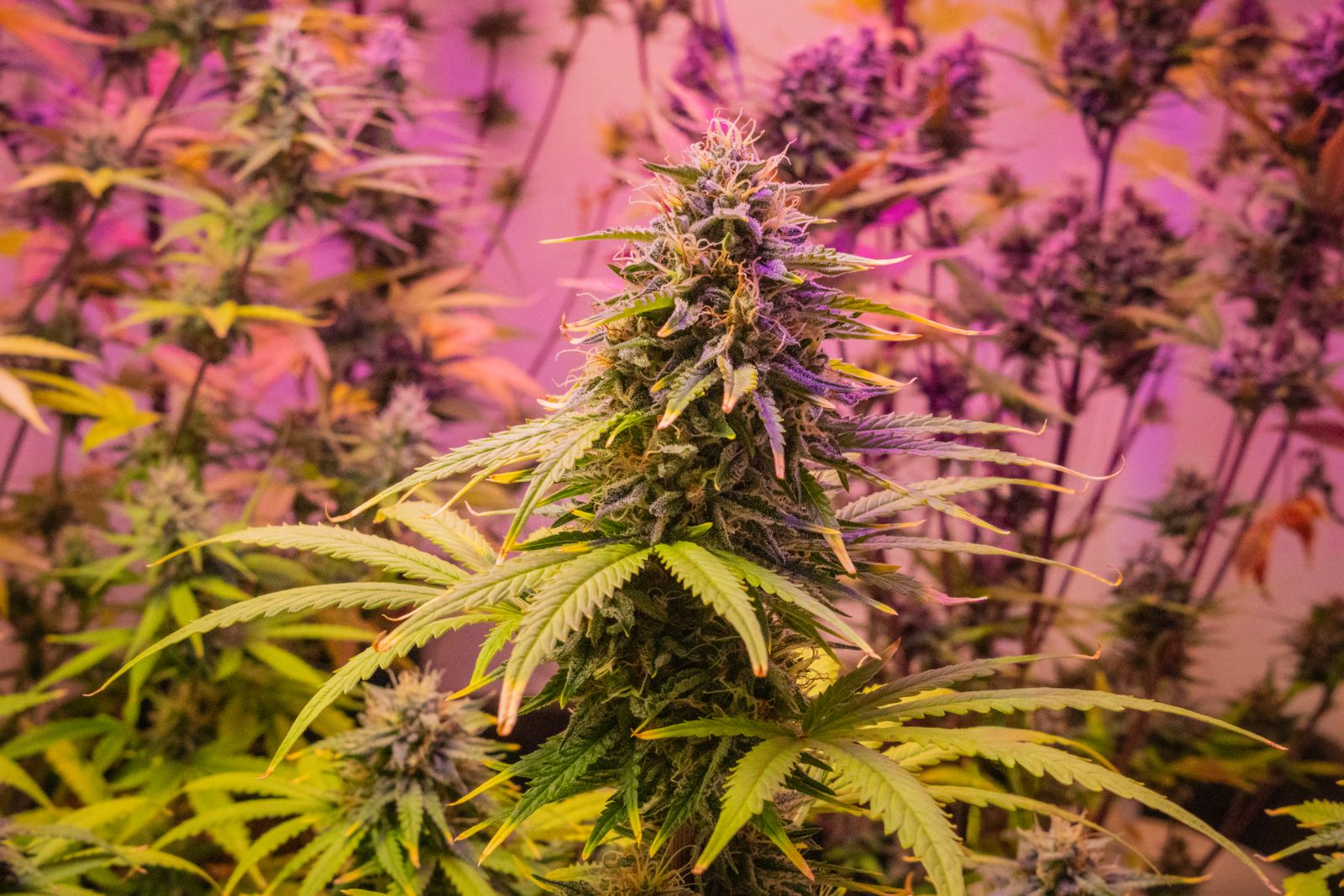
Athletes managing chronic pain and inflammation tend to gravitate toward high-CBD, low-THC cultivars — strains where the sedating psychoactivity is minimised and the analgesic, anti-inflammatory effects of cannabidiol do the heavy lifting. For pre-performance use, sativa-leaning cultivars with elevated limonene and pinene content offer a clearer, more energising effect profile. For post-game recovery and sleep, indica-dominant genetics rich in myrcene and linalool provide the deep body relaxation that speeds muscle repair.
Consider the kind of cultivars that map onto those needs:
- Sativa-forward strains for focus and pre-activity use. Terpinolene-rich sativa hybrids with THC in the 18–22% range and modest CBD content produce the alert, engaged headspace athletes describe when talking about cannabis and performance.
- Balanced hybrids (roughly 50/50) for daytime pain management. A cultivar with a 1:1 or 2:1 THC:CBD ratio delivers analgesic benefit without the cognitive fog that would compromise game-time decision-making.
- Indica-dominant strains for overnight recovery. High-myrcene, high-THC indicas — the lineage you find in Afghan-descended classics — encourage the prolonged, restorative sleep that professional training demands.
If you're cultivating at home under Canada's personal production allowance (up to four plants per household under the Cannabis Act), tailoring your genetics to specific functional goals is one of the most rewarding parts of the craft. Growing a myrcene-heavy indica for recovery use is a different cultivation challenge than coaxing maximum terpinolene expression out of a sativa hybrid — different VPD targets, different defoliation timing, different flush windows. The depth is real, and it's worth exploring through our Marijuana Lifestyle coverage, where we break down strain-specific cultivation in detail.
The Bigger Picture: Cannabis, Athletes, and Where the Culture Is Heading
The NFL's inconsistent, often hypocritical cannabis policy is ultimately a trailing indicator. Culture and science have already moved. Leagues across North America are quietly softening their positions — some eliminating cannabis from banned substance lists entirely, others raising the threshold concentration that triggers a positive test to levels that effectively decriminalise casual use.
In Canada, that cultural shift has the force of law behind it. The Cannabis Act didn't just change what you can legally carry — it changed the conversation. A CFL athlete discussing cannabis use in a post-game interview isn't confessing to a crime. They're discussing a legal consumer choice, one that an estimated four million–plus Canadian adults make regularly.
The real question now isn't which players smoke weed — it's which leagues are going to catch up to the medical evidence, the legal landscape, and the lived reality of their own athletes. Eben Britton played some of his best games after a pre-game joint. Le'Veon Bell got suspended for it anyway. Tom Brady deflated footballs and was back on the field in short order.
Draw your own conclusions. The athletes already have.
Whether you're a grower selecting genetics for a recovery-focused grow, a consumer curious about what strains elite athletes might reach for, or simply a football fan watching Friday night CFL with sharper eyes, the cannabis conversation in professional sport is one of the most fascinating intersections of science, policy, and culture happening right now. Stay curious, grow intentionally, and know that the players on that field may have more in common with your garden than you ever expected.