The 7 Factors That Could Affect Your Cannabis High
· 10 min read
You could smoke the same strain twice in the same week and swear you used two completely different products. That's not your imagination — it's biology, chemistry, and environment conspiring in ways that modern cannabis science is only beginning to fully map. The cannabis high is not a single, repeatable output. It's a dynamic system shaped by at least seven distinct variables, some of which you can engineer to your advantage, and some of which are simply written into your physiology. Understanding each one doesn't just make you a more informed consumer, it makes you a more intentional grower, curator, and guide for anyone you share your harvest with.
Here's a quick overview of the seven factors we'll break down in depth:
- Location and setting
- Delivery method
- Dosage
- Cannabinoid profile
- Flavour profile and terpenes
- Age
- Tolerance
Let's go through each one properly.
1. Location and Setting: Your Environment Is Part of the Formula
Set and setting isn't just a concept from psychedelic research — it's one of the most underestimated variables in any cannabis session. The space you're in when you consume shapes the emotional and psychological texture of the entire experience.
Familiar environments signal safety to the nervous system. When your brain recognises its surroundings — your living room, your backyard, a trusted friend's space, it can lower its vigilance and allow the cannabinoids to do their work without interference. In contrast, an unfamiliar or socially charged environment can quietly activate low-level threat responses that THC amplifies rather than soothes. The questions start stacking up: Where are the exits? Do these people know I'm high? Am I welcome here? None of those questions are dangerous on their own, but under THC, they can spiral.
This is especially relevant for higher-THC indica cultivars like Granddaddy Purple, the legendary indica-dominant cross of Purple Urkle and Big Bud, which is prized for its sedating, body-heavy effects. In a cosy, controlled setting, that deep physical relaxation is exactly what you're after. In an unfamiliar crowd or a new space, that same sedation can feel like paralysis. The cultivar hasn't changed — the environment has.
Practical guidelines for optimising your setting:
- Choose spaces where you have consumed comfortably before.
- Control the sensory environment — lighting, sound, and temperature all matter.
- Have water, a snack, and a comfortable seat within easy reach before you begin.
- If you're in a social setting, ensure the people around you are people you genuinely trust.
- For first-time or low-tolerance users especially, private settings dramatically reduce the risk of anxiety or paranoia.
The cannabis itself is only half the equation. Where you are when you consume it is the other half.
2. Delivery Method: Onset, Duration, and Intensity Are All on the Table
How cannabis enters your body is arguably the single most controllable variable in this entire list — and it governs three critical dimensions of your high: how fast it begins, how intense it peaks, and how long it lasts.
Smoking or vaporising cannabis delivers cannabinoids through the lungs into the bloodstream in roughly 5–15 minutes. The high typically peaks within 30 minutes and lasts anywhere from 2–4 hours. It's fast, relatively predictable, and easy to titrate — you can take a puff, wait 15 minutes, and assess before continuing.
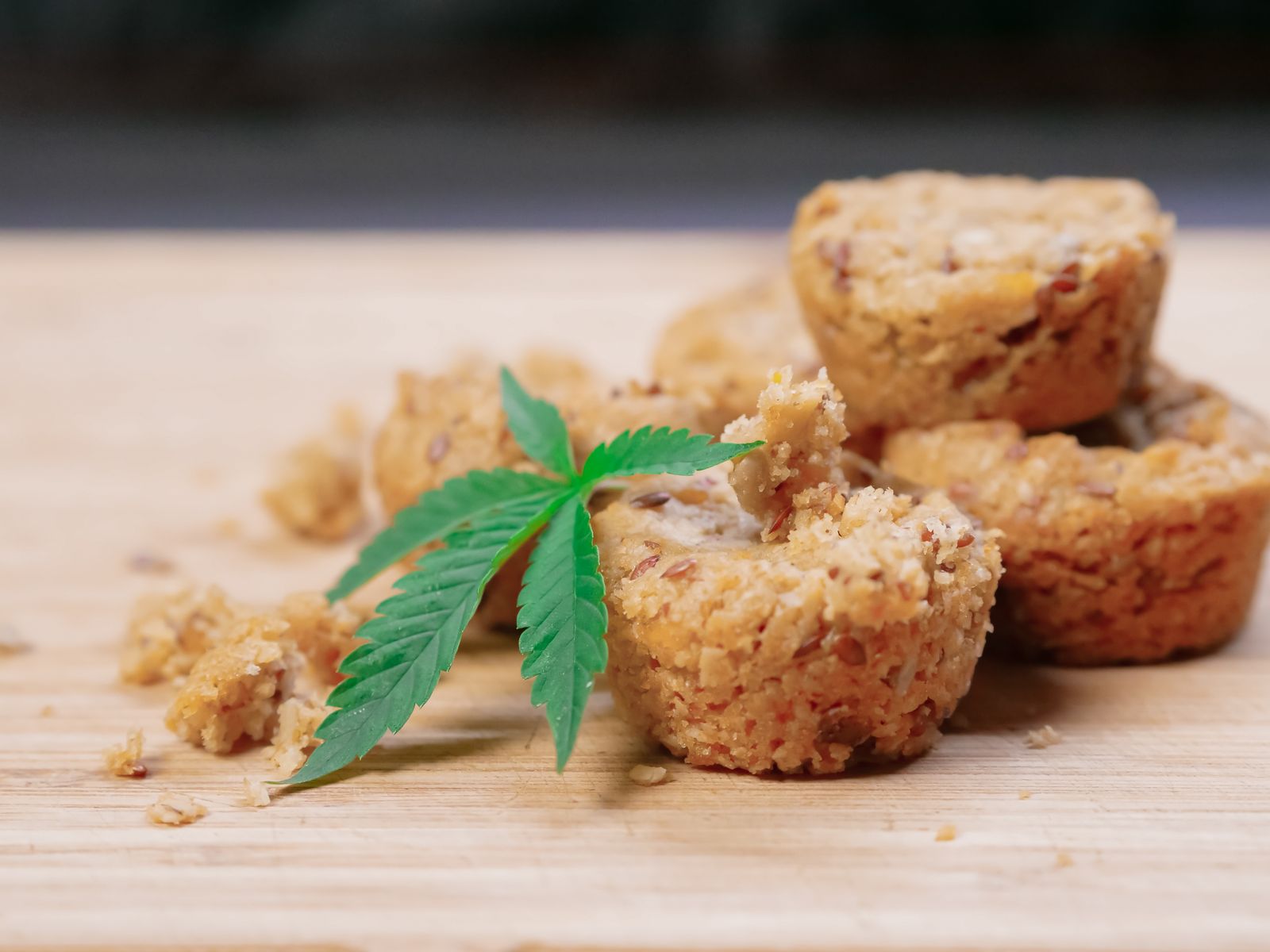
Edibles are an entirely different story. Because THC is metabolised through the liver into 11-hydroxy-THC — a compound that crosses the blood-brain barrier more efficiently than inhaled delta-9-THC, the onset is slower (anywhere from 30 minutes to 2 hours) and the experience is significantly more intense and prolonged, typically lasting 6–8 hours. The delay is where most overconsumption incidents happen: a person feels nothing after 45 minutes, takes more, and then the first dose arrives in full force.
Tinctures and sublingual oils occupy a middle ground: absorbed through the mucous membranes under the tongue, onset typically falls between 15–45 minutes with a 3–5 hour window. Topicals, meanwhile, act locally on peripheral cannabinoid receptors and do not produce psychoactive effects in standard doses.
The rule is simple: the slower the onset, the more patience the method demands. Respect that delay, and you remain in control.
For growers, this is directly relevant to how you present your harvest — the same flower that produces a pleasant 2-hour smoke can become an overwhelming 7-hour experience when it's baked into a butter. Knowing your delivery method is knowing your product.
3. Dosage: Less Is Genuinely More — Especially at First
There is a well-worn piece of cannabis wisdom that experienced users have been passing down for decades: start low, go slow. It remains the single most evidence-supported piece of advice in the space, and it applies whether you're a first-time consumer or an experienced grower trying a new phenotype for the first time.
Too little cannabis may produce no perceptible effect — a frustrating but entirely harmless outcome. Too much cannabis, particularly high-THC product consumed without titration, can produce a cluster of deeply unpleasant effects:
- Pronounced anxiety and racing thoughts
- Paranoia and heightened self-consciousness
- Cottonmouth and dry, irritated eyes
- Nausea, particularly with edibles at high doses
- Elevated heart rate and a sensation of physical unease
- Disorientation and time distortion that feels threatening rather than interesting
None of these effects are medically dangerous for the vast majority of healthy adults, but they are profoundly unpleasant — and they are almost entirely avoidable with proper dosage management.
For flower, a standard starting dose is a single inhalation, held briefly, followed by a 10–15 minute assessment window. For edibles regulated under Canada's Cannabis Act, single-serving products are capped at 10 mg THC — and for most new or infrequent consumers, 2.5–5 mg is a more appropriate starting point. The experience you want is a comfortable, functional elevation. You can always take more; you cannot take less.
The real lesson here is calibration. Cannabis is not a substance that rewards aggression — it rewards patience and self-awareness.
4. Cannabinoid Profile: THC and CBD Are Not Interchangeable
Walk into any licensed cannabis retailer in Canada and you'll see THC and CBD percentages listed prominently on every product. That's not arbitrary — it's arguably the most important single piece of information on the label.
THC (tetrahydrocannabinol) is the primary psychoactive compound in cannabis. It binds to CB1 receptors in the brain and central nervous system, producing the classic range of euphoric, analgesic, and sedating effects depending on the strain and the individual. Cannabis strains today can range from as low as 5% THC to over 30% in the most potent modern cultivars — a six-fold difference that translates into radically different experiences.
CBD (cannabidiol) is non-intoxicating. Rather than binding directly to CB1 receptors, it acts as a modulator — and critically, research suggests it may actually temper some of THC's more anxiogenic effects. A strain with a balanced THC:CBD ratio (say, 10%:10%) will typically feel noticeably smoother and less psychoactively intense than an equivalent high-THC, near-zero-CBD cultivar.
Some users have genuine adverse reactions to high-THC cannabis — anxiety, paranoia, elevated heart rate, in the same way that some people metabolise caffeine or alcohol poorly. For those individuals, high-CBD cultivars or balanced-ratio strains are not a compromise; they're the right tool for the job. Pacific Seed Bank carries a range of high-CBD seed options suited exactly to this need.
Licensed retailers across Canada are legally required to display cannabinoid profiles on all products — use that information. It is the clearest, most actionable data available to you as a consumer, and it deserves far more attention than most people give it.
5. Flavour Profile and Terpenes: More Than Just Aroma
Terpenes are the aromatic compounds produced in the same resin glands as cannabinoids — and they are responsible for the vast sensory diversity of cannabis. The word gets thrown around in dispensary conversations, but it describes something genuinely important.
It's terpenes that put the citrus bite in Lemon Kush, the bright, tart feminized hybrid whose limonene-forward nose is practically a signature. It's terpenes that produce the sharp, solvent-edged intensity of Chemdawg Sour Diesel, the fuel-drenched sativa-leaning powerhouse whose myrcene and caryophyllene content is as distinctive as a fingerprint. And it's terpenes that make Blue Cheese, the autoflowering indica-dominant cultivar with its unmistakable sharp, fermented nose, the most polarising strain in any collection — people either lean into that funky, earthy complexity or they walk straight past it.
Here's the nuance: the research community is still actively debating the extent to which terpenes independently alter psychoactive effects in humans. The "entourage effect" — the idea that cannabinoids and terpenes interact synergistically to modify the overall experience, has compelling theoretical support and growing clinical interest, but it has not yet been conclusively proven in rigorous human trials. What we can say with confidence is this: the sensory experience of a strain, its smell, its flavour, its smoke quality, has a direct and measurable effect on subjective enjoyment. A user who loves pine and citrus notes will engage differently with a limonene-heavy sativa than someone who finds that profile aggressive.
Emotional response to flavour and aroma is a real psychological phenomenon. It influences mood, expectation, and ultimately the quality of the experience. Don't underestimate it.
6. Age: Biology Shifts the Baseline
Age is one of those factors that feels abstract until it suddenly isn't. A 2007 study on rats published in Psychopharmacology found a meaningful connection between developmental stage and cannabis response: adolescent rats tolerated the effects of cannabis significantly better than adult rats, who showed more pronounced stress responses, anxiety markers, and motor suppression. The researchers noted that adult subjects appeared neurologically more sensitive to THC's anxiogenic properties.
The leap from rat studies to human biology is never perfectly clean — but the neurological mechanisms involved (endocannabinoid system density, CB1 receptor distribution, dopaminergic modulation) are sufficiently conserved across mammals to make the findings worth taking seriously. Anecdotally, it mirrors what many long-term cannabis users report: the easy, fearless relationship with high-THC cannabis that some people enjoy in their twenties becomes more nuanced, and sometimes more challenging, as they age.
For growers, this has a practical implication as well. Older consumers or those returning to cannabis after a long hiatus often benefit from lower-THC, higher-CBD cultivars and more conservative dosing — not because they're less capable, but because their endocannabinoid system may be operating on a different baseline than it was years earlier.
Under Canada's Cannabis Act, the legal minimum age for purchase and consumption is 19 in most provinces (18 in Alberta and Québec). That legal framework exists in part because adolescent brain development and cannabis exposure is a legitimate area of ongoing medical concern — a separate but related point to the adult-age discussion above.
7. Tolerance: The Most Personal Variable of All
Tolerance is, the factor that ties every other variable together — and it's the most individually specific of the seven.
THC and CBD bind to cannabinoid receptors (CB1 and CB2) distributed throughout the brain and body, and that binding produces effects ranging from euphoria and pain relief to appetite stimulation and sedation. But the density, sensitivity, and responsiveness of those receptors varies enormously between individuals, and it changes within the same individual over time. A daily consumer's CB1 receptors undergo a measurable process of downregulation — becoming less responsive to THC stimulation, which is why someone with six months of regular use might need three times the dose to achieve what a new consumer feels from a single puff.
Tolerance is not simply "experience." It's neurochemistry. And it's genuinely bidirectional — the same downregulation that builds over weeks of heavy use can partially reverse after even a short tolerance break (commonly 48–72 hours for casual users, potentially longer for heavy daily consumers). Many experienced users deliberately cycle off cannabis for a week or two specifically to restore sensitivity.
There's also a meaningful layer of individual genetic variation at play: some people's endocannabinoid systems appear constitutionally more reactive to THC than others, independent of prior exposure. This is why two people with identical consumption histories can have profoundly different experiences with the same product.
Understanding your own tolerance — not someone else's, not the average user's, is the single most empowering piece of self-knowledge you can bring to any cannabis session.
Putting It All Together
Seven factors, one experience. The cannabis high is not a fixed destination — it's a moving target shaped by where you are, how you consumed, how much you took, what cannabinoids and terpenes you chose, how your body has aged, and what your endocannabinoid system has been trained to expect. Understanding each of these levers doesn't remove the magic from the experience; it gives you the tools to direct it.
The practical takeaway is straightforward: choose a familiar, comfortable environment. Select your delivery method with intention and respect its timeline. Start with a conservative dose and scale up slowly. Know your cannabinoid profile — THC percentage is not a badge of honour; it's a specification. Pay attention to the terpene character of what you're consuming and notice how your body responds. Factor in your age and your history. And above all, learn your own tolerance rather than borrowing someone else's.
For a deeper dive into curating your sessions from start to finish, the marijuana experience guide on this site is an excellent companion resource — particularly useful if you're navigating cannabis for the first time or coming back after a long break. And for ongoing strain deep-dives, grow guides, and lifestyle content, the Marijuana Lifestyle section keeps you current on everything worth knowing.
Grow with intention. Consume with knowledge. The two are not separate pursuits.