CBD for Pets and Your Furry Companions
8 min read · , updated May 14, 2026
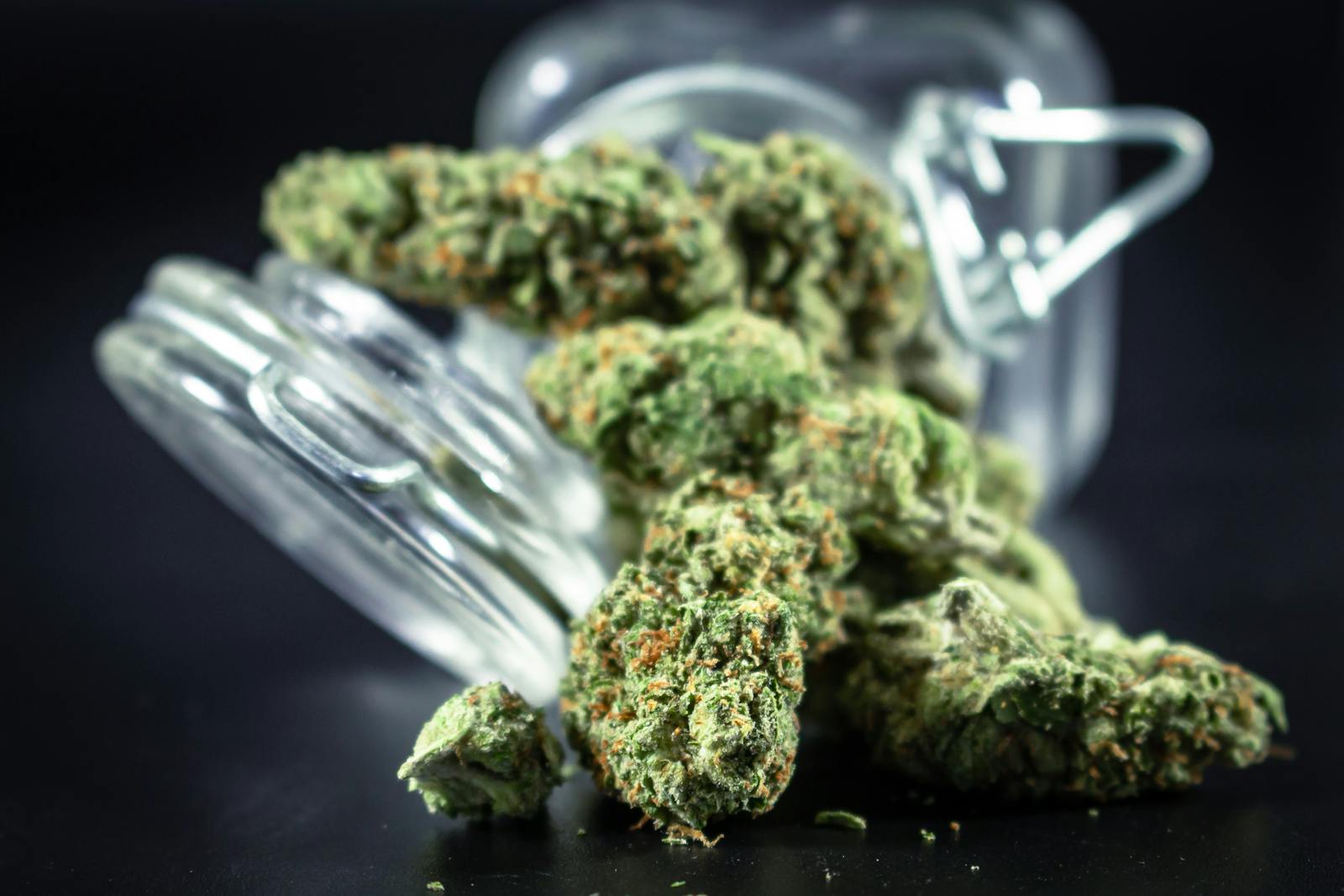
Your dog doesn't care about your terpene profiles or your harvest yields — but she does share something remarkable with you: an endocannabinoid system that responds to cannabidiol in ways researchers are only beginning to fully understand. That biological overlap is precisely why CBD for pets has moved from fringe wellness trend to a serious conversation happening in Canadian veterinary clinics, pet shops, and living rooms coast to coast.
Understanding CBD: The Non-Psychoactive Powerhouse
Cannabis plants produce over a hundred cannabinoids, but two dominate the conversation: tetrahydrocannabinol (THC) and cannabidiol (CBD). For a thorough breakdown of how they differ at the molecular and experiential level, our guide on THC vs CBD is essential reading — but the short version is this: CBD produces no psychoactive effect. It will not get you high, and it will not get your pet high. What it does instead is interact with the endocannabinoid system's CB1 and CB2 receptors to modulate inflammation, pain signalling, anxiety response, and nausea, without the intoxicating cascade that THC triggers.
For human consumers, the choice between THC and CBD is largely a matter of preference and intention. For pets, it is not a choice at all.
CBD promotes calm, relaxation, and physiological balance. It works through the same receptor network found in mammals, birds, and even fish — which is why the science that supports CBD use in humans maps so logically onto companion animals. The endocannabinoid system is ancient, evolutionarily speaking, and your Labrador's CB2 receptors are not so different from yours.
Why THC Is Genuinely Dangerous for Pets
This cannot be overstated: THC is not safe for animals.
There is a disturbing genre of social-media content featuring pets who have accidentally — or deliberately, consumed THC. The animals are disoriented, unsteady, unable to regulate their temperature or posture. People in the comments laugh. Veterinarians do not. Dr. Gary Richter, owner and medical director of Montclair Veterinary Hospital, puts it plainly: "The most significant [risk] is THC toxicity, meaning, essentially, they are high. Depending on how significantly a pet has overdosed, the effects of that can be quite long-lasting, even days."
The comparison to alcohol is apt. A dog's kidneys and liver were not designed to metabolise ethanol efficiently, and the same metabolic mismatch applies to THC. A human who consumes too much THC experiences discomfort; they understand, at some level, what is happening and that it will pass. A dog or cat has no such frame of reference. The altered state is terrifying, not recreational. There is no upside.
Consider the contrast clearly:
- THC in humans: Euphoria, creativity, appetite stimulation, altered time perception — effects sought and enjoyed by choice.
- THC in pets: Disorientation, loss of motor control, incontinence, bradycardia, hypothermia, prolonged distress — effects that constitute a veterinary emergency at higher doses.
- CBD in humans: Relaxation, pain relief, reduced anxiety, anti-inflammatory support — no psychoactive impairment.
- CBD in pets: Emerging evidence points to meaningful reductions in discomfort and anxiety, with no psychoactive risk when administered appropriately.
The rule is simple: if a cannabis product contains significant THC, it has no place near your pet.
What the Science and Pet Owners Are Saying
Formal research on CBD for companion animals is still catching up to anecdotal enthusiasm — a familiar gap for anyone who has followed cannabis science generally. Most rigorous studies predate 2018's regulatory shift under Canada's Cannabis Act, which opened new doors for research but left a thin body of peer-reviewed animal-specific literature. The Canadian Veterinary Medical Association has remained cautious about formal guidance as a result, and many practicing vets hesitate to recommend cannabis products openly, wary of professional repercussions in a regulatory grey zone.
Cornell University's veterinary college, however, has produced some of the most compelling early data. Dogs given CBD showed a "clinically significant reduction in discomfort and an increase in activity" — findings that align with what CBD does in human patients managing chronic pain and inflammation. That is not nothing. That is a signal worth following.
Meanwhile, pet owners across Canada are not waiting for consensus. Anecdotal accounts from CBD-for-pets communities describe outcomes that range from modest to striking:
"…a senior Staffordshire Terrier had a 6 cm mammary tumour and metastasis that disappeared in three months and didn't come back."
"…the bloating went down. She had more energy. After three weeks, she was down to her normal body size, and by week four she was running around the house and you'd never know she was on death's door."
Anecdotal evidence is not clinical proof. But when thousands of pet owners report similar patterns of improvement across similar conditions, the signal-to-noise ratio becomes harder to dismiss — especially when the mechanism of action (endocannabinoid receptor modulation) is biologically coherent and well-documented in adjacent human research.
Possible Benefits of CBD for Companion Animals
Here is where the human-to-animal parallel becomes genuinely useful. The truth is that the endocannabinoid receptors in your cat's body are structurally similar enough to your own that conclusions drawn from human CBD research offer a reasonable foundation for understanding what CBD might do for your pet. Based on that overlap, CBD may offer support for the following conditions in companion animals:
- Chronic inflammation — particularly relevant for ageing dogs with degenerative joint conditions
- Muscle spasms — including those associated with neurological conditions or injury recovery
- Rheumatoid arthritis — a condition that affects cats and dogs with striking similarity to how it presents in humans
- Anxiety — separation anxiety, noise phobia (fireworks, thunder), and travel stress are among the most commonly cited reasons Canadian pet owners reach for CBD
- Nausea — CBD's anti-emetic properties are well-documented in humans and may ease chemotherapy-related or motion-sickness nausea in pets
- Glaucoma — early evidence suggests cannabinoids may reduce intraocular pressure, a key factor in managing this condition
None of these represent guaranteed outcomes. They represent the intersection of biological plausibility, early research, and the lived experience of tens of thousands of pet owners. That intersection deserves respect — and attentive, careful experimentation.
How to Administer CBD to Your Pet Safely
You do not need a veterinarian's formal endorsement to begin exploring CBD for your pet — but you do need to approach it with the same methodical rigour a good grower brings to a new cultivar. Start low, observe carefully, and adjust incrementally.
- Choose a product with zero or negligible THC. Look for broad-spectrum or CBD-isolate formulations. Full-spectrum products may contain trace THC; at sufficient doses, even trace amounts can accumulate to problematic levels in small animals.
- Start with one to two drops. For most small-to-medium dogs and cats, a minimal dose is the right point of entry. Observe your pet for 24–48 hours before increasing.
- Use pet-specific formulations where available. Companies like Smart Hemp CBD now produce products calibrated for dogs, cats, and even horses — these typically account for body weight dosing more precisely than human-formulated products.
- Regular "human" CBD tinctures work too — just use far less than you would for yourself. A 70 kg human's dose is not a 10 kg dog's dose. Scale by body weight, not by bottle recommendation.
- Track your observations. Note mobility, appetite, sleep patterns, vocalisation, and anxiety behaviours before and after introducing CBD. You are running a single-subject experiment; treat it like one.
- Consult your vet, even informally. While formal guidance is limited, many Canadian vets are privately supportive of CBD for pets and will discuss it candidly if you raise it. Their knowledge of your pet's specific health history is irreplaceable.
CBD products for pets are increasingly available through licensed cannabis retailers across Canada, health food stores, and online wellness shops. The Cannabis Act framework does not explicitly regulate CBD pet products the same way it regulates human cannabis, so quality control can vary — read labels carefully, seek out products with third-party Certificates of Analysis (COA), and buy from reputable sources.
A Note for Cannabis Growers: CBD-Rich Cultivation and Your Household
If you grow cannabis at home under your four-plant personal allowance — as permitted by the Cannabis Act, and your goal includes producing CBD-rich material for personal wellness use, it is worth knowing that the same CBD-forward harvest you might use for tinctures, capsules, or infused oils could, in theory, serve your pets as well. A properly extracted, THC-minimal CBD oil from a high-CBD cultivar is chemically no different from a commercial pet product.
For those exploring our full catalogue of cultivation education, the How To Use Marijuana? section covers everything from extraction basics to consumption methods — knowledge that applies whether the end user walks on two legs or four.
If you are cultivating specifically for CBD content, prioritise genetics with a high CBD:THC ratio — ideally 20:1 or greater for pet-safe applications. Feminised, photoperiod cultivars give you the most control over phenotype expression and cannabinoid profile. Low-stress training, careful VPD management through flower, and a slightly early harvest (watching for mostly cloudy trichomes rather than waiting for full amber) will preserve CBD content and limit THC conversion, a small but meaningful detail when your end goal is a pet-safe product.
The Bottom Line: Thoughtful, Evidence-Informed Care
CBD for pets is not a miracle cure, and it is not a passing trend. It sits at the intersection of ancient biology — the endocannabinoid system that mammals have carried for millions of years, and a modern, rapidly evolving body of research that is finally beginning to catch up to what growers, patients, and now pet owners have observed empirically for decades.
Your pet cannot tell you they feel better. But they can show you — through a longer walk, a calmer response to the doorbell, a return to appetite after a difficult treatment. Pay attention to those signals. Start carefully, dose conservatively, source responsibly, and let the evidence guide you forward. The science will follow; it always does.