What is THCA vs THC? A Clear Guide to Effects, Legality, and Growing in Canada
· 16 min read · Updated May 14, 2026
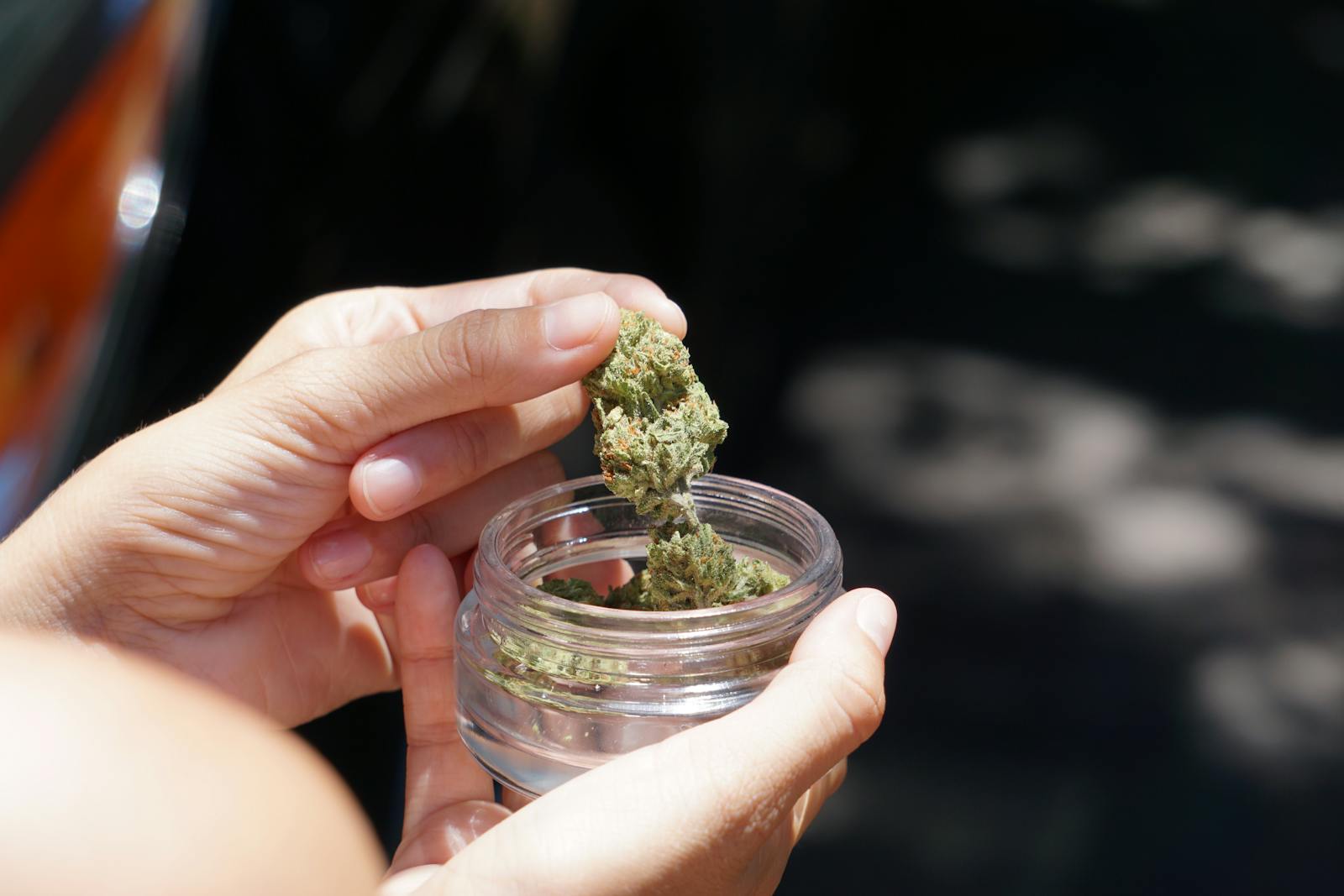
Your cannabis plant has never produced a single milligram of THC. Not one. Every frosty bud you've ever grown was packed with THCa — the raw, non-psychoactive precursor that only becomes the famous psychoactive compound after heat is applied. Understanding this distinction isn't just academic; it changes how you grow, how you harvest, how you store, and how you consume every crop you'll ever pull.
The Core Difference Between THCa and THC
When your cannabis plant is alive and growing, it manufactures Tetrahydrocannabinolic acid — THCa. Not THC. The plant itself has no interest in getting you high; it's simply producing a cannabinoid acid as part of its natural biochemistry.
The reason THCa doesn't produce psychoactive effects comes down to molecular geometry. THCa carries an extra carboxyl group attached to its structure, making it just slightly too large to bind effectively with the brain's CB1 receptors — the lock that THC fits perfectly. Think of THCa as a key that's been cut one notch too many. It slides in, but it won't turn.
Apply heat — specifically around 315°F (157°C), and that carboxyl group breaks off as carbon dioxide. The remaining molecule is now delta-9-THC, perfectly shaped to engage those CB1 receptors and deliver the psychoactive effects cannabis is known for. This chemical reaction is called decarboxylation, and it is the single most important transformation in all of cannabis chemistry.
THCa vs THC at a Glance
Before going deeper, here's a clear side-by-side comparison of the two compounds — because getting this straight is the foundation for every decision you'll make in your grow room and your garden.
- THCa — Psychoactivity: None. The carboxyl group prevents CB1 receptor binding entirely.
- THC — Psychoactivity: Full psychoactive effect after decarboxylation; the compound responsible for euphoria, relaxation, and altered perception.
- THCa — Found in: Raw, living, or freshly harvested cannabis — fresh leaf, uncured flower, raw juice.
- THC — Found in: Smoked, vaped, or properly decarboxylated cannabis and infused products.
- THCa — Legal status in Canada: Regulated under the Cannabis Act as part of the cannabis plant; not a separate category from regulated cannabis.
- THC — Legal status in Canada: Legal for adults under the Cannabis Act; must be cultivated within personal limits or purchased through licensed retailers.
- THCa — Primary use: Wellness applications without intoxication; raw consumption, topicals, unheated tinctures.
- THC — Primary use: Recreational and therapeutic psychoactive effects.
This is also why the lab reports and seed listings at Pacific Seed Bank express results as "potential THC." That figure represents the THCa the plant is capable of producing — which then becomes available THC once heat is applied. It's the most accurate way to communicate what your harvest can deliver.
The Science of Decarboxylation — And Why Every Grower Needs to Understand It
Decarboxylation sounds intimidating. It isn't.
"Decarbing" is simply the removal of one carboxyl group (–COOH) from the THCa molecule. Heat provides the energy to break that bond, releasing it as CO₂ gas. What's left is the familiar THC structure that fits CB1 receptors like a master key. Every time you apply flame to a bowl, load a vaporiser, or bake edibles, you're running a decarboxylation reaction — whether you knew the name for it or not.
How Decarbing Happens in Real Life
The reaction occurs across a range of temperatures and timelines. Here are the three most common ways it happens in practice:
- Smoking: Combustion delivers instantaneous heat well above 400°F, converting THCa to THC in real time as you inhale. Fast, complete, and efficient — though combustion also destroys terpenes and some minor cannabinoids at those extreme temperatures.
- Vaporising: A quality vaporiser operates between 315–400°F (157–204°C), the ideal window for full THCa-to-THC conversion without burning plant material. You preserve more terpenes and get a cleaner, more flavour-forward experience.
- Oven decarbing for edibles: Ground, cured flower spread on a parchment-lined baking sheet at approximately 240°F (115°C) for 30–40 minutes converts the bulk of THCa to THC before you infuse it into butter or oil. Lower temperature, longer time — a gentler conversion that preserves more of the volatile aromatic compounds.
Decarboxylation also happens slowly and passively through prolonged exposure to light, heat, and oxygen — which is exactly why improper storage degrades your harvest's potency over time. Airtight, dark, cool storage isn't optional; it's the difference between a six-month-old jar that still packs a punch and one that's a shadow of what it once was.
The essential insight: Decarboxylation isn't a lab procedure. It's a natural chemical reaction controlled by temperature and time. Mastering it means mastering the potency of everything you produce.
Why This Changes How You Think About Growing
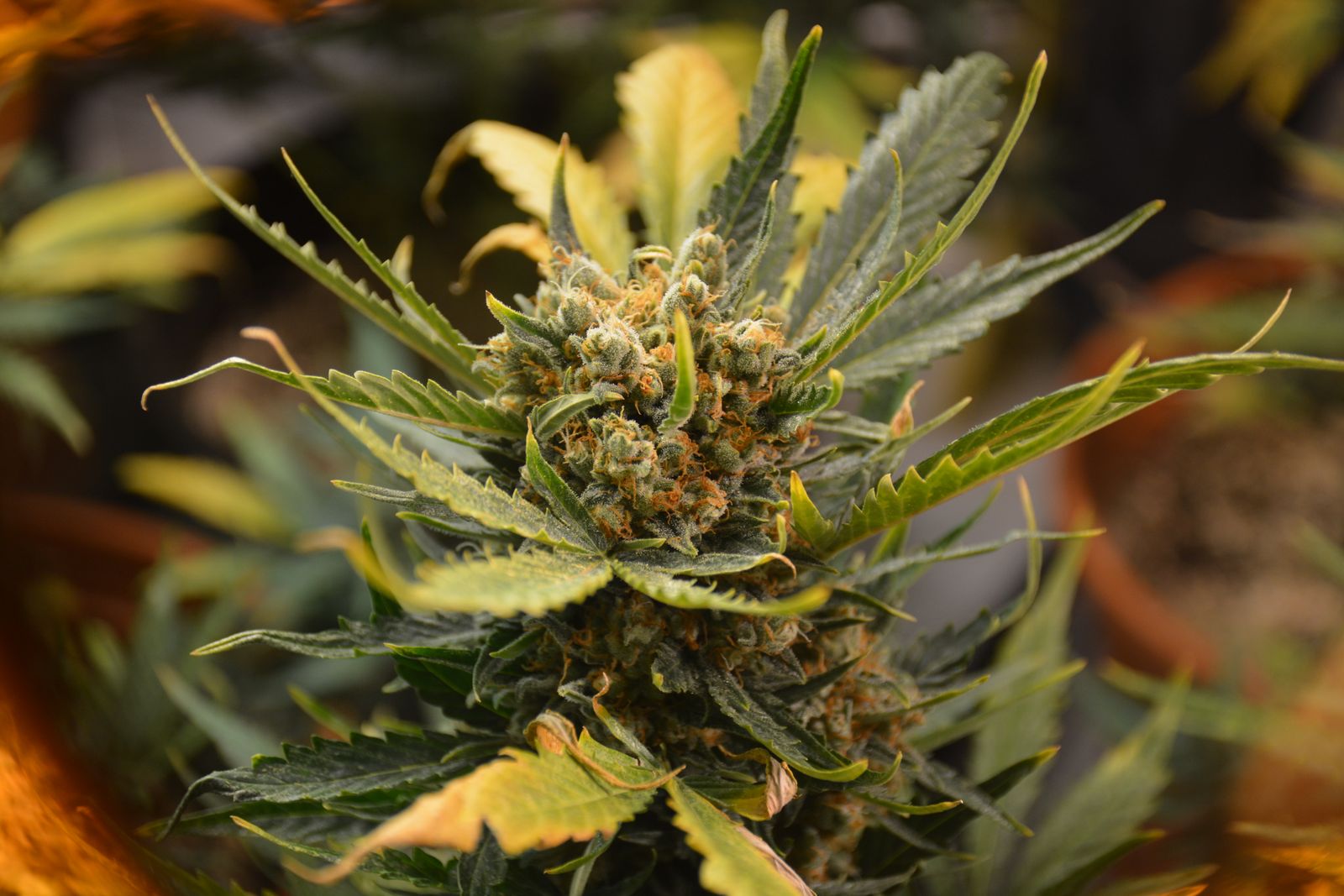
Understanding decarboxylation is, frankly, a big shift for any home cultivator. Those glistening, resin-drenched trichomes coating your buds at peak flower? They are THCa factories. Dense, crystalline, purpose-built structures whose entire biological function is to accumulate cannabinoid acids. If you want to understand where that potency actually lives in the plant, spend some time with our deep dive on the DL on cannabis trichomes — it's one of the most useful pieces of cultivation knowledge you can carry into your next grow.
For growers browsing feminised and autoflower seed catalogues, this knowledge reframes the way you read strain specs entirely. A cultivar listed at 28% "potential THC" is really telling you it can produce up to 28% THCa in its trichomes — which will become 28% THC once properly consumed. Higher THCa potential means more raw material to convert. That's the number to chase.
Comparing the Effects: What THCa and THC Actually Do
If decarboxylation is the chemistry, effects are the lived experience — and between THCa and THC, those experiences are not even in the same neighbourhood.
Consuming raw THCa — juiced fresh leaves, an unheated tincture, a handful of untreated trim blended into a smoothie, produces no intoxication whatsoever. None. The CB1 receptors don't engage, the psychoactive cascade doesn't trigger. People who consume THCa this way are typically seeking what the plant offers in its natural state: interaction with the endocannabinoid system through pathways that don't involve the classic head change. It's a completely clear-headed experience.
Cross the heat threshold, and you're in entirely different territory.
THCa: The Clarity Cannabinoid
THCa is about engaging with the plant without mental alteration. Because it doesn't bind to CB1 receptors, it's often the choice for growers and consumers who want to incorporate cannabis into a daily wellness routine without affecting their capacity to work, drive, parent, or otherwise function at full cognitive capacity. Consider the practical applications:
- Morning nutrition: Fresh fan leaves and small, unheated flower material blended into green juices, providing cannabinoid exposure with zero psychoactivity.
- Topical preparations: Homemade salves, balms, and creams made with undecarboxylated infusions, applied directly to skin.
- Unheated tinctures: Raw cannabis soaked in a carrier oil or alcohol without heat, preserving the THCa fraction for consumption without intoxication.
- Daytime use: Maintaining full cognitive function while still working with the plant's cannabinoid profile.
The key constraint is simple: THCa cannot intoxicate you through any consumption method that doesn't involve heat. That's not a limitation — for many users, it's precisely the point.
THC: The Experience Cannabinoid
Once decarboxylated, THC delivers the full psychoactive experience that has defined cannabis culture for generations. CB1 receptor binding triggers dopamine release, alters sensory perception, produces euphoria or deep relaxation depending on the cultivar and the individual, and creates the distinctly cannabis quality of experience that no other plant compound replicates.
The specific character of that experience — uplifting versus sedating, cerebral versus body-focused, creative versus contemplative, is shaped by the cultivar's terpene profile working in concert with THC and the full cannabinoid matrix. A sativa-dominant hybrid loaded with limonene and pinene will feel entirely different from an indica-dominant cultivar expressing myrcene and linalool, even at the same THC percentage. This is the entourage effect in action, and it's why genetics matter so much more than a single number on a lab report.
The practical distinction: THCa is about what the plant does for your body in its natural state. THC is about what the decarboxylated plant does for your mind and mood. One is a raw input; the other is an activated output. As the grower, you control which one you harvest.
This dual-use reality is one of the most compelling arguments for growing your own. The same plant, the same harvest, the same genetics — and you can choose to juice the trim for a non-psychoactive morning routine, then cure and smoke the flower for an entirely different evening experience. That versatility is unique to the home cultivator.
Navigating the Legal Landscape in Canada
Canada's regulatory framework for cannabis is among the most clearly articulated in the world — and it treats THCa very differently from the approach taken in some other jurisdictions, particularly across the southern border.
Under the Cannabis Act, which came into force in October 2018, cannabis — including all its cannabinoid derivatives, is regulated federally regardless of delta-9 THC content. This is a critical distinction. Canada does not have a "hemp loophole" that carves THCa out of cannabis regulation based on a THC threshold. Industrial hemp is a separate regulatory category (defined as cannabis with no more than 0.3% THC in flowering heads and leaves), but even hemp cultivation requires a federal licence from Health Canada. The "THCa flower" grey market that has proliferated in some U.S. states simply does not have a parallel legal pathway in Canada.
The bottom line for Canadian growers: high-THCa cannabis is regulated cannabis under Canadian law, full stop. There is no THCa-specific exemption.
What Home Cultivation Rights Actually Look Like
The good news is substantial. The Cannabis Act explicitly permits Canadian adults to cultivate cannabis for personal use — up to four plants per household under federal law. That allowance applies equally to high-THCa cultivars, high-CBD cultivars, autoflowers, feminised seeds, all of it. The plant count limit is the plant count limit, regardless of genetics.
With that right come clear responsibilities. Your plants are regulated cannabis from the moment they germinate. Staying within your four-plant limit, keeping your grow secure and inaccessible to minors, and not selling or distributing your harvest are the core obligations. None of this is burdensome for the responsible home grower — it's simply the framework within which legal personal cultivation operates.
Provincial and Municipal Rules — Know Your Jurisdiction
Federal law sets the floor, but provincial and municipal rules can raise it considerably. This matters enormously in practice:
- Quebec and Manitoba have enacted provincial legislation that restricts or prohibits home cultivation entirely, even though it is federally permitted. If you live in these provinces, you need to know your provincial rules before you germinate a single seed.
- Most other provinces follow the federal allowance of up to four plants per household, though some have additional rules around visibility, access, and proximity to schools or playgrounds.
- Municipal bylaws can add another layer — zoning restrictions, strata or condo rules, and local ordinances may affect where and how you can legally grow.
It's also worth thinking about how cannabinoids behave in contexts beyond the garden. If you're consuming THCa products and have employment considerations, our guide on marijuana and workplace drug testing covers what you actually need to know about how cannabis compounds are detected in standard tests — including why raw THCa consumption isn't necessarily the safe harbour some assume it to be.
How to Grow for Peak THCa — and Lock It In After Harvest
Everything you do from seed selection to the sealed curing jar either builds or erodes your plant's THCa potential. This is where cultivation knowledge translates directly into what ends up in your stash.
It starts with genetics and it ends with genetics. You cannot coax high THCa out of a plant that wasn't bred for it. Selecting cultivars with proven high potential THC percentages — expressed in seed catalogues as that "potential THC" figure, is the non-negotiable foundation. Browse the Growing Marijuana section of our blog for cultivation guidance tailored to maximising what your specific genetics can deliver.
The Cultivation Variables That Move the Needle
Once elite genetics are in the ground, your job is to create the conditions that allow those genetics to express fully. Several variables have the greatest impact on final THCa accumulation:
- Light intensity and spectrum: Cannabis uses light energy to drive cannabinoid biosynthesis, particularly during flower. High-intensity full-spectrum lighting — whether quality LED arrays indoors or direct Canadian summer sun outdoors — is one of the most reliable levers for maximising trichome density and THCa production. Weak light means weak flowers, regardless of genetics.
- VPD and environmental control: Vapour pressure deficit management keeps transpiration and nutrient uptake running efficiently. Ideal flowering VPD sits between 1.0–1.5 kPa. Stray too far in either direction and the plant diverts energy from cannabinoid production into stress responses.
- Nutrient balance across life stages: Nutrients are the raw materials your plant converts into growth, and getting the ratios right through each stage — higher nitrogen during veg, phosphorus and potassium-forward feeding through flower — directly supports vigorous bud development. Overfeeding is as damaging as underfeeding; nutrient burn stresses the plant and suppresses yield and potency simultaneously.
- Canopy training: LST (low-stress training), topping, and SCROG techniques maximise light penetration to bud sites throughout the canopy. More bud sites receiving quality light means more sites producing dense, resinous flowers packed with THCa.
- Late-flower stress management: Minor, controlled stressors in the final weeks — a light UVB exposure protocol, a slight reduction in relative humidity — can signal the plant to increase trichome production as a defensive response. This is advanced territory, but it's a legitimate technique for squeezing extra resin density out of already-good genetics.
Harvest Timing: Reading Trichomes Like a Pro
Harvest timing is arguably the single most impactful post-vegetative decision a grower makes. Chop too early and you leave THCa on the table. Wait too long and THCa begins degrading into CBN — a shift that reduces potency and changes the effect profile toward sedation.
A quality jeweller's loupe (30–60x) or a digital microscope is essential. Here's what trichome colour is actually communicating:
- Clear, glassy trichomes: Immature. THCa is still accumulating. Harvesting now means forfeiting a significant portion of your plant's potential — often 20–30% of its peak output. Do not cut here.
- Milky/cloudy trichomes: Peak THCa accumulation. The plant has reached maximum cannabinoid density. This is the harvest window for the highest-potency, most cerebral effect profile. Most experienced growers targeting potency cut here.
- Amber trichomes: THCa is converting to CBN through oxidation. The window is closing. A ratio of predominantly milky with 10–20% amber gives a more relaxed, body-forward effect and is preferred by many indica fans — but it represents a deliberate trade-off with raw peak potency.
For a complete, technique-by-technique breakdown of the harvest decision, our guide on how to harvest cannabis is the most thorough resource we've produced on the subject. Read it before your first chop and re-read it before every subsequent one.
A difference of three to five days at harvest can meaningfully shift the final cannabinoid profile of your entire crop. Patience, a good loupe, and the discipline to wait for peak maturity are the unglamorous secrets behind potent homegrown cannabis.
Drying and Curing: Where Potency Is Preserved or Lost
The chop is not the finish line. In fact, the post-harvest phase is where many otherwise excellent grows are quietly ruined.
A slow dry — 10–14 days in a dark space at 60–65% relative humidity and 18–21°C, allows chlorophyll to break down gradually and preserves delicate terpenes and cannabinoid acids. Rushing with heat, fans blowing directly on buds, or low humidity will degrade the very THCa you spent months cultivating.
Curing in sealed glass jars for a minimum of two to four weeks — burping daily for the first week to release CO₂ and moisture, continues the enzymatic breakdown of remaining chlorophyll and allows terpenes to fully express. Critically, it also protects THCa from the light, heat, and oxygen exposure that cause premature decarboxylation and degradation in storage. Research has shown that the ratio of THCa to THC in cannabis resin can range from 0.5:1 to 6.1:1 depending on processing and storage conditions, a range that makes clear just how much is at stake in the curing jar.
Choosing Seeds Aligned With Your THCa or THC Goals
All of this knowledge converges on one practical question: which seeds should you grow?
The answer is simpler than you might expect, because — as the biochemistry makes clear, all high-THC cultivars are, by definition, high-THCa cultivars while they're in the ground. The plant always produces THCa first. Whether that THCa becomes THC is entirely a function of what you do with the harvest, not what the plant itself does.
This means the seed selection question isn't "THCa or THC strain?" It's "what effect profile, what growth structure, what flowering time, and what yield do I want?" The rest follows from heat and intention.
If you're growing for the highest-potency psychoactive experience, target feminised or autoflower cultivars with the highest potential THC percentages in the catalogue — those figures represent peak THCa production capacity. Heavy resin producers, cultivars known for dense trichome coverage, and genetics with proven 25%+ potential THC ratings are your target. Photoperiod feminised cultivars generally allow more time for trichome development and often produce higher per-plant yields outdoors, while quality autoflower genetics deliver faster turnarounds, sometimes seed to harvest in under 75 days, without sacrificing meaningful potency in elite-bred lines.
If your interest is raw THCa consumption — juicing, unheated tinctures, raw topicals, those exact same high-potency cultivars are what you want. A plant rich in THCa for smoking is rich in THCa for juicing. You simply deploy a different post-harvest path. At https://pacificseedbank.ca, filtering the catalogue by THC level surfaces the cultivars with the highest raw THCa potential, regardless of how you plan to consume them.
FAQs
Will I Fail a Drug Test If I Only Use THCa?
This is genuinely nuanced, and the honest answer is: don't assume you're safe. Standard immunoassay drug tests target THC metabolites — primarily THC-COOH, not THCa itself. However, a small fraction of consumed THCa can be metabolised into THC within the body, which then produces the same detectable metabolites as directly consumed THC.
Also, virtually all commercially available THCa products contain at least trace amounts of delta-9 THC from natural co-occurrence or incomplete separation. Regular consumption of those products can accumulate detectable metabolites over time. If you have a workplace drug test, a pre-employment screen, or any professional obligation tied to cannabis-free status, the only safe position is to avoid all cannabis products — THCa included. The risk isn't worth taking. Our article on marijuana and workplace drug testing covers the detection science in detail if you want to understand exactly what's at stake.
How Do I Decarb My Homegrown Cannabis at Home?
Oven decarboxylation is reliable, accessible, and requires no specialist equipment. Break down your dried, cured flower to a coarse grind — not a fine powder, which burns too easily, and spread it in an even single layer on a baking sheet lined with parchment paper. Bake at 240°F (115°C) for 30–40 minutes, checking at the 30-minute mark. The flower should shift to a slightly toasted, darker colour without any sign of burning or scorching. Allow it to cool fully before handling.
This one step converts the bulk of THCa into THC and is the essential preparation for any oil, butter, capsule, or edible preparation. Skipping it — or doing it at the wrong temperature, is the most common reason homemade edibles fail to deliver expected effects.
Do I Need Special Seeds to Grow High-THCa Plants?
No. Because all cannabis plants produce THCa as their primary cannabinoid acid during growth, any cultivar bred for high THC content is inherently a high-THCa cultivar while it's growing. The "potential THC" percentage listed in seed descriptions is a direct expression of the THCa the plant is capable of accumulating. Choose any top-shelf feminised or autoflower cultivar known for potency, grow it well, and you will have a plant loaded with THCa — ready for either heat-activated consumption or raw use, entirely on your terms.
The genetics set the ceiling. Your cultivation skills, harvest timing, and post-harvest technique determine how close you get to it. Start with proven, high-potency genetics from a trusted source, apply what you've learned about trichome development and decarboxylation, and that ceiling will feel a lot more like a floor.
Keep Reading
How Much Does It Cost To Grow Your Own Weed in Canada?
Learn the real costs of growing weed at home, including grow tents, lights, seeds, nutrients, electricity, and how much cannabis you can harvest.
The 5 Best Blueberry Cannabis Strains To Grow Indoors
Find the best blueberry weed strains to grow indoors, including Blue Dream, Blueberry Cheesecake, and more - and buy the seeds from Pacific Seed Bank.
Why 5.8–6.5 Is The Ideal pH for Cannabis (And When to Adjust)
Learn why 5.8-6.5 is the ideal pH for cannabis plants, how to test your plant's pH, and how to adjust it higher or lower when you need to.
The Best Autoflowering Light Schedule For Bigger Yields
Stop guessing your autoflowering light schedule. Our guide breaks down the 18/6, 20/4, and 24/0 schedules to help you grow bigger, better plants.