Autoflowering vs Photoperiod: The Canadian Grower's Ultimate Guide
14 min read · , updated May 14, 2026
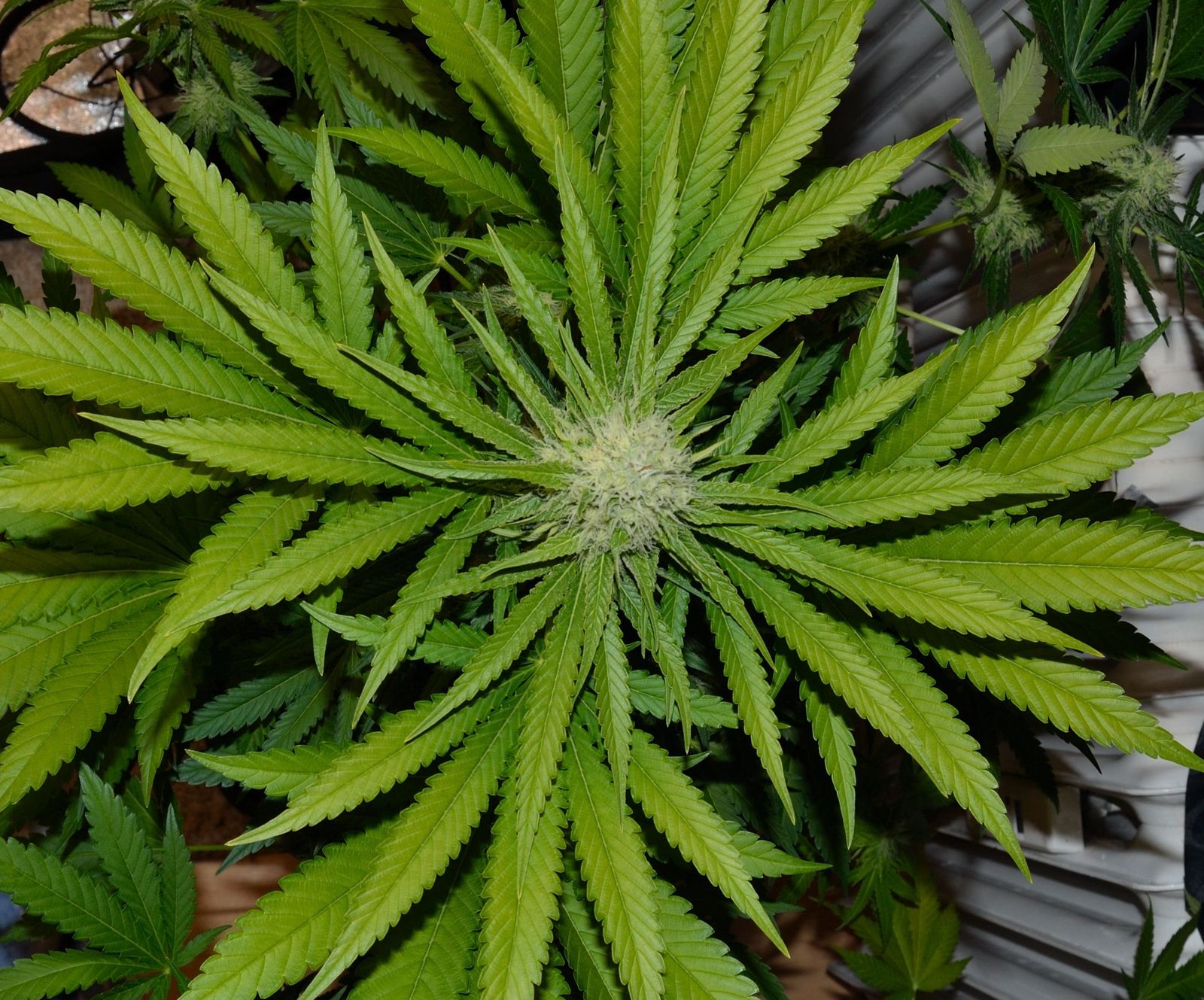
Most growers pick their seed type the wrong way — they start with "which is better?" when the real question is "which is better for me?" The answer hinges on a single biological quirk: one plant waits for darkness to bloom, and the other simply doesn't care.
What Actually Separates Autoflowering and Photoperiod Cultivars
This is the foundation everything else is built on. Photoperiod cannabis flowers in response to light — specifically, a shift to 12 hours of uninterrupted darkness that mimics the shortening days of late summer. Until you create that signal, the plant stays in vegetative growth indefinitely. Autoflowers operate on a completely different logic: they flower based on age, not light, typically triggering the transition around week 3 or 4 regardless of what your timer says.
That single genetic difference creates two entirely distinct growing experiences. To understand exactly what autoflowering marijuana seeds are at the genetic level, the short answer is a cannabis plant that carries the ruderalis flowering gene — but the full story is worth knowing before you commit to a seed.
The core distinction is this: photoperiod cultivars are light-dependent, flowering in response to shorter days. Autoflowers are age-dependent, flowering automatically after a fixed period of time regardless of your light schedule.
This means the choice isn't aesthetic — it restructures your entire grow, from equipment to timeline to technique.
| Feature | Autoflowering Cultivars | Photoperiod Cultivars |
|---|---|---|
| Flowering Trigger | Age-based; automatic | Light cycle change (12/12) |
| Grower Control Over Timing | Limited; plant dictates schedule | Full; grower controls veg length |
| Total Lifespan | Fast (8–10 weeks, seed to harvest) | Slower (13–22+ weeks common) |
| Best For | Beginners, quick harvests, compact spaces | Experienced growers, cloning, maximum yield |
The Genetics Behind Autos and Photos
Why does one cannabis plant bloom on a timer while another waits for the dark? The answer lives in the plant's lineage, and understanding it makes you a better grower.
Photoperiod cultivars descend from two foundational species: Cannabis indica and Cannabis sativa. Indica landraces evolved in the mountainous regions of the Hindu Kush — short, dense, fast-finishing. Sativa landraces developed in equatorial zones with long, stable days, tall, airy, slow. Both, however, evolved in environments where seasonal light changes were meaningful enough to use as a flowering signal. That evolutionary heritage is why your indoor lights have to play pretend autumn to make them bud.
Autoflowers carry a third bloodline: Cannabis ruderalis, a wild species from the harsh, short-summered climates of Siberia and Central Asia. When you only have a few weeks of good weather before frost, you cannot afford to wait for a light cue. Ruderalis simply evolved to flower automatically after reaching maturity, come what may. That survival strategy, encoded in its DNA, is the autoflowering gene.
The Ruderalis Influence
Clever breeders recognised that if you could cross ruderalis with high-quality indica or sativa genetics, you could pass the automatic flowering trait into cultivars that actually had desirable potency, flavour, and yield. Early attempts were rough — the resulting plants were small and weak, with the ruderalis physique dominating over the indica or sativa parent. But decades of selective breeding have refined the balance dramatically.
A modern autoflower inherits its size, terpene profile, and cannabinoid potential from its indica or sativa parent. Its internal clock — that automatic flowering trigger, comes directly from Cannabis ruderalis. Today's breeders have dialled in just enough ruderalis influence to control the timing without compromising the quality you'd expect from a top-shelf photoperiod.
The result is a genuinely hybrid expression. The ruderalis contribution is minimal by volume but decisive by function: it's the switch, not the engine.
Photoperiod Lineage: Sativa and Indica Compared
Photoperiod cultivars, without the ruderalis gene, express their sativa or indica heritage fully. Sativa-dominant cultivars tend to grow tall and open-structured, with long internodal spacing and narrow leaflets — a physiology shaped by equatorial regions where light is abundant and consistent. Indica-dominant cultivars grow shorter and bushier, with broad leaves and tighter node spacing, adapted to the compressed seasons of high-altitude environments.
- Sativa-dominant photoperiods: Tall, stretchy structure; longer flowering times (10–14 weeks); cerebral, energising effects; suited to larger grow spaces and experienced growers who can manage vertical growth.
- Indica-dominant photoperiods: Compact, branchy structure; faster flowering (7–9 weeks); relaxing, body-heavy effects; easier to manage in standard tent setups.
At Pacific Seed Bank Canada, every cultivar — auto or photo, is feminised. That means no energy wasted identifying and pulling males, no risk of accidental pollination, and no dilution of your effort. Every seed you plant is engineered to produce buds.
Grow Timelines from Seed to Harvest
The clock is the single most practical difference between the two types, and it affects nearly every decision you'll make in the grow room.
Autoflowers are sprinters. Their total lifecycle — from the moment a seedling breaks soil to the day you harvest, runs between 8 and 10 weeks for most modern cultivars. That schedule is fixed. You are not in control of it, which is both a limitation and a profound simplification.
Photoperiods are marathon runners you get to pace yourself. The vegetative stage stretches for as long as you decide, and that flexibility is the entire source of their yield potential — but it demands a much larger time commitment and more deliberate management.
The Autoflower Sprint, Stage by Stage
Predictability is an autoflower's greatest practical gift. From the moment your seeds pop — and you can find everything you need to know in our guide to how to germinate seeds quickly, the entire lifecycle unfolds on a reliable schedule:
- Germination and seedling (weeks 1–2): The seed sprouts and develops its first true leaves. Focus on gentle moisture, warmth (24–26 °C), and low-intensity light.
- Vegetative stage (weeks 3–4): Rapid structural development. The plant is building its frame — nodes, branches, and fan leaves — before the flowering signal activates internally.
- Pre-flower transition (week 4): Without any input from you, the plant begins redirecting energy toward bud production. White pistils appear at node junctions.
- Flowering stage (weeks 5–10): Buds develop and swell over 5–7 weeks. Trichome development is your harvest cue: cloudy trichomes for a more cerebral effect, amber for heavier sedation.
Total time from seed to harvest: 8–10 weeks. You can realistically run three or four complete autoflower cycles in a single calendar year indoors.
The Photoperiod Marathon and Grower Control
With photoperiods, the vegetative stage is where your strategic decisions live. Common indoor practice is to veg for 4–8 weeks, but many experienced growers push well beyond that to build plants capable of genuinely impressive yields. The longer you veg, the more bud sites you create, and the more those sites fill in during flower.
When the plant reaches your target structure, you trigger flowering yourself: switch your lights to a strict 12/12 schedule, meaning 12 hours of light followed by 12 hours of total, uninterrupted darkness. Light leaks during the dark period can cause stress, delayed flowering, or even hermaphroditism — so seal your grow space carefully.
From there, the flowering stage runs 8–12 weeks for most cultivars, with heavy sativa-dominant genetics sometimes requiring even longer. All in, a typical photoperiod run stretches to 4–5 months from seed to scissors.
The fundamental trade-off is control versus speed. Autoflowers hand you a fast, predictable harvest on a fixed timeline. Photoperiods hand you the keys to a much bigger potential outcome — but they demand patience, planning, and a dialled-in environment to earn it.
Autoflower vs. Photoperiod Timeline at a Glance
| Growth Stage | Autoflower Timeline | Photoperiod Timeline |
|---|---|---|
| Germination and Seedling | 1–2 weeks | 1–2 weeks |
| Vegetative Stage | 2–3 weeks (automatic) | 4–8+ weeks (grower-controlled) |
| Flowering Stage | 5–7 weeks | 8–12+ weeks |
| Total Time to Harvest | 8–10 weeks | 13–22+ weeks |
Yield, Potency, and the Modern Grower
Ten years ago, this comparison was almost embarrassingly one-sided. Photoperiods dominated on every measurable metric — yield per square metre, peak THC percentages, terpene complexity, everything. Autoflowers were novelty plants: fast, sure, but weak and stingy. That reputation was earned, and it has taken a generation of dedicated breeding to dismantle it.
It's now been dismantled.
Yield: The Gap Has Closed, But Not Entirely
The yield advantage of photoperiods comes directly from their customisable vegetative stage. More time in veg means a larger canopy, more bud sites, and heavier colas. A well-grown, well-trained photoperiod indica can pull 400–600 g/m² under optimal conditions. That ceiling is genuinely hard to match.
Modern autoflowering cultivars, however, are no longer embarrassed by the comparison. Top-tier autos routinely deliver 350–400 g/m², and some elite genetics approach photoperiod numbers when conditions are dialled in — proper VPD management (0.8–1.2 kPa during vegetative, 1.2–1.6 kPa in flower), full-spectrum lighting at appropriate PPFD levels, and clean nutrient ratios throughout. For growers focused on annual output rather than per-plant maximums, multiple autoflower runs can actually outproduce a single photoperiod cycle in the same grow space over a full year. Our roundup of the highest yielding cannabis strains gives you a deeper look at what top genetics are currently capable of.
Potency: Old Stereotypes Are Gone
The THC gap has closed faster than almost anyone predicted. A decade ago, breaking 15% THC in an autoflower was considered a genuine achievement. Today, it's a floor, not a ceiling. Modern autoflowering genetics routinely test at 20–23% THC, and a growing cohort of "super-auto" cultivars is pushing past 25%.
Photoperiods still hold the absolute ceiling. The most potent cultivars in the world — testing at 28–30%+ THC, are almost exclusively photoperiod genetics. Their longer lifecycle, combined with the grower's ability to manipulate light spectrum, intensity, and temperature differentials during late flowering, creates more opportunity to push cannabinoid and terpene production to its genetic limit.
But here is the honest comparison: blind-tested in a session, a top-shelf modern autoflower and a quality photoperiod are effectively indistinguishable by effect for most consumers. The gap that remains is at the very highest end of the spectrum, in the hands of very experienced cultivators, with highly refined photoperiod genetics. For the vast majority of home growers, it is not a practical difference.
- Autoflowers: Typical THC range 18–25%; terpene profiles solid but sometimes less complex than photoperiod equivalents; accelerated lifecycle limits late-stage terpene accumulation opportunities.
- Photoperiods: Typical THC range 20–30%+; greater terpene complexity possible with extended late-flower environmental manipulation; higher ceiling, but ceiling requires skill and time to reach.
Which Type Is the Right Fit for Your Grow
The framework is simple: match the plant's nature to your goals, your space, and how much time and control you actually want to exercise. Neither type is superior in absolute terms. Each is superior in specific circumstances.
Choose Autoflowers for Speed, Simplicity, and Short Seasons
Autoflowers remove the single most technically demanding variable in cannabis cultivation: the light schedule. You don't flip lights. You don't seal grow spaces against light leaks. You don't time your schedule around a photoperiod trigger. The plant manages its own transition, and your job is to keep conditions stable, watering correctly, feeding appropriately, and staying out of the way of the timeline.
They are genuinely forgiving for first-time growers. They are also the definitive choice in several specific situations:
- Limited space: Most autoflowers top out at 60–90 cm indoors. A small tent, a closet, or a corner of a spare room is entirely workable.
- Short Canadian summers: Whether you're on the Prairies, in northern Ontario, or in the interior of British Columbia, the outdoor growing window can be brutally compressed. Autos finish in 8–10 weeks from seed, meaning you can start in June and harvest before September frost — something no photoperiod can reliably promise at northern latitudes.
- Multiple annual harvests: Three or four runs per year indoors is achievable. For growers managing their own supply under the Cannabis Act's four-plant personal cultivation limit, cycling autos efficiently can yield more total flower annually than fewer, longer photoperiod grows.
- Discreet outdoor grows: Compact structure and non-dependence on seasonal light change make autoflowers easier to tuck into a garden or balcony without the plant telegraphing its identity through sheer size.
If your priorities are a fast turnaround, a manageable learning curve, or a successful outdoor harvest in a region where summer doesn't last long enough to be polite, autoflowers are almost always the right call.
For autoflower growers looking for proven genetics, the big shift autoflowering feminised strain is exactly what its name suggests — a high-performance auto built for growers who want serious results without serious complexity. For those who want both speed and world-class flavour, Girl Scout Cookies Auto brings the legendary GSC terpene profile, sweet, earthy, with a sharp cookie-dough finish, into a compact, fast-finishing package that rivals its photoperiod parent for potency and bag appeal.
Choose Photoperiods for Control, Training, and Maximum Yield
If you want to grow the biggest, heaviest, most refined cannabis you're capable of producing, the path runs through photoperiod genetics. The unlimited vegetative stage is not just a feature — it's the mechanism that enables everything else. Extended veg time allows you to apply advanced training techniques, build massive canopies, and give your plants the recovery time they need after intentional stress.
Photoperiods reward growers who are willing to invest time and skill. Consider them your default choice if:
- You want to train aggressively: High-stress techniques like topping, FIMing, and supercropping genuinely shine with photoperiods. You can top a plant, wait for it to recover and bush out, then top again before you ever flip the lights. A well-executed ScrOG (Screen of Green) setup on a photoperiod plant can produce a dense, even canopy that maximises every photon in your grow space.
- You're chasing maximum yield: The math is straightforward — longer veg means more lateral branching, more bud sites, and heavier harvests. Experienced photoperiod growers running large containers with extended veg times regularly exceed 500 g/m².
- You want to preserve elite genetics through cloning: This is the decisive advantage photoperiods hold that autoflowers simply cannot match. Keep a mother plant under 18+ hours of light indefinitely, take clones whenever you need new runs, and you have an inexhaustible supply of your favourite verified phenotype. Autoflowers cannot be cloned effectively — any cutting carries the same internal age clock as the mother, and will flower almost immediately without time to develop.
- You want cannabinoid fine-tuning: Growers can manipulate late-flowering light spectrum (increasing UV-B exposure) and environmental stress (strategic temperature drops in the final two weeks) to push terpene and cannabinoid expression in photoperiod cultivars. This level of craft simply isn't available on an autoflower's compressed timeline.
For growers ready to invest in the craft, Green Crack, the sativa-dominant photoperiod famous for its sharp mango and citrus terpene profile and genuinely energising effect, rewards patient cultivation with enormous, resin-drenched colas. Or consider Blue Dream, the beloved sativa-leaning hybrid that balances a blueberry sweetness with haze-driven complexity — a cultivar that fills a ScrOG like almost nothing else and consistently delivers yields that justify every extra week in the veg tent.
FAQs: What Canadian Growers Ask Most
What's the Best Light Schedule for Autoflowers?
Autoflowers will flower under virtually any light schedule — that's the whole point. But "will flower" and "thrive" are different things. To maximise vegetative mass and therefore final yield, run your lights for 18–20 hours per day from seedling straight through to harvest. More light hours equal more photosynthesis, more energy, and larger buds. Some growers run a full 24-hour light cycle, arguing that the extra hours push growth. Others prefer an 18/6 or 20/4 schedule, believing a short dark period supports metabolic recovery. Both approaches work; the 18–20 hour range is the most widely validated sweet spot for yield.
Can You Clone an Autoflower?
Technically, yes. Practically, no.
You can root a cutting from an autoflower — the cutting will form roots and survive. The problem is that cloning does not reset the plant's internal clock. Your clone is the same chronological age as the mother it came from. Since autoflowers begin flowering around week 3 or 4 of their total lifecycle, a clone taken from a mature mother plant will flip to flower almost immediately, with no time to build any structural size. The resulting plant will be tiny, underdeveloped, and barely worth harvesting.
If you want a perpetual harvest of a specific cultivar, you need a photoperiod mother plant. There is no practical workaround for autoflower cloning.
Do You Train Autos and Photoperiods Differently?
— and confusing the two approaches can seriously set back a grow.
Photoperiod plants are built for high-stress training (HST). Topping, FIMing, and supercropping all involve deliberately damaging or removing plant tissue. Photoperiods handle this well because you control the light schedule: you can hold the plant in vegetative growth for as long as it needs to recover and rebuild before you flip to flower. The result is a bushier, more productive plant with a dramatically increased bud-site count.
Autoflowers operate on a fixed, short clock and cannot afford recovery time. Any HST applied to an auto risks permanent stunting — the plant will flip to flower before it has recovered, and you'll harvest a fraction of its potential. The rule for autos is low-stress training (LST) only: gently bending and tying branches outward and downward to open the canopy, expose lower bud sites to light, and create a more even profile, all without breaking or removing tissue. LST is effective, non-invasive, and perfectly suited to the auto's compressed timeline.
The autoflowering vs. photoperiod decision comes down to one honest self-assessment: how much time, space, and technical engagement do you want to bring to your grow? Both paths lead to excellent cannabis when matched to the right grower and setup. For everything from seed selection to harvest technique, the Growing Marijuana blog at https://pacificseedbank.ca is built to give you the knowledge to make every grow better than the last.
Keep Reading

How Much Does It Cost To Grow Your Own Weed in Canada?
Learn the real costs of growing weed at home, including grow tents, lights, seeds, nutrients, electricity, and how much cannabis you can harvest.
The 5 Best Blueberry Cannabis Strains To Grow Indoors
Find the best blueberry weed strains to grow indoors, including Blue Dream, Blueberry Cheesecake, and more - and buy the seeds from Pacific Seed Bank.
Why 5.8–6.5 Is The Ideal pH for Cannabis (And When to Adjust)
Learn why 5.8-6.5 is the ideal pH for cannabis plants, how to test your plant's pH, and how to adjust it higher or lower when you need to.
The Best Autoflowering Light Schedule For Bigger Yields
Stop guessing your autoflowering light schedule. Our guide breaks down the 18/6, 20/4, and 24/0 schedules to help you grow bigger, better plants.