Why Should I Buy From A Seed Bank Like Pacific Seed Bank Canada?
8 min read · , updated May 14, 2026
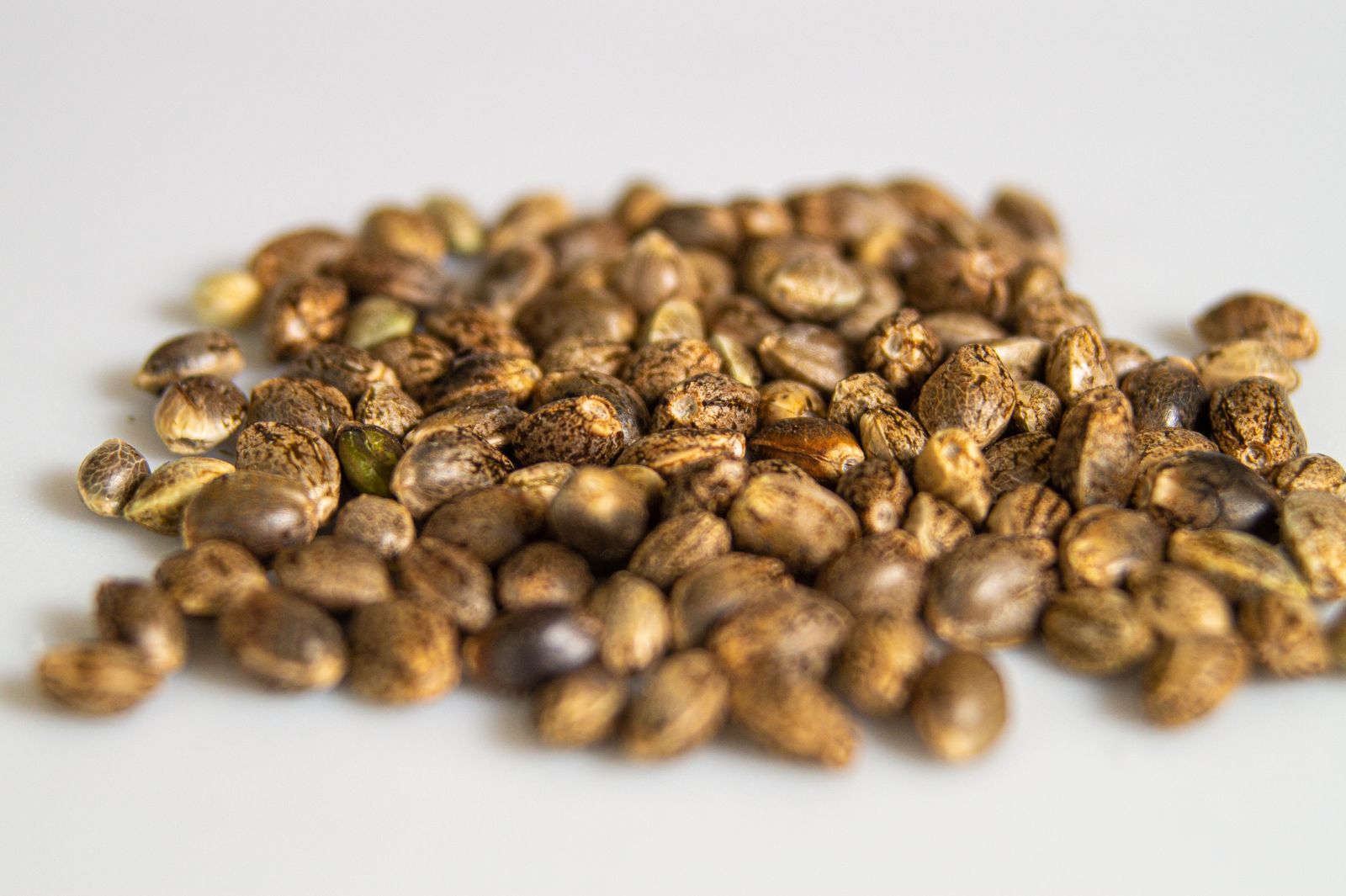
Most Canadian growers spend more time researching their next grow light than they do vetting the source of the seeds that will determine everything — yield, potency, flavour, and whether that investment pays off at all. The seed is the blueprint. Get it wrong at the source, and no amount of dialled-in VPD or expert topping technique will save you.
That's the case for buying from a reputable seed bank — not a corner dispensary with a small rotating stock, not an unverified online listing, but a dedicated, knowledgeable operation whose entire reputation rests on the quality of its genetics. Here's exactly why it matters.
Authority: The Expertise Behind Every Strain
You wouldn't have a mechanic diagnose a complex engine problem at the corner store, and the same logic applies to sourcing cannabis genetics. A quality seed bank isn't simply a warehouse with seeds on shelves — it's a living knowledge base built by people who understand the full arc of a plant's life, from the genetic lineage of a cross to the ideal soil pH for its expression in your specific grow environment.
Reputable seed banks dedicate real resources to researching breeders and strains with a level of scrutiny that licensed retail stores simply cannot match. They know that a given cultivar might express dramatically different phenotypes depending on whether it's grown in coco coir versus living soil, that a 70% sativa leaning strain will demand different canopy management than a dense, resinous indica, and that flowering time windows aren't suggestions — they're the result of photoperiod genetics refined across generations of selective breeding.
Pacific Seed Bank was built on exactly this principle. The team is composed of seed-savvy horticulturalists, medical professionals, and industry specialists who have spent decades evaluating strains, auditing breeders, and compiling the results into a catalogue Canadians can trust. When you ask a question — about nutrient schedules, terpene profiles, or whether a particular autoflowering strain can handle a northern British Columbia outdoor season, you get an answer grounded in real cultivation experience, not a guess.
- Strain-specific knowledge: Flowering windows, expected THC ranges, dominant terpenes, and ideal training methods are understood at depth, not just listed on a label.
- Breeder vetting: Not every seed producer meets the same genetic stability standards. A seed bank does the due diligence so you don't have to gamble your grow.
- Cultivation guidance: Understanding whether a strain rewards a SCROG setup or responds better to aggressive LST is the kind of nuanced advice that only comes from hands-on horticultural expertise.
- Medical context: For patients growing under personal cultivation provisions of the Cannabis Act, understanding the cannabinoid and terpene profile of a strain — its CBD-to-THC ratio, its myrcene or linalool content — is clinically relevant, not just recreational preference.
Selection: Hundreds of Strains, Zero Compromise
Walk into a brick-and-mortar cannabis retailer and you're choosing from whatever fits behind the counter. That's not a criticism — it's simply the physics of retail floor space. An online seed bank operates without those constraints, and the difference in breadth is extraordinary.
Consider what a serious Canadian grower might actually need across a single season. An outdoor cultivator in the Okanagan wants a photoperiod feminized strain that finishes before the first frost in October — likely a fast-flowering indica-dominant with an 8-week flower period and robust mould resistance. A basement grower in Toronto running a 3 × 3 tent under a 600-watt HPS needs compact autoflowering genetics that won't stretch past 80 centimetres. A patient managing chronic pain wants a high-CBD cultivar with a warm, myrcene-rich profile that doesn't compromise cognitive function. These are three completely different seed requirements, and a single display case cannot serve all three.
A seed bank can — and does.
There are genuinely hundreds of strains on the market today, and they fall into meaningfully distinct categories:
- High-THC recreational cultivars bred for potency, often featuring terpene profiles rich in limonene and caryophyllene, with THC levels reaching 25–30% in premium phenotypes.
- CBD-forward medical strains with ratios ranging from 1:1 THC:CBD all the way to near-isolate CBD varieties for patients who need therapeutic relief without pronounced psychoactivity.
- Terpene-forward connoisseur cultivars — think complex, layered flavour profiles featuring gas, tropical fruit, dark berry, or aged cheese notes — where the aromatic experience rivals the cannabinoid effect in importance.
- Autoflowering genetics that complete seed-to-harvest in as few as 60–70 days, ideal for Canadian growers with short outdoor windows or those running perpetual indoor harvests.
- Fast-finishing photoperiod feminized strains bred specifically for northern climates where autumn comes early and outdoor harvests need to wrap up before Thanksgiving.
- Landrace and heritage varieties for cultivators who want to explore the genetic roots of modern cannabis — Afghani, Durban Poison, and similar foundational cultivars that have shaped decades of breeding.
Shopping from a seed bank means you can explore a new breeder's interpretation of a classic like OG Kush alongside a cutting-edge autoflowering hybrid you've never encountered before — all in one session, with full strain data available before you commit a single dollar. That kind of freedom simply doesn't exist at a local retailer.
Reliability: Germination Rates, Genetics Integrity, and Discreet Delivery
A seed bank's reputation lives or dies by one thing: whether its seeds actually do what they're supposed to do.
This is not a trivial point. Cannabis seeds are perishable, sensitive to heat and humidity during storage, and vary enormously in genetic stability depending on the breeder's rigour. A seed that fails to germinate doesn't just cost you money — it costs you weeks of a grow cycle. A seed that germinates but expresses unstable phenotypes, hermaphrodites under stress, or delivers THC levels far below the advertised spec is arguably worse, because you've invested the full time and care of a grow only to be disappointed at harvest.
Reputable seed banks address this through multiple layers of quality control:
- Breeder relationships: Working directly with established, tested breeders rather than sourcing opportunistically from unverified stock.
- Proper seed storage: Seeds stored at stable cool temperatures (ideally 6–8°C) with controlled humidity to preserve viability — germination rates degrade rapidly in poor storage conditions.
- Feminization integrity: True 100% feminized seeds are produced through rigorous processes — silver thiosulphate or colloidal silver treatment to induce male flowers on a female plant — ensuring pollen carries only XX chromosomes. The result is near-certain female expression, eliminating the risk of accidental pollination that ruins a sinsemilla crop.
- Discreet, well-packaged shipping: Seeds shipped carelessly in flimsy packaging can be damaged in transit. A professional seed bank uses protective packaging and discreet labelling designed for safe delivery across Canada's varied postal network.
- Responsive customer service: If something goes wrong — a package is delayed, a seed lot underperforms — a trustworthy seed bank stands behind its product and makes it right.
These aren't luxuries. For a home cultivator under Canada's Cannabis Act allowance of up to four plants per household, each seed represents a meaningful portion of a limited legal canopy. Every plant counts.
Competition: Why the Global Seed Market Works in Your Favour
Cannabis seed banks compete on a genuinely global stage, and that competitive pressure is one of the best things that has ever happened to the home grower.
When a seed bank knows that a grower in Winnipeg can compare its offerings with those of a bank in Amsterdam, Barcelona, or Vancouver in under five minutes, the standard for quality, service, and transparency rises accordingly. Mediocre genetics, poor customer service, and unreliable shipping aren't survivable in that environment — not when a single negative review on a cannabis forum can reach thousands of potential customers within hours.
Compare this to a local retailer. A dispensary faces far less competitive pressure on its seed selection because its primary business is flower, concentrates, and accessories. Seeds may sit in a display case for months, their viability quietly degrading. Staff expertise on genetics is variable, and the selection reflects what's available from a limited number of provincial distribution channels rather than the best of what global breeding has produced.
A dedicated seed bank, by contrast, is constantly evaluating its catalogue — retiring underperforming lines, adding newly stabilised crosses, and responding to grower feedback. That ongoing refinement is only possible when genetics are the core product, not an afterthought.
Reviews and Community: Social Proof That Actually Means Something
There is no more reliable signal in the cannabis seed world than unsolicited praise from experienced growers who have nothing to sell you.
Cannabis cultivation forums, grow journals, and review aggregators represent thousands of real grow cycles — successes and failures documented in granular detail by people who have actually germinated a strain, trained it through vegetative growth, pushed it through a full flower cycle, and harvested, dried, and cured the final product. When those growers return to say that a specific seed bank's White Widow feminized delivered a consistent 500 g/m² under 600 watts, or that a particular autoflowering Blueberry phenotype expressed stunning purple hues and a complex blueberry-and-earth terpene profile at 63 days from seed, that information is invaluable.
It's worth taking the time to search a seed bank's name on reputable cannabis forums before making a purchase. Look for patterns across multiple reviewers: consistent germination success, phenotype stability, accurate strain descriptions, and professional handling of any problems that arose. A company that appears repeatedly in these conversations — not just in its own marketing materials, has earned genuine community trust.
This is particularly relevant under Canada's legal framework, where home cultivators are making real horticultural investments with a four-plant ceiling. The stakes of choosing the wrong source are real, and peer-sourced information helps Canadians make confident, informed decisions.
The Bottom Line: Your Seeds Are Your Entire Grow
Every technique you master — low-stress training, targeted defoliation at day 21 of flower, precision VPD management, a two-stage flush before harvest, a 60-day slow cure in amber glass, is only as powerful as the genetic foundation underneath it. Elite technique applied to mediocre, unstable, or poorly stored genetics returns mediocre results. Elite technique applied to well-bred, properly stored, and expertly selected genetics is how home cultivators produce dispensary-quality cannabis in their own homes, legally, for a fraction of what it costs to buy.
That's the real argument for buying from a seed bank. Not just selection, though it is broader. Not just expertise, though it is deeper. It's the certainty that the seed you plant on day one carries the genetic potential to justify every hour and every dollar you invest between germination and jar.
The team at Pacific Seed Bank has spent years doing exactly the work described above — vetting breeders, curating genetics, and building a catalogue of 100% feminized seeds and premium autoflowering varieties that Canadian growers can trust grow after grow. Your job, the genuinely enjoyable part, is deciding which strain goes in the tent next.