How To Pair Cannabis Terpenes With Food & Drink
8 min read · , updated May 14, 2026
Sommeliers didn't invent pairing — they just formalised something the nose already knew. The same logic applies to cannabis: once you understand that terpenes are the shared chemical language between your flower and your plate, every meal becomes an opportunity for a more intentional, layered experience.
Marijuana Aroma & Flavour: Where It All Begins
Walk into any well-stocked cannabis retailer in Canada and the aromatic complexity hits you before you've even reached the display case. Indica-dominant cultivars pull you in thanks to their fruity aroma — grape, dark berry, stone fruit, while sativa-leaning varieties lean hard into diesel, citrus, pine, and skunk. Hybrids split the difference in endlessly creative ways. That sensory geography isn't random. It is the direct expression of terpenes, the volatile aromatic compounds that define a strain's personality from the first sniff to the final exhale.
Flavour and aroma in cannabis are inseparable from the growing environment: temperature, humidity, light spectrum, and soil biology all influence terpene expression at the phenotype level. A Blueberry Kush grown in a warm, humid room will express different terpene ratios than one grown cool and lean. That variability is part of what makes terpene pairing an art rather than a formula — and why growers who understand their own cultivars are best positioned to explore it.
What Are Cannabis Terpenes?
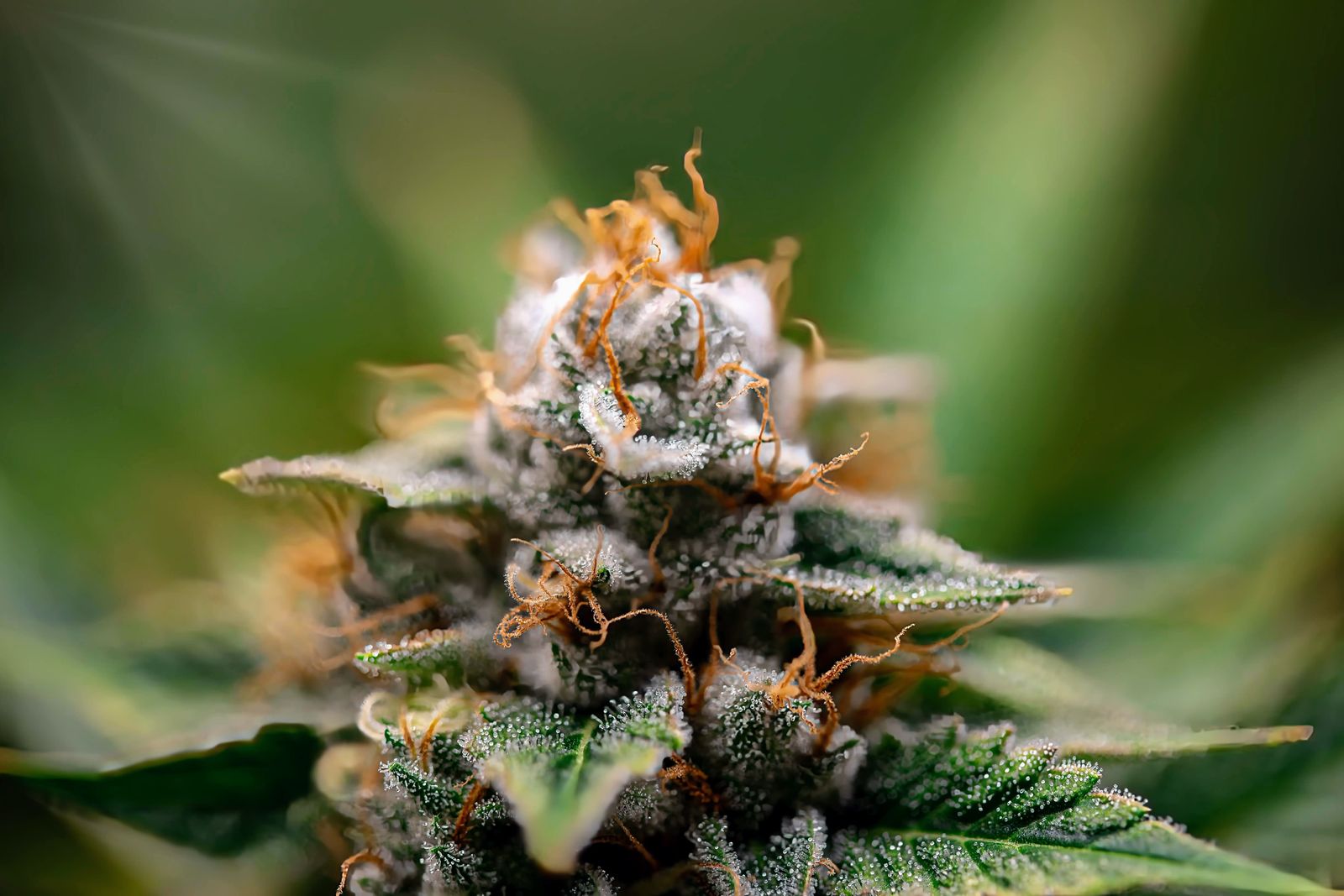
Terpenes are naturally occurring organic compounds synthesised in the trichomes of cannabis flowers — the same resinous structures that concentrate cannabinoids like THC and CBD. They are not unique to cannabis; they are the aromatic backbone of the entire plant kingdom. Lavender's calming scent comes from linalool. Black pepper's heat comes from beta-caryophyllene. The fresh snap of a pine forest is pinene. Cannabis simply concentrates these compounds in staggering variety and intensity.
Here are the terpenes most relevant to food pairing, along with their dominant aroma signatures:
- Myrcene — earthy, musky, tropical fruit; the most abundant terpene in modern cannabis cultivars
- Limonene — bright citrus, lemon zest, fresh orange peel
- Linalool — floral, lavender, slightly spiced
- Pinene (α & β) — sharp pine, rosemary, fresh eucalyptus
- Beta-Caryophyllene — warm spice, cracked black pepper, clove
- Terpinolene — floral, herbal, with hints of apple and lilac
- Ocimene — sweet, tropical, faintly woody
- Humulene — earthy, hoppy, slightly bitter — the terpene that links cannabis to craft beer
Most strains produce a dominant terpene alongside two to four supporting ones, creating a terpene profile as complex as a wine's varietal character. Understanding that profile is the foundation of intelligent pairing.
How Your Palate Actually Processes All of This
Taste is more than your tongue's job. The roughly 10,000 taste buds distributed across your papillae detect the five basic taste qualities — sweet, sour, salty, bitter, and umami, but the full experience of flavour is largely olfactory. Retronasal olfaction, the process by which aroma compounds travel from the back of your throat to your olfactory receptors as you chew and exhale, accounts for the majority of what we describe as taste. This is why food tastes flat when you have a cold.
For cannabis pairing, this is the operative insight: the terpenes you inhale or ingest interact with the same olfactory system that processes your food. When a citrus terpene like limonene from your strain meets the lemon beurre blanc on your salmon, both signals arrive at the same receptor sites, creating resonance — an amplification of the shared aromatic compound. Contrast works too: a peppery beta-caryophyllene strain cutting through the fat of a cheeseburger is the cannabis equivalent of a high-acid wine alongside a rich dish.
An Introduction to Cannabis & Food Pairings
There is no universal rulebook here — think about your favourite combinations and you'll realise that the most memorable pairings often break convention. Pairing cannabis with food follows two primary philosophies: complementary pairing, where shared terpenes amplify each other, and contrasting pairing, where opposing flavour profiles create balance. Both are valid. Both are delicious.
The following strain-and-dish pairings illustrate how terpene logic translates directly to the table:
- Lemon Drop & Salmon with Rice — This limonene-forward auto brings a clean, bright citrus note that mirrors the lemon used to finish most salmon preparations. The herbaceous undertones complement fresh dill or caper garnishes without overpowering the fish's delicate fat.
- Blueberry Kush & Yogurt with Granola — Blueberry Kush, the indica-leaning berry classic, carries a sweet myrcene-and-linalool profile that layers beautifully onto the tangy creaminess of full-fat yogurt. Add fresh blueberries and a drizzle of honey to close the loop.
- Pineapple Trainwreck & Hawaiian Pizza with Mozzarella Sticks — A sativa-leaning feminized strain with tropical terpene expression, Pineapple Trainwreck carries ocimene and myrcene signatures that lock in with the sweet acidity of pineapple on pizza. The mozzarella adds a creamy, mild counterpoint to the strain's bright finish.
- Mint Chocolate & Vanilla Ice Cream with Sprinkles — Mint Chocolate, a feminized cultivar with cool menthol and rich cocoa terpene notes, is practically engineered for this pairing. The vanilla base softens the mint, while the chocolate registers on both sides of the equation simultaneously.
- Big Buddha Cheese & Cheeseburger with Fries — Big Buddha Cheese carries the unmistakable pungent, fermented terpene profile of aged cheddar. Paired with a proper double cheeseburger, it's a complementary pairing in the most unapologetically satisfying sense. The umami synergy is real.
- Cookie Monster & Tomato Soup with Sour Cream — This one surprises people until they try it. The sweet, toasty, vanilla-tinged terpene profile of Cookie Monster acts as a direct counterweight to the acidic brightness of tomato soup. A dollop of sour cream softens the acidity further and adds a creamy richness that echoes the strain's dessert-forward character.
The Cookie Monster pairing deserves a deeper look, because it illustrates contrast pairing at its most effective. Cookie Monster — available as both a feminized and an autoflowering cultivar, carries a sweet, baked-good terpene signature dominated by caryophyllene and linalool. Tomato soup is acidic and savoury by nature. The contrast creates balance, not confusion, in the same way that a sweet Riesling cuts through a salty, spiced curry. Neither flavour dominates; both are elevated.
When you're ready to push further into adventurous territory, consider something built around Blue Cheese, the autoflowering feminized cultivar with its distinctive funky, fermented edge. Pair it with a charcuterie board featuring aged blue cheese, walnuts, and fig jam — each component mirrors or contrasts a different layer of the strain's complex terpene profile. Olives, pickles, and other high-acid fermented foods follow similar logic: their sharpness pushes back against earthy, pungent terpenes in a way that keeps the palate engaged.
The Cannabis–Appetite Connection: Why Pairing Matters Even More When You're High
The munchies are not a myth, and the mechanism behind them is precise. THC binds to CB1 receptors in the hypothalamus — the brain region responsible for hunger regulation, and effectively amplifies appetite signals while simultaneously increasing olfactory sensitivity. Studies have shown that cannabis consumption can heighten the sense of smell, which, as we've established, is the primary driver of flavour perception. In other words, food genuinely smells and tastes better.
This has two practical implications for the pairing enthusiast:
- Subtle flavours become perceptible. A delicate herb like tarragon or a mild cheese that might normally register as background noise can become a centrepiece when your olfactory sensitivity is elevated.
- Overpowering combinations intensify further. Very pungent strains paired with very bold foods — think a high-myrcene diesel strain with a heavily spiced curry — can overwhelm the palate rather than complement it. Moderation in pairing intensity is wise.
Under the Canadian Cannabis Act, responsible consumption remains the guiding principle. Knowing your strain, understanding its effects, and setting up a comfortable, intentional environment makes the pairing experience safer and more rewarding for everyone at the table.
Building Your Pairing Vocabulary
The fastest way to develop a personal pairing philosophy is to treat it as a sensory exercise, not a high-stakes dinner party challenge. Start simple. Identify the dominant terpene in your strain — your seed bank, your budtender, or a lab-tested product listing can often tell you. Then ask: what food shares that aromatic compound?
A few practical rules of thumb to guide you:
- Citrus terpenes (limonene) → seafood, light vinaigrettes, lemon desserts, wheat beers
- Berry and fruit terpenes (myrcene, linalool) → breakfast foods, yogurt, fresh fruit salads, rosé wine, fruit-forward cocktails
- Earthy and musky terpenes (myrcene, humulene) → red meats, root vegetables, craft lagers, aged hard cheeses
- Pine and herb terpenes (pinene) → Mediterranean cuisine, roasted lamb, herbed olive oils, gin-based drinks
- Spice terpenes (beta-caryophyllene) → dark chocolate, grilled meats, peppery greens, whisky, red wine
- Sweet and dessert terpenes (linalool, terpinolene) → vanilla, cream-based sauces, pastries, sweet white wines, milky cocktails
Notice how drink pairings follow naturally from the same terpene logic. A limonene-forward strain like Lemon Drop alongside a cold wheat beer with lemon is a triple-threat citrus moment. A spicy caryophyllene cultivar and a peaty Scotch whisky is a pairing that would stop a sommelier in their tracks. For more inspiration across the culinary calendar, the Marijuana Lifestyle section of our blog is worth exploring regularly.
Start Pairing, Start Eating
You do not need a culinary degree, a cannabis certification, or a terpene spectrometer to get this right. What you need is curiosity, a willingness to pay attention to what you're tasting, and a garden — or a well-stocked seed bank, that gives you access to strains with distinct, expressive terpene profiles. Grow intentionally, cure your flowers properly (a slow 60-day cure at 60% RH preserves terpene integrity far better than a rushed two-week dry), and you will have better raw material to work with before the first dish is even plated.
The most sophisticated pairing you will ever execute is the one that makes you stop mid-bite and say: that's exactly right. It doesn't have to be elaborate. Sometimes it's Blueberry Kush and a bowl of yogurt on a Tuesday morning. Sometimes it's a feminized Big Buddha Cheese phenotype so pungent it demands a proper double smash burger in response. Either way, you're eating more intentionally, flavouring more deliberately, and experiencing cannabis in a dimension most people haven't explored yet. That's the whole point.