Male vs Female Cannabis Seeds: What's the Difference?
9 min read · , updated May 14, 2026
Most growers know they want female plants — but far fewer understand why that choice matters so profoundly, or what they're actually sacrificing when they discard every male in the room. Cannabis is dioecious, meaning it produces distinctly male and female individuals, each with a radically different role in the plant's life cycle. Get that distinction wrong, or ignore it, and you'll either watch your resinous buds fill with seeds or spend an entire season growing plants that never produce a single smokable flower. Understanding the biology behind cannabis sex isn't just academic; it's the foundation of every efficient, productive grow.
What Male Cannabis Plants Actually Do
Males are the misunderstood workhorses of cannabis genetics. A male plant never produces the dense, trichome-covered flowers that growers harvest, yet without males, the thousands of cultivars Canadians enjoy today simply wouldn't exist.
Instead of buds, male plants develop pollen sacs — small, round structures that cluster at the internodes, the joints where branches meet the main stem. As the plant matures, those sacs swell, split open, and release clouds of fine pollen into the air. A single vigorous male can release enough pollen to fertilise every female in a sealed 3×3-metre grow tent.
Their contribution to cultivation is primarily genetic. Males carry exactly half the chromosomal information needed to create new phenotypes. Breeders spend years hunting for exceptional male specimens — plants that pass along traits like terpene complexity, mould resistance, vigorous root structure, or accelerated flowering time, because those invisible qualities can define an entire seed line. For the casual home grower permitted to cultivate up to four plants under Canada's Cannabis Act, however, a male plant in the mix is usually an expensive mistake rather than an asset.
- Produce pollen rather than resinous flower
- Carry 50% of offspring genetics
- Essential for creating new strains and seed stock
- Should be removed from flower-focused grow spaces before pollen shed
Female Cannabis Plants: Where the Harvest Lives
Every sticky, aromatic, cannabinoid-rich bud you've ever encountered came from a female plant. That's the short version.
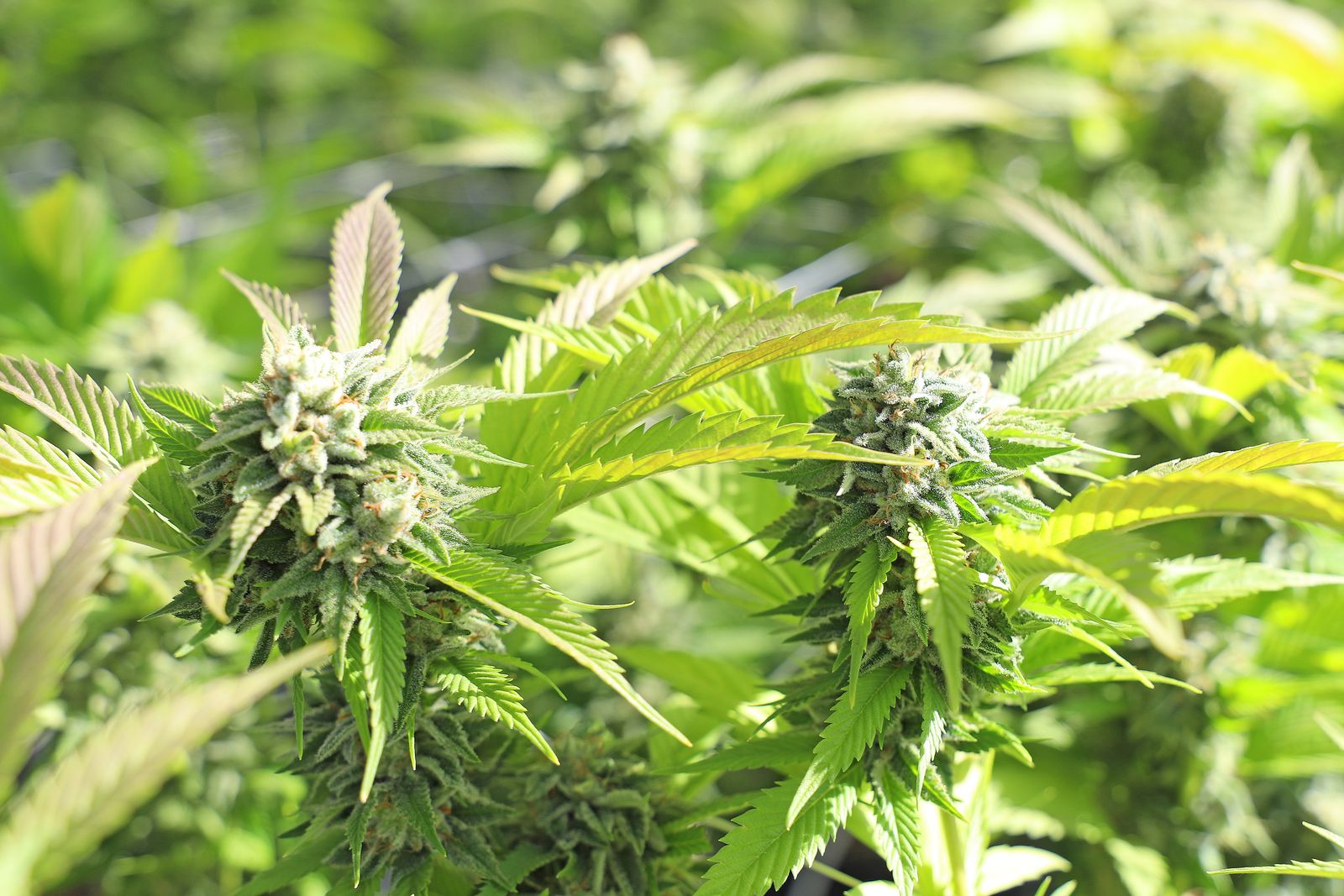
The longer version is more interesting. Female cannabis plants are biologically primed to capture pollen. They develop pistillate flowers — clusters of tiny bracts tipped with white, hair-like pistils, that are designed to intercept airborne pollen grains and channel them toward the plant's ovules for fertilisation. Once fertilised, the plant's entire metabolic priority shifts: it stops investing energy in trichome and cannabinoid production and redirects everything into seed development. The result is a seeded bud with noticeably lower THC density and a harsher smoke.
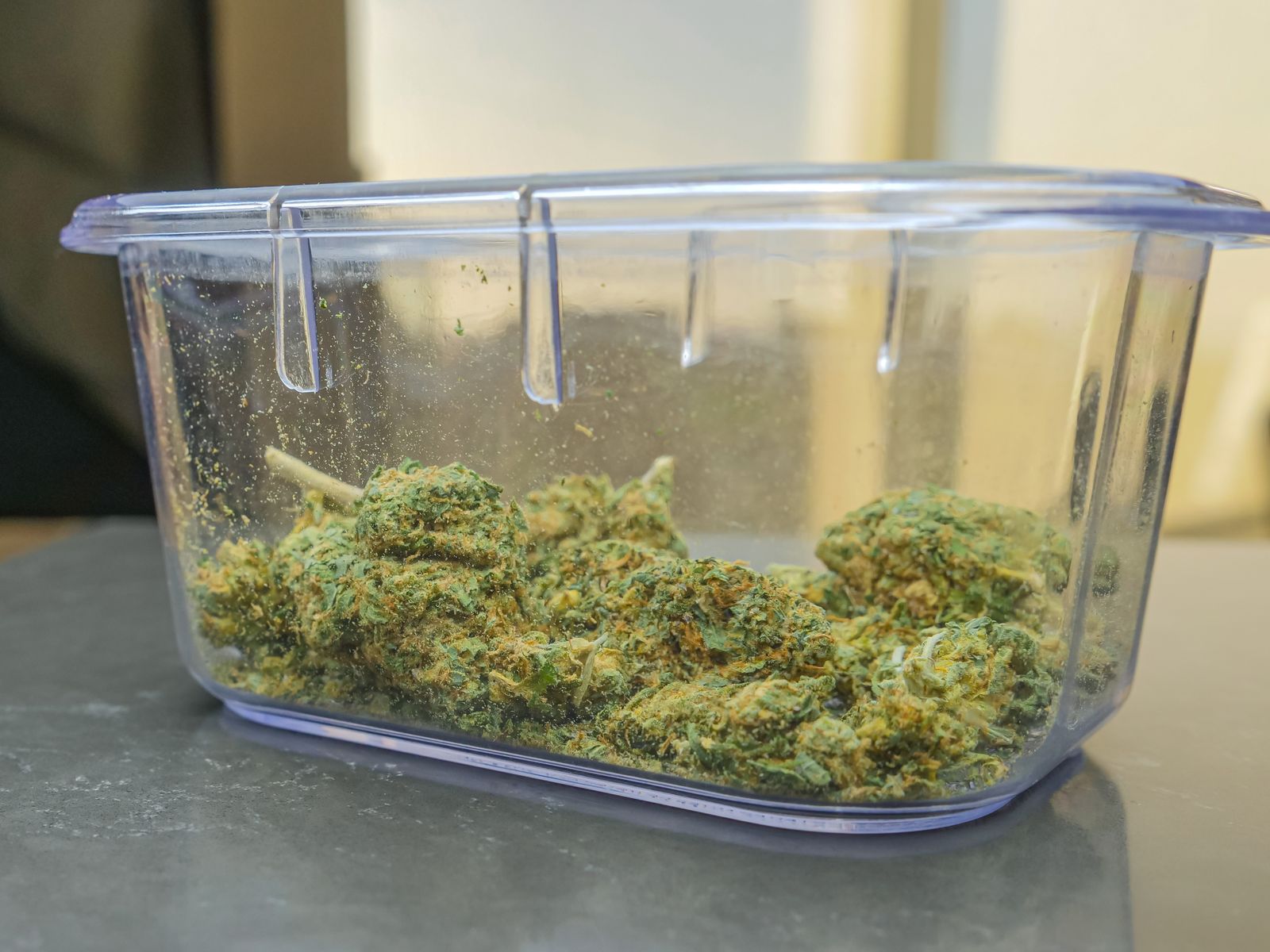
Deny the female plant pollen entirely, and something remarkable happens. With no seeds to produce, she pours every available resource into swelling her flowers, stacking calyxes, and coating every surface with sticky, terpene-laden resin. This is sinsemilla — from the Spanish sin semilla, "without seeds", and it represents the pinnacle of cannabis flower production. The unfertilised sinsemilla bud is what licensed retailers stock under the Cannabis Act, and it's what most Canadian home growers are striving to produce.
Why Plant Sex Determines Your Entire Growing Strategy
The stakes of getting sex identification right are higher than most beginners expect. One undetected male releasing pollen in a flowering room doesn't just seed a few nearby plants — it can compromise an entire crop within 24 to 48 hours, because pollen travels freely on air currents, clothing, and even your breath.
Consider the two scenarios side by side:
Flower-focused grower: Every male must be identified and removed before pollen shed — ideally 10 to 14 days after the plant shows pre-flowers. The reward is a room full of unfertilised females producing maximum cannabinoid and terpene output, typically harvested at 500–600 g/m² under optimised indoor conditions. Breeding-focused grower: Males are actively selected and preserved. A single elite male is introduced to an isolated female, pollination is controlled to affect only specific branches, and the resulting seeds carry a deliberate genetic combination. Both plants matter equally here, but for entirely different reasons.
For growers producing flower for personal use — the most common use case in Canada, accidental pollination represents a complete loss of potency and a significant loss of time and money. That's why the industry developed feminised seeds in the first place.
How to Identify Male and Female Plants Early
Timing is everything. The window between first pre-flower appearance and pollen shed can be as short as one to two weeks, so daily inspection during the transition from the vegetative growth phase is non-negotiable.
Pre-flowers — the earliest sex indicators, appear at the internodes before you ever trigger a flowering light cycle. Here's what to look for:
- Locate the internodes. Check the junction where each branch meets the main stem, starting from node four or five from the base of the plant.
- Look for sac clusters on males. Male pre-flowers are round, pale green, and resemble tiny grapes bunched together on a short stalk. They may look almost like a miniature bunch of grapes in tight formation.
- Look for bracts with pistils on females. Female pre-flowers are teardrop-shaped with one or two white hairs (pistils) curling outward from the tip. They're more elongated and pointed than male sacs.
- Use magnification. A 30× jeweller's loupe or a digital microscope makes pre-flower identification far more reliable, especially in the earliest stages.
- Act immediately on males. Once identified, remove male plants from the grow space before any sacs begin to yellow, which signals imminent pollen release.
Environmental factors influence how quickly pre-flowers appear. Plants under mild stress — slightly high temperatures, fluctuating humidity outside the optimal 50–70% VPD range during veg, may show pre-flowers sooner. Stable conditions slow the process but produce healthier expressions overall.
Feminised Seeds: The Practical Choice for Most Canadian Growers
Feminised seeds remove the single most stressful variable in cannabis cultivation: the coin-flip of plant sex.
The production method is elegant. A female plant is stressed — typically through silver thiosulphate solution or colloidal silver applied to specific branches, until she produces viable pollen. That pollen, carrying only female (XX) chromosomes, is used to fertilise another female. Because no male genetic material is involved, nearly 100% of the resulting seeds will germinate into female plants. Most quality feminised lines achieve 99%+ female rates under stable conditions.
For a Canadian home grower limited to four plants, feminised seeds mean all four plants contribute to the harvest. With regular seeds, statistical probability suggests two of those four plants will be male — cutting your productive canopy in half before flowering even begins.
The trade-off is real but limited in scope. Feminised seeds are less suited to serious breeding work because they don't originate from a true male-female genetic cross, which can introduce slight instability in subsequent generations. For breeders chasing specific trait combinations across multiple generations, regular seeds remain the professional standard. For everyone else — the overwhelming majority of Canadian home cultivators, feminised seeds are simply the smarter investment.
Hermaphrodite Plants: The Hidden Third Risk
Between the clean binary of male and female sits a third category that causes significant problems: the hermaphrodite.
A hermaphroditic cannabis plant develops both pollen sacs and pistillate flowers on the same individual. This isn't a natural genetic quirk so much as a stress response. The plant, sensing that its reproductive opportunity is at risk, creates its own pollen to self-fertilise — a survival mechanism that became a cultivation nightmare.
Common triggers include:
- Interrupted dark periods during flowering (light leaks are a frequent culprit)
- Extreme temperature swings — above 30°C or below 15°C during flower
- Severe nutrient deficiencies or toxicities, particularly nitrogen excess late in flower
- Physical damage to branches or roots
- Genetic predisposition — some lines are simply more stress-sensitive than others
A hermaphrodite is uniquely dangerous because it can pollinate itself and every nearby female without any obvious visual warning until pollen sacs are already bursting. Inspect the undersides of leaves and deep within the canopy, not just the obvious bract clusters. Any plant showing both structures should be removed from the grow space immediately.
Some breeders have deliberately used hermaphroditism to create feminised seed lines — it's the same forced-pollen method described above. But a spontaneously hermaphroditic plant passing that stress sensitivity to its offspring is rarely desirable, which is why most growers treat hermaphrodites as a problem to eliminate rather than an opportunity to exploit.
Cloning: The Third Path to an All-Female Garden
There is a third strategy beyond feminised seeds and careful sexing of regular seeds, and it's one of the most powerful tools available to an experienced grower: cloning.
A clone is a cutting taken from a verified female plant — typically a 10–15 cm branch tip with at least two nodes, rooted in a propagation medium and grown on as a genetically identical copy of the mother. Because the mother's sex is already confirmed, every clone she produces is guaranteed female. There's no germination gamble, no waiting through the vegetative stage to check pre-flowers, and no risk of an undetected male contaminating the room.
Cloning also preserves an exceptional phenotype indefinitely. If you find a plant with unusually high terpene expression, outstanding yield, or remarkable pest resistance, taking clones locks in that exact genetic expression for future cycles. Mother plants maintained in a perpetual vegetative state under 18 hours of light can supply cuttings for months or years.
The limitation is that clones carry the same genetic vulnerabilities as their mother. If she's susceptible to powdery mildew or botrytis, her clones will be too. Diverse genetics from fresh seeds will always outperform a monoculture of clones in terms of adaptability — but for consistent, predictable harvests, cloning from a proven female is hard to beat.
Which Seed Type Is Right for Your Growing Goals?
Matching your seed type to your actual objective is the most important decision you'll make before germination.
- Harvesting high-quality flower → feminised seeds; all available canopy space contributes to yield.
- Simplicity and speed → autoflowering feminised seeds; they flower on age rather than light cycle, making them ideal for beginners or compact Canadian grow spaces.
- Creating new genetics → regular seeds; both male and female expressions are available for deliberate crosses.
- Guaranteed replication of a proven plant → cloning from a confirmed female mother.
- Learning the full biology of cannabis → regular seeds will teach you everything, including the discipline of daily inspection and the cost of missing a male.
Beginners will almost always find their first successful harvest with feminised or autoflowering feminised seeds. The Marjiuana Education resources available at Pacific Seed Bank Canada are a strong starting point for understanding exactly how these seed types perform across different growing environments — from BC coastal humidity to Alberta's dry continental winters.
The Clear Summary Every Grower Needs
Cannabis sex isn't a minor detail — it's the single variable that determines whether your grow space fills with marketable, potent flowers or with pollen-dusted seeds and missed potential. Here's the distilled version:
- Male plants produce pollen, contribute genetics, and belong in the breeding tent — not the flower room.
- Female plants produce sinsemilla buds when kept unpollinated, delivering the trichome-dense, cannabinoid-rich flower that growers and consumers want.
- Feminised seeds virtually guarantee female plants, maximising the return on seed, pot, and watt of light you invest.
- Hermaphrodites are a stress-induced emergency — remove them immediately upon discovery.
- Clones from verified females offer the most reliable path to an all-female garden without a single seed.
Know your goal before you germinate. Whether you're running a four-plant personal garden under Canada's Cannabis Act or studying plant breeding in preparation for something more ambitious, the choice between male, female, and feminised seeds is the first — and most consequential, decision of every grow cycle. Make it deliberately, and everything that follows becomes cleaner, more productive, and more rewarding.
Keep Reading
Do Pot Seeds Go Bad? The Real Scoop on Seed Shelf Life
Do pot seeds go bad? Yup. Find out how long cannabis seeds last, how to spot bad ones, and the best storage tricks to keep your seeds viable for years.
Cannabis Terms Explained: Vocabulary For New Growers
Cannabis Seed Storage Tips for Maximum Shelf Life