Can We Please Finally Normalize Cannabis in Canada?
7 min read · , updated May 14, 2026

Canada legalised recreational cannabis in October 2018 — and yet, more than six years later, a surprising number of Canadians still lower their voice when the subject comes up at the dinner table. We passed the Cannabis Act. We built a regulated market. We proved the sky would not fall. So why does the cultural stigma persist, and what can each of us do, right now, to finally push past it?
The Economic Case for Full Normalisation
Cannabis revenue is not a bonus — it is a pillar of recovery.
COVID-19 exposed just how fragile provincial and federal budgets can be when traditional revenue streams dry up overnight. Cannabis retail, by contrast, demonstrated remarkable resilience throughout the pandemic, with sales climbing year over year even as restaurants, theatres, and gyms shuttered. Experts across the political spectrum have pointed to a robust, well-regulated cannabis market as one of the most practical levers available to support economic recovery — not because cannabis is a luxury, but because its supply chain employs thousands of Canadians in cultivation, processing, retail, testing, and logistics.
Every dollar spent at a licensed retailer stays inside a framework that funds public health, education, and harm-reduction programmes. Every dollar redirected to the legacy market does the opposite. Normalisation is, at its core, an economic argument as much as a social one, and provincial governments that continue to restrict access — through limited store counts, high tax burdens, or overly cautious product regulations, are leaving real money and real jobs on the table.
- Cannabis excise tax revenue can be directed toward school infrastructure, mental health services, and addiction support — a direct community reinvestment.
- Licensed micro-cultivation creates entrepreneurial pathways for small farmers across British Columbia, Ontario, and the Prairies.
- Cannabis tourism — think curated grow tours, tasting events, and cannabis-crawls in cities like Vancouver and Toronto — represents an entirely underdeveloped export of Canadian culture.
- Research and development in cannabinoid medicine is an emerging sector that will only attract global investment once the domestic stigma is dismantled.
The financial argument for normalisation is not complicated. The political will to act on it is the only thing still lagging behind.
Language Matters More Than You Think
"Pot," "weed," "ganja," "Mary Jane" — each nickname carries decades of counter-culture baggage that makes it easy for sceptics to dismiss the conversation before it starts.
Linguistic experts have long observed that the words we choose signal how seriously we take a subject. Physicians don't call ibuprofen "the good stuff." Sommeliers don't call pinot noir "grape juice." When we consistently use the scientifically accurate term — cannabis, we reframe the entire conversation. We signal that we are talking about a plant with documented pharmacological properties, a regulated product with quality-assurance standards, and a lifestyle choice that deserves the same respect as a glass of wine with dinner.
This is not pedantry. It is strategy. Consider the practical difference: telling your employer you use cannabis for sleep support lands very differently than saying you "smoke weed to chill out." Same activity. Radically different reception. The former opens a dialogue; the latter closes one. Whether you are a medical patient managing chronic pain or a recreational consumer who enjoys a sativa-dominant hybrid on a Sunday afternoon, the language you use in casual conversation is a small but meaningful act of normalisation.
Educating the Next Generation — Honestly
The most durable change in any culture comes from what the next generation is taught to believe — and right now, cannabis education for young Canadians remains inconsistent, often fear-driven, and rarely evidence-based.
Honest education does not mean handing a teenager a joint. It means giving young people accurate, age-appropriate information about what cannabis is, how it interacts with the endocannabinoid system, why the developing brain warrants particular caution, and what the legal framework looks like in their province. Children raised on honest information make better decisions than children raised on prohibitionist scare tactics — that is not a controversial claim; it is a decades-long public health consensus.
Here is what balanced cannabis education for young Canadians actually looks like:
- Explain the endocannabinoid system — CB1 and CB2 receptors, homeostasis, and why cannabis has effects at all. Science, not mythology.
- Distinguish cannabinoids — CBD's non-intoxicating therapeutic profile versus THC's psychoactive effects, and why that difference matters medically.
- Address brain development honestly — the evidence that heavy adolescent THC exposure can affect memory and cognition is real, and young people deserve to know it.
- Explain the legal landscape — minimum age by province (18 in Alberta and Québec, 19 elsewhere), possession limits, and the distinction between legal and legacy market product.
- Discuss responsible use — just as we model responsible alcohol consumption, we can model what mindful, informed cannabis use looks like for adults.
When a teenager eventually reaches the legal age and makes their own informed choice, they will be far better served by having grown up in a home where cannabis was discussed openly and accurately than in one where it was whispered about or treated as forbidden. That conversation starts with us.
Dismantling the Lazy Stoner Stereotype
Hollywood gave us Cheech and Chong. It did not give us the full picture.
Those unfamiliar with marijuana may think that it makes users lazy, unmotivated, and perpetually snack-hunting — and if your only reference point is a 1978 comedy film, that impression is understandable. It is also deeply incomplete. The pharmacological reality is that cannabis effects vary enormously depending on cannabinoid profile, terpene composition, dose, consumption method, individual biochemistry, and, critically, strain selection.
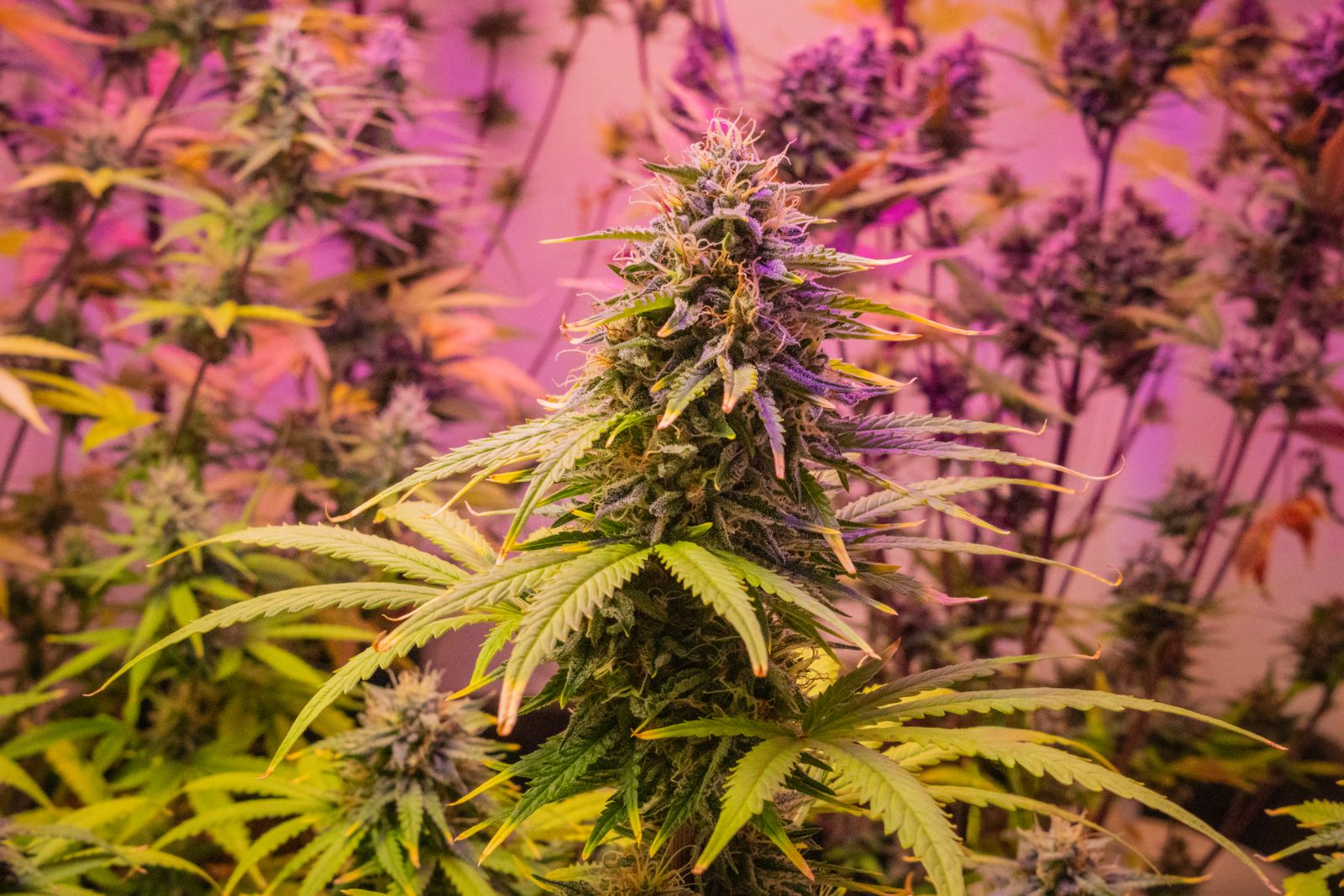
A resinous, myrcene-heavy indica like Bubba Kush is going to produce a very different experience than a limonene-forward, sativa-dominant cultivar like Super Lemon Haze. The former encourages physical relaxation and sleep; the latter is favoured by creatives, athletes, and professionals who want mental clarity and sustained energy without the anxious edge that high-THC products can sometimes produce. Both are legitimate, context-dependent choices. Neither defines all of cannabis any more than a glass of port defines all of wine.
Compare the two poles of the spectrum side by side:
Indica-dominant, high-myrcene cultivars tend toward sedation, body-heaviness, appetite stimulation, and analgesic effect — ideal for evening use, chronic pain management, and insomnia. Sativa-dominant, high-limonene or high-terpinolene cultivars tend toward cerebral activation, mood elevation, and creative focus, used by writers, musicians, designers, and endurance athletes who microdose for performance enhancement rather than impairment.
The stereotype survives because it is easier to mock than to understand. Our job, as informed consumers and growers, is to replace the caricature with specificity. When someone trots out the "lazy stoner" trope, ask them whether they have tried a low-dose, CBD-rich cultivar for morning anxiety — whether with CBD alone or combined with a modest THC percentage, before dismissing the entire plant. The answer, almost universally, reframes the conversation.
Your Vote Is a Cannabis Policy Tool
Canada's Cannabis Act was a beginning, not an endpoint.
Every federal election, every provincial election, and every municipal vote is an opportunity to signal to your representatives that cannabis policy matters to you as a constituent. Elected officials respond to what their voters prioritise. When cannabis consumers stay home on election day — or when they vote on cannabis issues but never communicate that priority to their MP or MLA, the political incentive to refine and strengthen cannabis law diminishes accordingly.
What does better cannabis policy actually look like in practice? It looks like reasonable possession limits that reflect real-world use patterns. It looks like expungement frameworks for Canadians with legacy-era convictions for activities that are now entirely legal. It looks like a regulated edibles and derivatives market with product caps that reflect evidence rather than anxiety. It looks like provincial retail expansion that gives legal stores a genuine price advantage over legacy-market suppliers — because right now, in too many markets, the illicit price point remains competitive enough to undercut the regulated system.
Vote consistently. Communicate your priorities. And hold your representatives accountable when cannabis policy drifts toward the punitive rather than the progressive.
How We'll Know We've Actually Got There
Normalisation is not a single moment — it is an accumulation of small cultural signals that eventually reach critical mass.
We are making genuine progress. The signs are already visible if you know where to look: cannabis tax revenue flowing into public education budgets, cannabis-themed wedding packages being offered by mainstream hospitality companies, city tourism boards quietly building cannabis itineraries into their visitor guides, and a new generation of cannabis dating apps matching consumers based on strain preferences and consumption habits. These are not fringe phenomena. They are early indicators of a culture integrating cannabis the way it integrated craft beer a decade ago — first awkwardly, then completely.
But the most important marker of true normalisation will be this: the day a Canadian with a reasonable amount of cannabis in their pocket or their glove compartment no longer feels a pulse of anxiety when they see a police cruiser. That day arrives when our legal frameworks are clear, consistent, and genuinely protective — not just technically permissive but practically reassuring.
Until then, the work continues. Explore more perspectives on cannabis culture and cultivation in our Marijuana Lifestyle section, where evidence-based education and real grower experience sit side by side. The stigma did not build itself overnight, and it will not dissolve overnight either — but every honest conversation, every accurate term used instead of a slang one, and every informed vote cast brings us measurably closer to the Canada that cannabis consumers and cultivators alike deserve.